
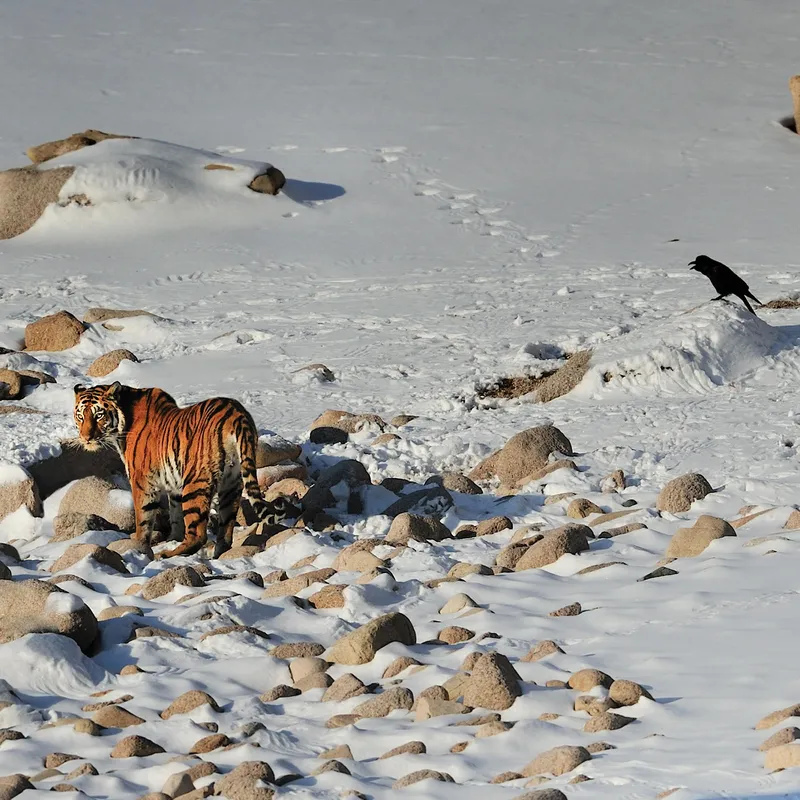
The Mountain Tigers: Discoveries and Insights
Tigers, the majestic big cats known for their power and grace, are predominantly associated with tropical forests and grasslands. The largest of the big cats, the Tiger (Panthera tigris) are the apex predators of the jungle ecosystem. However, recent findings have revealed their presence in mountainous regions, challenging our understanding of their habitat preferences and adaptability. These so-called "Mountain Tigers" have sparked scientific interest and conservation efforts, as their discovery provides new insights into the ecological diversity and resilience of this endangered species.

Adaptations to High-Altitude Environments
Adapting to such harsh climatic conditions with scarce food sources compared to their natural tropical forests is a testament to their adaptability and survivability. These tigers exhibit several physiological and behavioural adaptations that enable them to thrive in harsh environments. Serbian Tigers can be closely associated with these so-called "Mountain Tigers" as their furs have evolved thicker which provides insulation against the cold, while their large paws facilitate movement through snow. They can have larger territory markings in the high hills due to less competition for land, which has helped them evolve into the strongest Tiger species known to date. The males grow up to 3.7 meters in body length (including a meter-long tail) and weigh up to 423 kg (about 933 pounds). Females are smaller, the largest measuring 2.4 meters long and weighing as much as 168 kilograms (370 pounds).
Ecological Significance
The presence of tigers in high altitude regions underscores the ecological significance of these habitats. Mountain ecosystems are often rich in biodiversity, supporting a variety of prey species such as ungulates, which are crucial for the survival of tigers. Moreover, tigers play a vital role as apex predators, maintaining the balance of these ecosystems by regulating prey populations and ensuring the health of the habitat. Their presence in mountains highlights the interconnectedness of ecosystems and the importance of preserving these diverse landscapes. In Nepal, the primary Tiger species are the Bengal Tigers, who also belong to the world's charismatic megafauna. The national reserves in the Terai belt are made even more appealing by their sheer presence.
Conservation Challenges and Efforts
Conserving Mountain Tigers poses unique challenges due to the difficult terrain and the often remote nature of their habitats. Poaching, habitat fragmentation, and human-wildlife conflict remain significant threats. However, conservation efforts are underway to address these challenges. Initiatives such as anti-poaching patrols, community-based conservation programs, and habitat restoration projects are being implemented to protect these tigers and their habitats. International cooperation and support are also crucial, as the conservation of Mountain Tigers requires a concerted effort across borders.
Conclusion
The discovery of tigers in mountainous regions has expanded our understanding of their ecological adaptability and highlighted the importance of these habitats. As symbols of wild beauty and resilience, Mountain Tigers remind us of the intricate balance of nature and the urgent need to protect it. Through continued research, conservation efforts, and global cooperation, we can ensure that these magnificent creatures continue to roam the highlands, embodying the spirit of wilderness for generations to come.
