
Beyond Base Camps: The Ancient Honey Hunters of Everest Foothills
When most travelers hear about Nepal’s Everest region, they imagine snow-capped giants, Everest Base Camp treks, and legendary mountaineers. Yet, hidden in the lower foothills of Khumbu, there exists a tradition just as daring as summiting peaks: the art of Himalayan honey hunting.
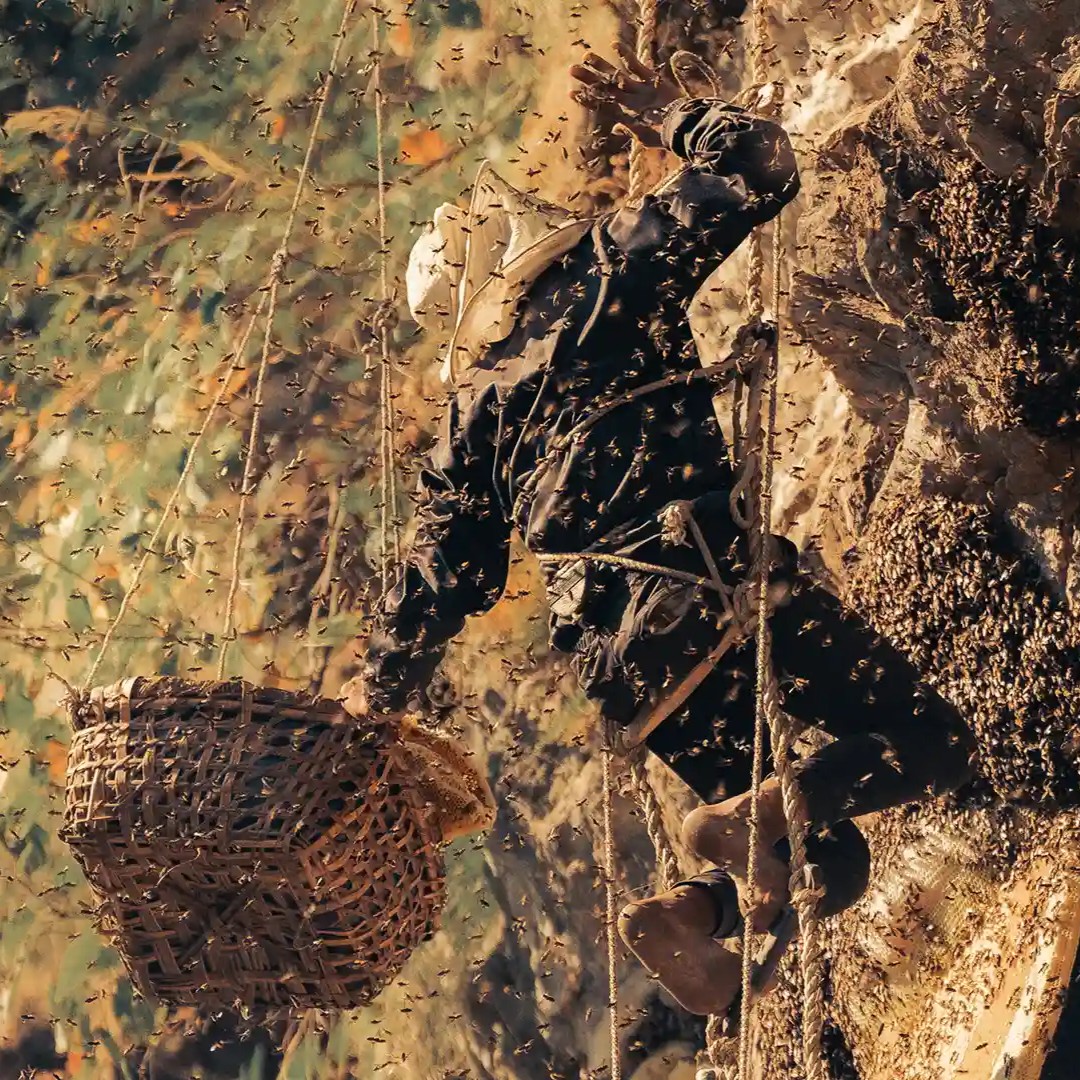
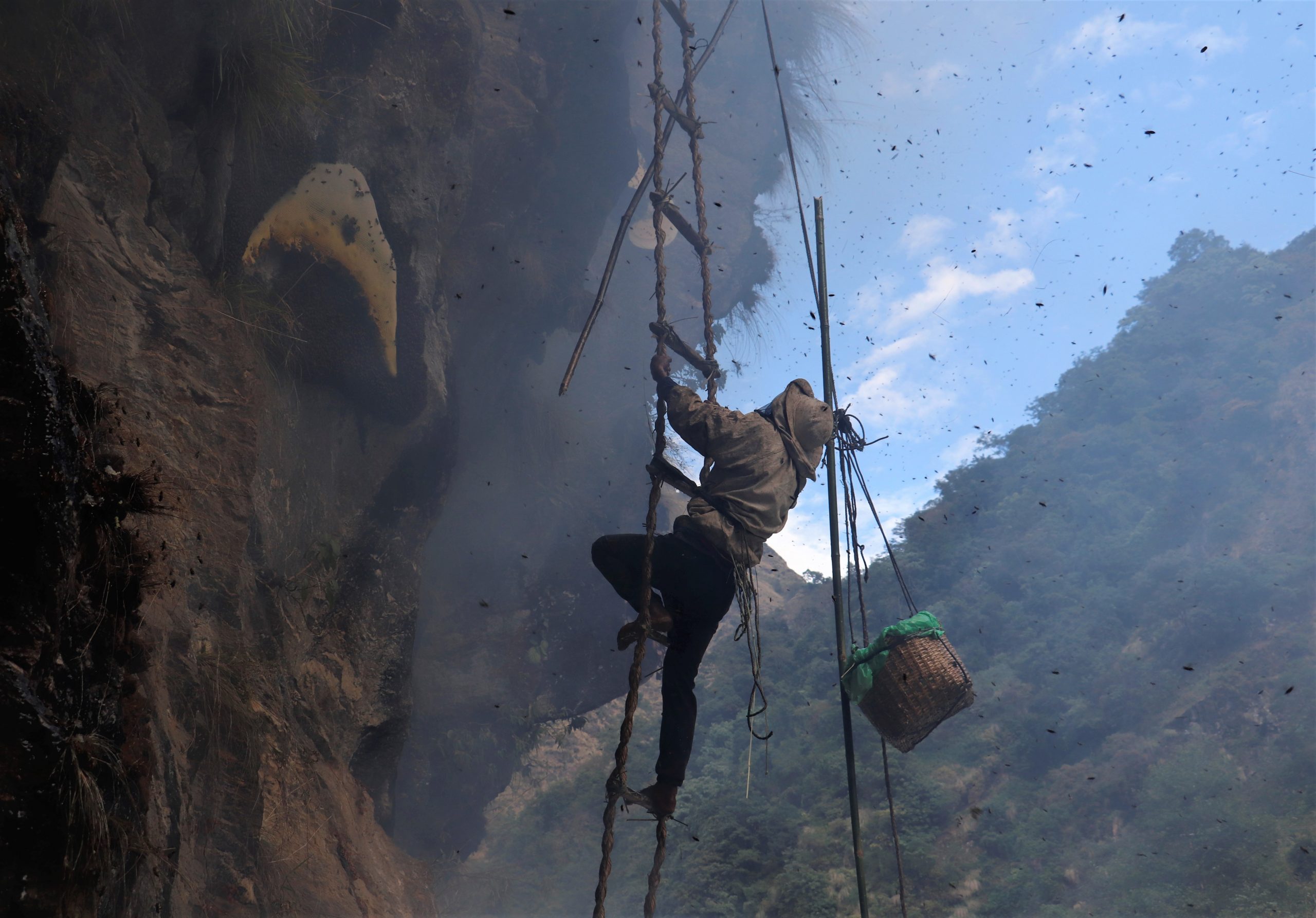
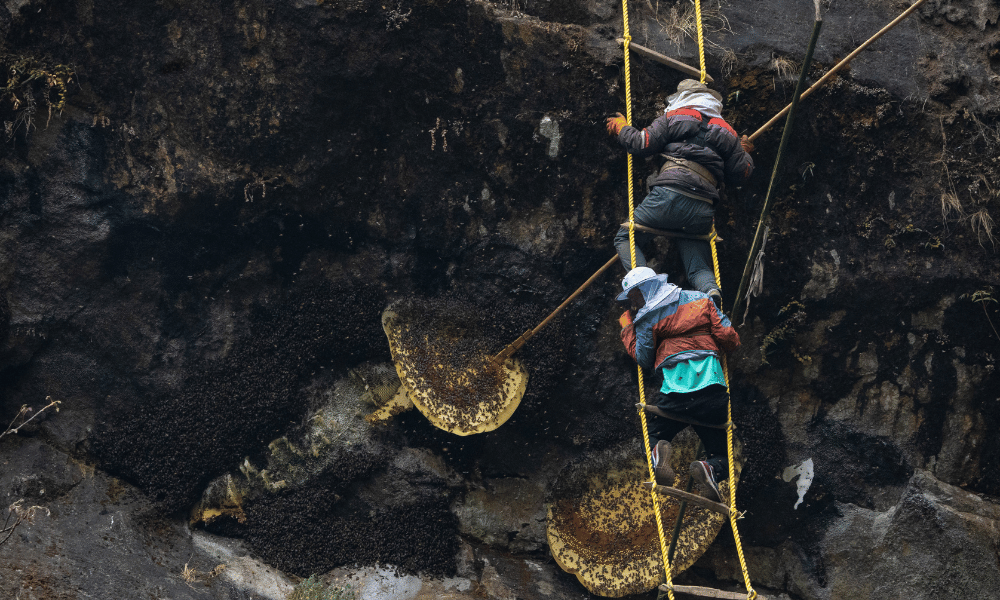
This ancient ritual, practiced by Gurung, Rai, and other indigenous communities, combines breathtaking landscapes with one of the most dangerous cultural traditions in the world. Suspended on handmade bamboo ladders, hunters risk their lives to gather honey from the world’s largest bees (Apis laboriosa), whose hives cling to sheer Himalayan cliffs.
The Legacy of Honey Hunting in Nepal
Honey hunting is more than a livelihood; it’s a sacred practice woven into the cultural fabric of Himalayan villages. Before each harvest, rituals are performed to honor the forest spirits and ensure safety. The hunters, often barefoot and armed with nothing but smoke torches, climb vertical cliffs to carve honeycombs into baskets while swarms of giant bees buzz around them.
The honey itself is equally extraordinary. Known for its medicinal properties and in some cases, its hallucinogenic effects when bees feed on rhododendron nectar it is considered both a delicacy and a healing elixir. Locals prize it for treating coughs, fatigue, and digestive issues.
A Rare Adventure for Travelers
For those seeking something beyond base camps and high passes, witnessing honey hunting offers a raw, authentic window into Himalayan life. Instead of focusing on extreme altitude or technical climbs, this experience immerses travelers in cultural traditions that have remained unchanged for centuries.
You’ll walk through terraced fields, rhododendron forests, and riverside trails before reaching remote villages where honey hunting still thrives. Here, visitors are welcomed into homestays, treated to local cuisine, and given a front-row seat to a ritual that outsiders rarely witness.
When and Where Does It Happen?
Honey hunting in the Everest foothills usually takes place twice a year:
- Spring (March–May): During rhododendron bloom, when honey takes on unique medicinal qualities.
- Autumn (September–November): With clear skies and favorable weather, villagers conduct a second harvest.
Villages in the mid-hill regions of Khumbu, away from the crowded Everest trails, are still the strongholds of this practice. These areas remain off the radar for most tourists, making it an exclusive cultural experience.
Why Experience Honey Hunting in the Himalayas?
- Cultural Immersion: Learn from communities whose traditions predate modern tourism.
- Rare Adventure: Few travelers witness this practice, making it one of Nepal’s most unique experiences.
- Natural Beauty: Trekking routes to honey hunting villages pass through forests, rivers, and panoramic mountain views.
- Sustainable Tourism: By joining such experiences, travelers help preserve an endangered tradition and support local livelihoods.
A Vanishing Tradition
With modernization and dwindling bee populations, honey hunting is slowly disappearing from the Himalayas. Younger generations are less inclined to risk their lives on sheer cliffs, and climate change is altering flowering cycles that bees depend on.
For travelers, witnessing this practice is not only an adventure but also a chance to support communities striving to keep their heritage alive
Final Thoughts
The Everest region is more than just a mountaineer’s playground. Hidden in its valleys and foothills lies a tradition that is just as daring, spiritual, and awe-inspiring as climbing the world’s tallest peaks.
By joining a honey hunting trek or cultural tour, travelers don’t just chase adventure, they also become part of a story that has endured for centuries in the shadow of the Himalayas.
