
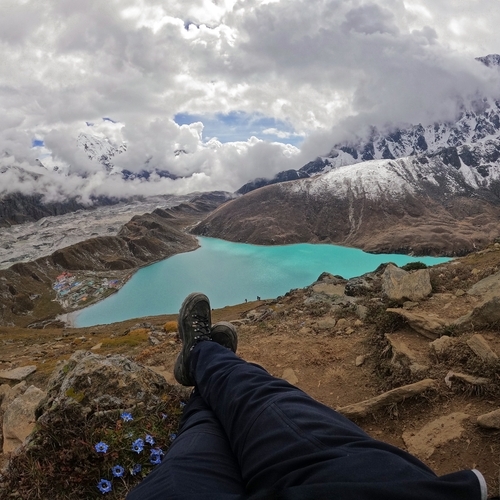
Gokyo Lake via Renjo la Pass

View seen from Renjo La Pass
One of Everest’s “Three Passes,” Renjo La Pass, is a popular trekking route which is covered by Everest Three Passes Trek. One of Nepal’s underrated trekking routes is moderately challenging but rewards trekkers with Sherpa culture and Himalayan scenery.
The area allows for exploration of the Khumbu region’s more isolated areas. The Renjo La Pass is at the height of 5,360 meters above sea level. The mystical Gokyo lakes route includes passing through the Renjo La Pass.
The westernmost pass of Nepal’s Three Passes Trek is Renjo La. It lies in Sagarmatha National Park. It links the region of the Gokyo Lakes to Lumde. To get more information about passes, we have a whole blog dedicated to the story of mountain passes.
How to reach Renjo La Pass?
Renjo La Pass Trek starts like any other Everest region-based trek. You will arrive in Nepal at the Tribhuvan International Airport in Kathmandu. Then you will fly from Kathmandu to Lukla, enjoying the view of the mighty Himalayas en route.
Reaching the pass will require you to be at Gokyo first. But you have to trek quite a bit before reaching Gokyo. After reaching Lukla, you will trek to Namche and follow the trails towards the Everest Base Camp. The trail separates the EBC route from Dzongla. You will go over Cho La pass to the Gokyo lakes. From Gokyo, you will travel to cross the Renjo La Pass.
You could also avoid the EBC trails if you wish to. You could directly reach Gokyo Lake via Dole and Machhermo from Namche Bazaar.
Along with rocky trails, the trek will also feature lush Himalayan forests. Rhododendron, fir, juniper, and pine can all be visible in these forests. Namche, Thame, and Gokyo are prominent Sherpa villages on the Renjo La Pass Trek. The highest freshwater lake system, the Gokyo Lakes, is a significant part of the trek and is visible along the Renjo La route.

Our Tour Leader Manshanta Ghimire sanding atop of Renjo La Pass with our client.
The enticing Everest view will be available to the trekkers. There are also many other snow-capped mountains in the Khumbu region, including Cho Oyu, Lhotse, Ama Dablam, and Makalu.
Sagarmatha National Park is also an attraction in itself, a protected area that comes alive along the trek, home to diverse plants and animals that make every step an adventure. Rhododendron forests bloom in bright colors, while mountain streams flow down rocky valleys. You might spot golden eagles soaring overhead, or Himalayan tahr leaping across steep cliffs. The park offers a chance to experience true wilderness, where nature shows its best at every turn. The Hotel Everest View, open at the highest altitude, is also traversed by the Renjo La Pass Trek.
The Sherpa villages along the trail will teach the trekkers about the Buddhist customs. There are significantly fewer people on the trek route. As a result, it is the ideal trek for people who enjoy spending time alone.
Permits required for the Renjo La Pass
The fundamental permits required for the trek in the Everest region are the same ones you need for Renjo La Pass. They are the entrance permits for Khumbu Pasang Lhamu Rural Municipality and Sagarmatha National Park, respectively.
The Sagarmatha National Park permit is valid only in the region’s protected area. Many rare species are living in this area. For the Solukhumbu region, there is a regional fee known as the Khumbu Pasang Lhamu Rural Municipality Entrance Permit. Both licenses are required to boost tourism and the local economy.
Difficulties
Altitude sickness
High altitude sickness is a danger people naturally face while trekking high altitude regions. The Renjo La pass also possesses this danger. Symptoms of altitude sickness could come as early as passing the 3500 meters mark. Since the highest point of the trek would be 5360 meters, risks of altitude sickness are common.
To prevent the dangers of altitude sickness, people acclimatize well. The counterclockwise route will have a schedule of rest at Namche Bazaar. You also have to hydrate and avoid food with caffeine.
If you go with guides, you’ll have a network of people to lean on during the trek. It also helps to have porters assist you with your luggage.
Trail Difficulties
Like the other “Three Passes” treks, Renjo La Pass also has some difficult Trails . But it is the easiest trek among the three. They aren’t very steep. However, dangers will persist in bad weather. Seasonal snowstorms and rainfall will certainly make the route difficult.
But you can easily prevent damage to roads due to weather by traveling in suitable weather. Trekking during autumn and spring would be the best idea. Moreover, be updated with the weather forecast.
The good part of this trek is that it doesn’t require passing glaciers. Hence, the route will be much more convenient. Dangers of crevasses openings are non-existent. So, in this regard Renjo La Pass is a better option.
Conclusion
The Renjo La Pass Trek is a rewarding journey into the heart of the Khumbu region. It combines breathtaking Himalayan views, the serenity of the Gokyo Lakes, and the unique cultural experiences of Sherpa villages. With fewer trekkers on the trail, it offers a more peaceful adventure while still showcasing the beauty and challenges of high-altitude trekking. Proper planning, permits, and seasonal considerations ensure this trek becomes a memorable exploration of Nepal’s natural and cultural heritage.
