
Himalayan Honey & High Trails: A Cultural Journey to the World’s Largest Bees
Nepal is globally renowned for its towering peaks, verdant valleys, and trekking adventures but hidden within its remote cliffs lies an ancient tradition that few travelers ever witness: wild honey hunting. This adrenaline-packed and culturally rich activity is not just an adventure; it is a journey into the heart of Himalayan heritage, where courage, skill, and spirituality meet nature in its rawest form.
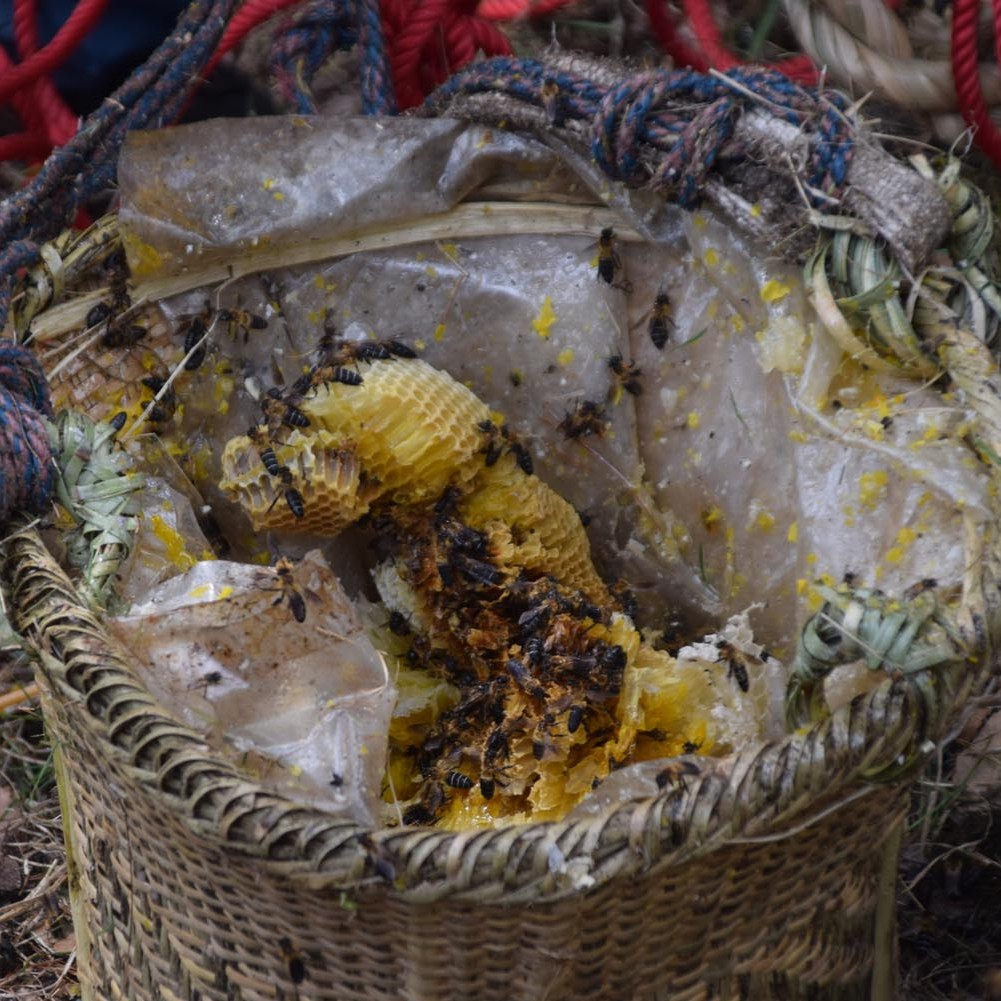
The star of this unique expedition is the Himalayan cliff honeybee (Apis laboriosa), the world’s largest honeybee species. These bees build their hives in almost inaccessible cliffs hundreds of meters above the ground, producing a honey prized not just for its taste, but for its medicinal and psychoactive properties derived from rhododendron nectar.
A Living Tradition Steeped in Culture
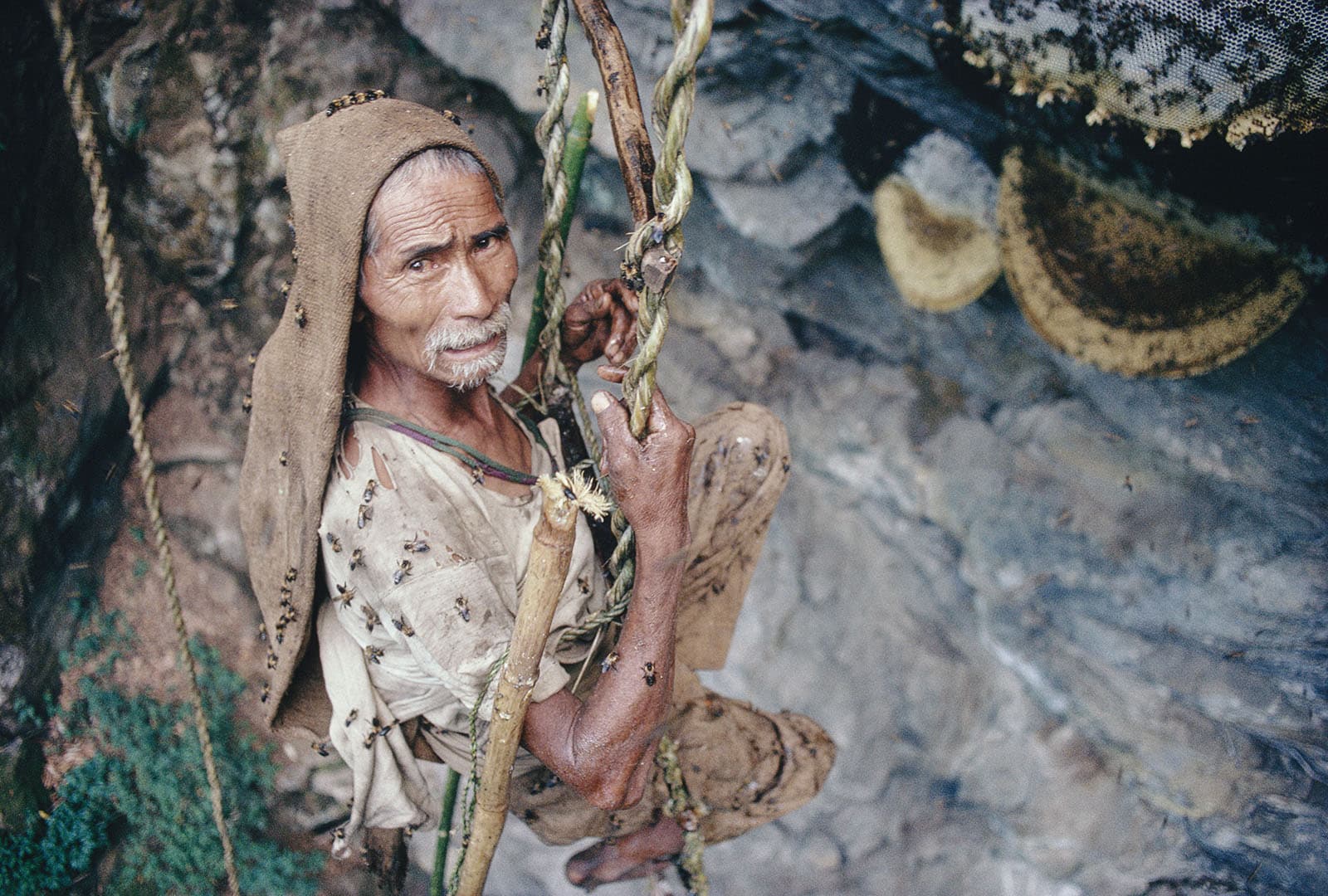
For the indigenous communities of Nepal, including the Gurung, Magar, and Rai, honey hunting is far more than collecting a sweet treat; it is a ritual. Before any harvest, hunters perform ceremonies to honor the bees and spirits of the cliffs, offering rice, flowers, and prayers. These age-old practices reflect a philosophy of balance and respect for nature, connecting humans to the mountains they inhabit.
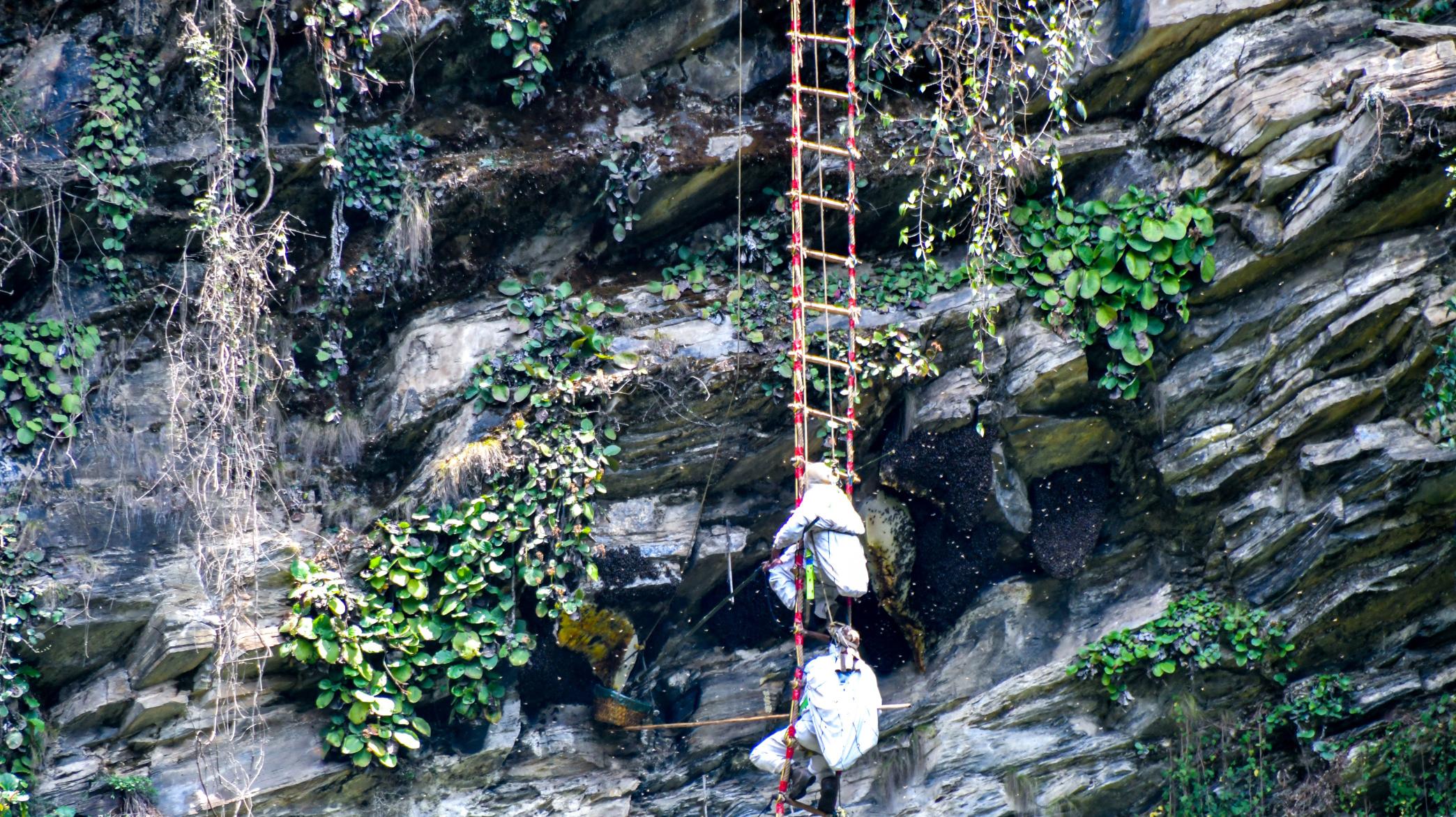
Watching these skilled hunters scale sheer cliffs using handmade bamboo ladders and hemp ropes is both humbling and exhilarating. Their daring feats are a testament to human ingenuity and a vivid reminder of the courage it takes to harvest nature’s hidden treasures.
The Allure of Himalayan Honey
Nepal’s wild honey is often referred to as “mad honey” because of its unique properties. It contains grayanotoxins from rhododendron flowers, which can produce mild euphoria when consumed responsibly. Beyond this, it is valued for its antibacterial, anti-inflammatory, and antioxidant benefits, making it both a culinary delicacy and a traditional medicine.
The flavor itself is a revelation rich, earthy, and complex, capturing the essence of the high-altitude forests where the bees thrive. For travelers, tasting honey directly harvested from Himalayan cliffs is an experience that combines adventure, gastronomy, and culture.
Where Adventure Meets Trekking
While honey hunting is thrilling on its own, combining it with a trek enhances the experience, allowing you to explore some of Nepal’s most breathtaking landscapes. Regions like Annapurna, Lamjung, Gorkha, and Langtang offer not just honey, but spectacular trekking trails through forests, rivers, waterfalls, and terraced fields, framed by majestic Himalayan peaks.
- Annapurna Foothills & Marshyangdi Valley: Witness wild honey collection alongside traditional trekking routes.
- Lamjung Villages: Engage with Gurung communities and explore terraced farms, rivers, and hilltop monasteries.
- Gorkha & Nimrung Khola: Combine history, culture, and honey-hunting adventure in the birthplace of Nepal’s unification.
- Langtang Valley: Experience honey hunting amidst lush forests, glacial rivers, and views of Langtang Lirung (7,234m).
Each destination offers a distinct flavor of Nepalese culture, local hospitality, and natural beauty, making the honey-hunting expedition much more than a simple adventure.
The Honey-Hunting Experience
The process of harvesting wild honey is a carefully orchestrated dance between courage and skill:
- Scouting Cliffs: Hunters identify hives in remote, high-altitude cliffs, sometimes accessible only after hours of trekking.
- Rituals and Preparation: Local customs dictate blessings and offerings to ensure a safe harvest.
- Cliff Scaling: Hunters ascend using bamboo ladders and ropes—a breathtaking spectacle for any observer.
- Harvesting the Honey: Using smoke to calm bees, honeycombs are carefully cut and lowered, ensuring maximum safety for both the hunter and the colony.
This traditional approach has remained unchanged for centuries, highlighting the ingenuity and adaptability of Nepalese communities.
Why This Adventure is Unmissable
- Adrenaline & Adventure: Few experiences rival the thrill of cliffside honey hunting.
- Cultural Immersion: Witness centuries-old rituals and connect with communities that have preserved this craft for generations.
- Nature’s Beauty: Trek through remote valleys, forests, and river gorges, with panoramic views of Annapurna, Dhaulagiri, and Langtang ranges.
- Culinary Delight: Taste authentic Himalayan honey at its freshest, straight from the hive.
Unlike conventional treks, honey-hunting expeditions provide a multisensory journey, combining sight, taste, sound, and adrenaline into one unforgettable experience.
Tips for Travelers
- Best Time to Visit: Spring (March–May) and Autumn (September–November) for ideal weather and active bee colonies.
- Preparation: Sturdy trekking boots, layered clothing, sun protection, and trekking poles
- Guides & Permits: Always travel with experienced guides; obtain trekking and honey-hunting permits in advance, including Annapurna Conservation Area Permit (ACAP).
- Safety Precautions: Follow guides’ instructions, respect local customs, and stay hydrated. Bee stings and cliff falls are real risks, so never attempt unsupervised climbs.
The Takeaway
Himalayan honey hunting is not just a tour it is a bridge between adventure, tradition, and nature. Travelers don’t just witness the Himalayas; they immerse themselves in centuries-old rituals, taste wild honey, and follow the daring steps of Nepal’s last honey hunters.
For those seeking an extraordinary adventure that blends culture, thrill, and Himalayan landscapes, there is no better journey than Himalayan Honey & High Trails. It’s a story of courage, respect, and the sweet rewards of nature’s most elusive treasures.
