
Khaptad National Park Trek
The Khaptad Trek in Nepal’s Far Western Region is a lesser-known route that attracts only a few trekkers each year. It’s ideal for those who want to explore nature, discover diverse flora and fauna, and experience true wilderness. Khaptad also holds religious importance, as it was the meditation site of Khaptad Baba, a saint who spent 50 years in the region. Its remote location has helped preserve its natural beauty, offering trekkers a rare and authentic adventure.
Khaptad National Park is full of stunning landscapes, including open meadows, green hills, steep slopes, and streams. With an altitude ranging from 1,400 to 3,300 meters, the park features forests that transition from subtropical to subalpine. It’s home to 567 plant species, 23 mammals, 287 bird species, and 224 varieties of medicinal herbs, making it a living garden and natural museum.
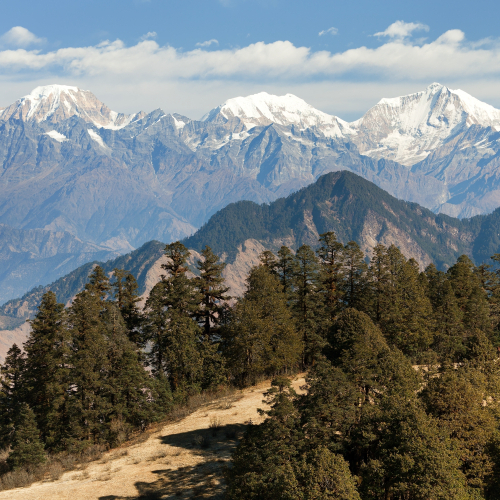
You may spot animals like barking deer, wild boar, leopards, Himalayan black bears, wild dogs, and monkeys such as rhesus and langurs. The trek also offers stunning views of Mt. Api (7,132 m) and Mt. Saipal (7,031 m), along with small temples, ponds, and open meadows that showcase Khaptad’s beauty.

Geography and Access
Khaptad National Park spans across Bajhang, Bajura, Doti, and Achham districts. The park covers 225 square kilometers, with altitudes ranging from 1,400 to 3,300 meters. This elevation range creates multiple microclimates and ecological zones. The topography includes sub-alpine forests and vast land of meadows, locally known as patans, which support seasonal plant life and facilitate wildlife movement.
Access to Khaptad requires determination and planning. Most visitors begin with a flight to Dhangadhi, followed by a long road journey to trailheads such as Silgadhi or Chainpur. The trek from these villages varies in length based on route and conditions. During the monsoon, travel becomes difficult, and the area is often temporarily cut off. This inaccessibility has helped preserve Khaptad's environment and cultural heritage. The lack of modern amenities means that travelers must be self-reliant and prepared for basic living conditions.
Ecological Characteristics
Khaptad supports a high-altitude ecosystem with over 270 recorded bird species, 23 species of mammals, and a broad range of plant life. Rhododendron forests bloom in spring and provide critical habitats for birds and small animals. Higher altitudes contain alpine meadows where plants with medicinal and commercial value grow, including the increasingly rare yarsagumba.
Wildlife in the park includes leopards, musk deer, and Himalayan black bears. These species use the mixed landscape for shelter and foraging. The plateau serves as a transitional zone between lowland and alpine ecosystems, making it a significant corridor for animal movement. The bird population is particularly diverse, attracting researchers and bird watchers. Migratory species use the area seasonally, making it a key node in larger ecological systems.
Seasonal variation in climate also influences the ecosystem. Summer brings growth and animal activity, while winter transforms the plateau into a snow-covered environment that only resilient species can endure.
Spiritual and Religious Importance
Khaptad has long-standing spiritual relevance, most notably through its association with Khaptad Baba, a mystic who lived in the region from the 1940s until his death. His teachings centered on discipline, meditation, and a deep respect for the natural world. The ashram he established remains active, and the nearby Triveni Temple continues to serve as a religious hub.
Religious festivals such as Janai Purnima and Gangavataran draw thousands of pilgrims to the region. During these events, temporary settlements form, and traditional rituals are observed. The plateau's religious geography includes sacred streams, symbolic rock formations, and temples that continue to support devotional practices.
Khaptad Baba’s advocacy for environmental ethics influenced the creation of the national park. His vision linked ecological preservation with spiritual discipline, and that legacy continues through both protected status and active pilgrimage.
Tourism Experience
Tourism in Khaptad offers a quiet and contemplative experience. It does not cater to conventional adventure seekers or luxury travelers. The absence of infrastructure requires physical effort and careful planning. Visitors who come to Khaptad are often motivated by interest in nature, solitude, or spiritual exploration.
Notable landmarks include Sahashra Linga, a site with numerous stone formations believed to hold religious meaning, and Nag Dhunga, a snake-shaped rock revered by pilgrims. Khaptad Daha, a small lake, provides a peaceful setting for wildlife observation and scenic photography. Views of the Api and Saipal peaks can be seen from the plateau, offering a rare visual connection to some of Nepal's most remote mountains.
Sound and stillness define much of the experience. Without mechanical noise, visitors hear the subtleties of natural life. This sensory contrast often leads to reflection and has become a defining aspect of the visitor experience. Tourism remains low-impact due to limited access and infrastructure, aligning with conservation goals and encouraging respect for the landscape.
The journey to Khaptad starts with a sightseeing day in Kathmandu, followed by a short flight to Dhangadhi. While there, you can visit a Tharu village to learn about their culture and daily life. From Dhangadhi, a drive takes you to Silgadi in Doti via Dadeldhura, where the trek begins. You’ll pass through Jhigrana, Baglake, Bichpani, and finally reach Khaptad National Park. The trek can be extended to visit places like Badimalika Temple or Suklaphanta and Bardia National Parks.
The best times to visit are March to May, September to November, or during the July and August full moons when Hindu pilgrims gather at the Khaptad Baba Ashram to worship Lord Shiva. Accommodation includes basic homestays and tea houses, but a camping trek is the best way to enjoy the region.

Itinerary
Day 01: Arrival at Tribhuvan International Airport, Kathmandu (1,400m)
Upon arrival in Kathmandu, you will be warmly welcomed by our representative who will assist with your transfer to the hotel. The remainder of the day's activities will be tailored to your arrival time. If you reach Kathmandu by midday or late afternoon, optional activities can be arranged to enhance your experience and make the most of your time in the city.
Day 02: Fly from Kathmandu to Dhangadhi (109m) - 1 hour 10 min and Drive to Silgadhi (1330m) - 6 hours.
The day begins with a flight from Kathmandu to Dhangadhi, lasting about an hour and 15 minutes. From Dhangadhi, we drive toward Silgadhi, covering approximately 192 km in six hours by jeep. The drive offers views of rolling hills and the rugged beauty of Nepal's far western region. Along the way, we pass through Dipayal and stop for lunch at a roadside eatery before continuing to Silgadhi. Once there, you’ll check into a lodge where you can unwind and rest after the long journey.
Day 03: Trek from Silghadi to Jhigrana (2,250m) - 6 to 7 hours
After breakfast at the lodge, we start our trek. The route quickly diverges from the main road and transitions into a trekking trail as we head toward Jhigrana. The scenery becomes increasingly picturesque as we approach Baghlekh, a small settlement with a mix of lodges and mud houses. From Baghlekh, it’s about a three-hour trek to Jhigrana, where we spend the night in a local lodge.
Day 04: Trek from Jhingrana to Khaptad National Park - 8 to 9 hours
The day starts with breakfast in Jhigrana before setting off for Khaptad National Park. The trail takes you past wildflower-covered hills and gradually ascends to offer stunning mountain views. We stop for lunch in Bichpani, a small settlement along the way. From there, we continue trekking through meadows, forests, and rugged terrain, finally reaching Khaptad National Park by evening. Overnight stay in a lodge within the park area.
Day 05: Leisure day at Khaptad National Park Area
Today is all about exploring the wonders of Khaptad National Park. After breakfast, we visit Khaptad Daha, a serene lake located at 3,000 meters. From the lake, we head to the meditation center, or ashram, tucked away in the forest. After exploring the area, we return to the headquarters for lunch and relax for a while. In the afternoon, we visit Ghode Dhawan, the largest pasture in the park, and take in the views before returning to the lodge for the night.
Day 06: Khaptad To Jhigrana (2,250m) - 7 Hours
We retrace our steps back to Jhigrana, passing through Bichpani along the way. The journey takes about seven hours, offering a chance to revisit the scenic trails and enjoy the tranquil environment. Overnight stay at a local lodge in Jhigrana.
Day 07: Drive from Jhingrana to Dhangadhi (109m) - 6 to 7 hours
After an early breakfast, we drive from Jhigrana to Dhangadhi, enjoying the views along the way. Overnight stay in Dhangadhi.
Day 08: Fly back to Kathmandu (1,400m) – 1 hour 10 mins.
On the last day of our journey, we return to the hustle and bustle of Kathmandu. There are two options to arrive in Kathmandu. You can catch a flight from Dhangadhi – Kathmandu which will take us about 1 hour and 10 mins to reach, whereas it takes around 20 hours by bus. Upon arrival, transfer to the hotel. Overnight stay in Kathmandu.
Day 09: Departure
The grand finale of our Khaptad National Park Trek has arrived! Our airport representative will accompany you to the International Airport, ensuring a smooth departure for your journey back home.
As we bid you farewell, we hold the hope that your wanderlust brings you back to Nepal once more. Safe travels!
Final Words
Khaptad reflects the interconnectedness of natural systems and cultural traditions. Its forests contribute to watershed stability and climate regulation. Its meadows support rare plant and animal species. Its spiritual institutions frame human interaction with nature in ways that encourage balance and restraint.
The effort required to reach Khaptad creates the conditions for reflection. Visitors often report a renewed sense of personal clarity after experiencing its environment. By confronting physical difficulty and limited comfort, the journey becomes an opportunity for recalibration.
In a world where both ecological and cultural diversity are under pressure, Khaptad remains a place of resilience. Its future depends on responsible management, local engagement, and awareness of its ecological and spiritual value. Protecting such landscapes helps preserve biodiversity, heritage and also the human capacity for wonder, and renewal.
