
Mani Rimdu Festival 2024-25
Nepal's mountains are home to several 'beyuls' - sacred spots that Padmasambhava (also known as Guru Rinpoche) blessed. Khumbu, which sits in Sagarmatha National Park, is one of these places.
The Sherpas who live in Khumbu are known around the world for welcoming visitors, but what really makes them unique is their deep spiritual and cultural roots.
Most Sherpas follow Tibetan Buddhism, which has become central to their daily life. Before Buddhism, a few people in the area practiced the BonPo religion.
People who practice Buddhism in the Himalayas have their own special celebrations. Mani Rimdu is one of their most important festivals.

Historical and Cultural Significance
The local people celebrate Mani Rimdu to honor how Guru Rinpoche brought Buddhism to their mountains. They also celebrate it to ask for protection from Chenrezig, who they see as the Buddha of Compassion.
While there are different stories about how Mani Rimdu started in Tibetan Buddhism, people often talk about Lama Gyalwa Lhakpa, who followed Guru Rinpoche's teachings.
The festival was big in Tibet first. When the Sherpas moved from Tibet to Nepal's mountains, Lama Sangwa Dorje brought Mani Rimdu to the Khumbu area. He's the same person who started the Pangboche Monastery, one of the oldest and largest in the region.
There's an old story that says eight evil forces were making it hard for Buddhism to spread in the Himalayas. But Guru Rinpoche, who had strong spiritual powers, managed to overcome them.

Khumjung Monastery Yeti Scalp
The story goes that Guru Rinpoche won in an interesting way - instead of destroying these demons, he turned them into protectors of Buddhist teachings. You can still see this story played out in the masked dances at Mani Rimdu today.
These former troublemakers promised to protect Buddhism in the Himalayas, and people say that's why Buddhism grew strong in the region.
Mani Rimdu is basically a replay of this story about good winning over evil. It's important not just for history, but also for its cultural lessons and moral teachings.
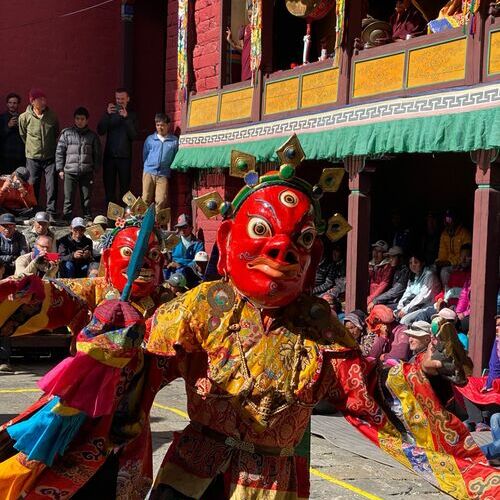
Every part of Mani Rimdu means something special - from the masked dances to the fire ceremonies. The masked dances are the main event, showing different characters from the story.
The dancers wear different masks and costumes to play various spiritual beings. Each one moves in their own way to show their character. When you see them in the festival, it reminds you of how they changed from causing trouble to protecting Buddhism.
Some people also connect Mani Rimdu to another story about a powerful protector spirit called 'Tshogpa' from Tibetan Buddhist legends.
At its heart, the festival tells the story of Buddhism's protectors. It's a way to celebrate them and say thanks for keeping things in balance and protecting people.
The festival has 16 different dances, each showing a different part of Buddhism's success. They also make special designs with colored sand to show how nothing lasts forever, do special prayers, and more.
But it's not just about history - it really brings the Sherpa community together. Think of it like Thanksgiving, where family members come home and spend time together.
The older Sherpas use this time to pass down their traditions to younger folks, making sure their culture stays alive. Everyone gets together to prepare, share gifts and blessings, and enjoy big meals.
These days, tourists are starting to come see the festival too, which helps the local economy and spreads awareness about Sherpa culture.
The Setting: Tengboche Monastery
The Mani Rimdu festival is celebrated with complete devotion and joy in the Tengboche Monastery located in the Khumbu region which is a part of many trekking routes of the Everest region.
Located at an altitude of 3,867 meters, the Tengboche Monastery was established more than three centuries ago and is an important spiritual site for Sherpas living in the Khumbu Himal.
It is regarded as the spiritual hub of the Everest region, and it offers a majestic panorama of the Himalayan giants including Mt. Everest itself. It exudes positivity and peace, giving you a space for reflection and meditation amidst the Himalayas.

Tengboche Monastery, holiest place in Everest Region
It serves as the perfect setting for the festivities of Mani Rimdu including the most colorful masked dances known as ‘Cham’ and religious tableaus by monks marking the festival.
Sacred tantric rituals by lamas are also performed at the monastery during the festival. Apart from Tengboche, Mani Rimdu is also celebrated in the monasteries of Chiwang and Thame as it is a festival of Tibetan Buddhism still dominant in the Himalayas of Nepal.
Experiencing the Rituals
The celebrations of Mani Rimdu are vibrant and celebrated with grandeur, and the rhythmic chants of monks, masked dances, and fluttering of colorful prayer flags against the backdrop of snow-clad peaks is a scene straight out of a mystical movie.
The festival of Mani Rimdu begins with the installation of a ‘mandala’ using colored sand by the monks. Lamas (monks) meditate and worship in front of this mandala for ten days.

Mani Rimdu festival at Tengboche Monastery
Sherpa villagers from Tengboche and neighboring villages gather at the monastery’s courtyard to enjoy the elaborate dances and rituals performed by the monks.
A kaleidoscope of rituals is performed, each beating the other one in terms of beauty. Amidst these, some of the rituals truly stand out while adding to the grace and energetic spirit of the three days of the festival that are open to the public.
Wong (Day 1)
Think of Wong as the festival's opening ceremony. It's when everyone gets a special blessing from Rinpoche - kind of like a spiritual kickoff. The ceremony starts with monks chanting prayers, and the Head Lama prepares special blessed water. After the ceremony, everyone gets two special items: Mani Rilwu and Tshereel. These are like blessed pills made from dough that people believe will help them live long, healthy lives and keep them safe from harm.
Cham (Day 2)
The second day is when things get really interesting with the masked dances, called Cham. Monks perform these dances to teach Buddhist lessons. They wear three main types of masks:
- Mahakala masks, worn by those playing protective spirits
- Wrathful deity masks, showing the fight against confusion and ignorance
- Dakini masks, representing wise female spirits who protect Buddhist teachings
There are sixteen different dances in total, with some funny moments mixed in to keep things lively. These aren't just regular performances though - they're considered sacred and can't be performed just for fun at other times.
Jinsak (Day 3)
The festival wraps up with a fire ceremony called Jinsak, held in the monastery's yard. It's like a spiritual cleansing ritual where people make offerings to a sacred fire - things like grain, oils, and incense. People believe this fire helps clean away negative energy and brings wisdom. When the fire burns down to ash, it reminds everyone that nothing lasts forever.
The festival officially ends when they take apart a special design they made with colored sand. Throughout the festival, they also do things like hanging and lowering special painted scrolls called Thangkas to mark the beginning and end of the celebrations.
Trekking to the Heart of the Festival
The festival has started attracting lots of tourists from all over the world, and as an adventurer, you might want to be a part of it too. So, how do you get to the Tengboche Monastery and experience the Mani Rimdu Festival? Let’s find out.
While Mani Rimdu is a vibrant celebration in itself, the joy of experiencing it is not just limited to the festival but the journey to reaching there is an adventure worth experiencing too.
There are many ways through which you can reach the Tengboche Monastery. The common ones are a solo trek or a trek combining the experience of Tengboche with any other famous treks of the Everest region.
What we recommend is to combine this experience with the likes of the iconic Everest Base Camp trek, the majestic Gokyo Lake trek, the thrilling Everest Three Passes trek, the elaborate Gokyo to Everest Base Camp trek, and many such options.

Tengboche Monastery Gate
If you pick from the likes of the EBC trek or the Everest Three Passes trek, you can have the experience within the same route as the itinerary of these treks already incorporates Tengboche as one of its resting spots.
Imagine trekking to the foothills of the highest peak in the world and making a worthy stop at the Mani Rimdu festival in between the distance of the EBC trek. The experience will be everything magical including spirituality, adventures, panoramas, and more.
However, you can also take other treks in the Everest region and make a detour to Tengboche for the duration of the festival. The feasible option for this is the Gokyo Lake trek.
For those with a time constraint, you can just trek from Lukla to Tengboche, immerse in the joy of the festival, and retrace your steps back to Lukla accompanied by the majestic views of the Himalayas.
Either way, the festival will give you equal joy and a newfound sense of bliss. So, secure your dates as the 2024 Mani Rimdu Festival is all set to take place at the Tengboche Monastery from 15th to 17th of November, which also happens to be the best time to trek Everest Base Camp!
Practical Tips to Follow During Mani Rimdu
- Mani Rimdu is a fascinating festival, but careful planning is essential to ensure a safe and enjoyable experience. At Mountain Tiger Nepal, we’ve put together some practical tips to help you prepare:
- Since Mani Rimdu attracts many visitors, it’s important to book your accommodations early through a reliable local agency, especially for stays in Tengboche, where competition is high. Accommodations are typically basic, with options like teahouses and lodges. If you’re lucky, you might find a private bathroom, but don’t count on it.
- Pack appropriately for the journey, as Himalayan temperatures can be quite harsh. Include layers such as comfortable innerwear, warm outerwear, fleece jackets, and waterproof clothing. Don’t forget tinted high-SPF sunscreen (50 or above) and a good pair of sunglasses. Refer to our trek packing list for more details.
- Make sure you have all the necessary permits and documents, including a TIMS Card and a Sagarmatha National Park Permit. If you’re using a trekking agency, they’ll usually handle this for you.
- Since you’ll be attending a religious event, dress modestly. Cultural clothing is ideal, but non-revealing outfits are perfectly fine. Always ask for permission before photographing rituals or monks at the monastery.
- Finally, respect the monastery’s customs. Remove your shoes before entering prayer halls and follow the clockwise direction for circumambulation as practiced by devotees.
- Planning with these tips will help you experience the magic of Mani Rimdu while respecting its cultural and spiritual significance.
