
Mardi Himal Cell Coverage 2026: When to Rely on Ncell and When You Need Satellite Backup
The modern Himalayan trekker operates under a different set of rules. While disconnecting is a luxury for some, for business owners, remote executives, and families back home, going completely off the grid is not an option. The Mardi Himal trek is frequently marketed as an accessible ridge trail, leading many to believe that cellular connectivity will remain stable throughout the journey. This assumption creates significant vulnerabilities.
Our ideology at Mountain Tiger Nepal centers on uncompromising safety and enterprise-grade communication. We believe that relying solely on local cellular networks in the high Himalayas is a gamble with weather and infrastructure. A premium trekking experience means providing the infrastructure for staying connected during Himalayan treks when it matters most. By integrating high altitude trekking safety protocols into every expedition, we ensure that a sudden alpine storm or a teahouse power outage never compromises your safety or your peace of mind.
Camp-by-Camp Network Reality
Understanding the actual telecommunications landscape on the Machhapuchhre ridge requires looking beyond standard coverage maps. The reality on the ground shifts dramatically with altitude and weather conditions.
From Pokhara up to Deurali, trekkers will experience reliable 4G coverage. This aligns with general Ncell and NTC network coverage in the Annapurna region, allowing for standard video calls and rapid email synchronization. As the trail ascends toward Forest Camp, the thick rhododendron canopy and shifting topography begin to block signals. Here, Ncell remains the dominant carrier, but data speeds drop significantly.
Reaching Low Camp introduces the first major communication hurdles. Cellular towers in the valleys below face physical obstruction from the ridges. While you may secure a weak signal on clear days, heavy cloud inversion—a common feature of the Mardi ridge—can entirely wipe out network access.
By the time you reach High Camp at 3,580 meters, conventional networks are profoundly unreliable. NTC occasionally registers a fleeting signal if you stand at specific vantage points, but sending a simple text message can take hours. Furthermore, solar-powered teahouses frequently lose power during sustained overcast weather, disabling local WiFi routers and leaving trekkers unable to charge their devices.
This is where our communication infrastructure bridges the gap. Our guides carry an Iridium or Thuraya satellite phone for Nepal trekking on every departure. When cellular networks fail, our teams maintain unbroken communication with our Kathmandu base to pull real-time weather data for the final ascent to the 4,200-meter viewpoint.
Weather Shifts and Evacuation Realities
Because Mardi Himal is a ridge trek rather than a valley route, trekkers are highly exposed to sudden cloud cover and rapid weather shifts above Badal Danda. Immediate communication is critical in this environment.
Our direct satellite SOS lines bypass local cellular delays, allowing our guides to liaise instantly with Kathmandu dispatch to coordinate helicopter rescue and emergency evacuation on Mardi Himal. Rather than hiking hours down the ridge to find a cell signal, our team can get a helicopter in the air the moment a weather window opens.
The Mardi Himal Itinerary Flow
A standard Mardi Himal trek itinerary from Pokhara begins with a drive to Kande, followed by a steady climb into the alpine forests. The initial days are characterized by dense woodland environments, passing through Australian Camp and Deurali, where the air is thick and the trails are well-trodden.
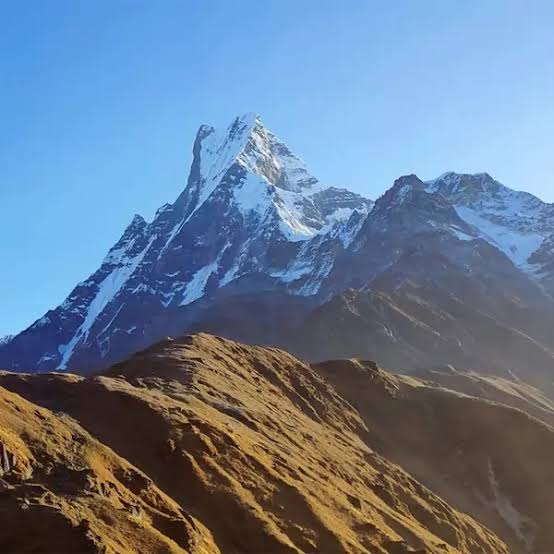
The environment changes abruptly upon reaching Forest Camp and pushing toward Low Camp. The tree line begins to thin, revealing the sheer drop-offs on either side of the ridge. The temperature drops, and the iconic Machhapuchhre (Fishtail) mountain dominates the northern skyline.
The most demanding segment involves the transition from Low Camp to High Camp. Trekkers navigate steep, rocky inclines exposed to the elements. The final push requires an early morning departure from High Camp to reach the upper viewpoint before the mid-morning clouds roll in. Standing at 4,200 meters, you are rewarded with an unobstructed, panoramic amphitheater featuring Annapurna South, Hiunchuli, and the towering face of Machhapuchhre, before beginning the long, careful descent back down the ridge.
Service Tiers and Logistics
We offer two structured tiers for this expedition. For those seeking luxury Mardi Himal trek packages, our Gold Tier provides upgraded comfort and dedicated logistical support throughout the journey.
| Service Element | Silver Tier | Gold Tier |
|---|---|---|
| Accommodation | Standard teahouse lodging throughout the trek. | Upgraded premium teahouse accommodation on the Mardi ridge where infrastructure permits. |
| Dietary Services | Three standard local meals daily from the teahouse menu. | Upgraded meal planning including fresh fruit, dietary accommodations, and unlimited hot beverages. |
| Guide & Support | Certified English-speaking mountain guide. | Senior expedition leader with private porter services for Nepal treks (one porter per trekker). |
| Communication | Shared access to satellite emergency dispatch. | Dedicated daily satellite pings to family, priority satellite phone access for urgent business communications. |
| Transportation | Private ground transport from Pokhara to the trailhead. | Luxury private transport from Pokhara, including all domestic flight arrangements from Kathmandu. |
About Mountain Tiger Nepal
Established in 2005, Mountain Tiger Nepal operates as a premier inbound Destination Management Company and logistics outfitter. We built our foundation on executing highly complex, remote expeditions that standard agencies cannot support. While we manage premium boutique experiences and accessible ridge routes, our core expertise lies in executing remote high-altitude camping treks in Nepal across restricted regions such as Upper Dolpa, Mustang, and the far-western Himalayas.
Beyond standard tourism, we serve as the primary logistics backbone for Himalayan documentary film production logistics. Moving heavy equipment, managing extensive base camps, and ensuring the safety of international crews in extreme environments has defined our operational standards for nearly two decades. Every trek we operate is executed with the same uncompromising commitment to precision, communication, and human safety.
