
Nepal's First Cantilever Bridge: En Route To Manaslu Circuit Trek
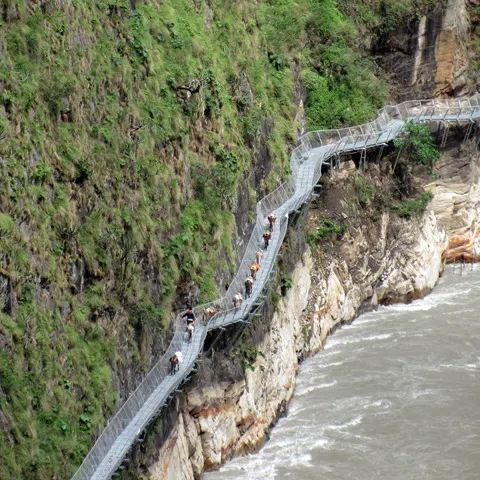
High in the mountains of Gorkha district, a bridge spans across the violent waters of the Budhigandaki River. The Gorkha Bridge, completed in June 2016, holds the distinction of being Nepal's first cantilever bridge, and it serves as a crucial link on the path to Manaslu, the world's eighth-highest mountain.
Where the Bridge Stands
The bridge sits at Yarubagar, connecting the villages of Sirdibas and Kerauja in Gorkha district. At 195 meters long (640 feet), this steel footbridge stretches across the Budhigandaki River, a waterway that has historically posed challenges for travelers in this remote region.
The location is strategic. The bridge at the Manaslu foot trail is the only pathway connecting the VDCs with the district headquarters, making it a lifeline for the communities in this mountainous area.
What Makes a Cantilever Bridge Special
A cantilever bridge differs from other bridge types in how it supports itself. Unlike suspension bridges that hang from cables or beam bridges that rest on supports at both ends, cantilever bridges extend outward from their supports using balanced structural elements called cantilevers. This design allows them to span long distances without needing support from the riverbed below, which is particularly useful in areas with fast-flowing rivers or unstable ground.
The 195-metre-long cantilever bridge was constructed by drilling the rocky cliff of Yarubagar, showing how this type of bridge can anchor directly into solid rock faces. The 35 ton steel structure shows how much engineering precision is required for cantilever construction.
Challenging Mountain Terrain
The bridge crosses terrain that has always been difficult to navigate. There used to be wooden bridges in Yarubagar but they were swept away by the flooded Budhigandaki river in 2014. The violent power of the mountain waters that flow from the Himalayas are no joke.
The area around the bridge is situated within the Budhigandaki Valley, where most of the trail follows a forested area. This is an uneven mountain region. Here, rivers carve gorges and seasonal floods can reshape the landscape overnight.
Communities That Depend on the Bridge
The bridge connects seven northern villages of Gorkha district, serving communities that have long struggled with isolation. Today, the pathway is busy with school children, mules and trekkers going up and down the Budi Gandaki Valley. These are the people who depend on this crossing: local families sending their children to school, traders moving goods with pack animals, and visitors exploring the region.
For the local population, this bridge connects them to services, markets, and opportunities that were previously difficult to reach, especially during monsoon seasons when rivers run high and dangerous.
The Route It Opens
The bridge also serves as a key section of the Manaslu Circuit Trek, one of Nepal's classic trekking routes. From here, you walk towards Yuri Bagar. Here, you can see the cantilever bridge which will take 20 minutes to reach, which shows us its importance for the main trekking path.

The cantilever bridge just crossing the Yaru Khola is one attraction of the day of Maccha Khola to Jagat day on the Manaslu trek, showing how it has become integrated into trekking itineraries.
Impact on Tourism
The bridge has transformed access to the Manaslu region for trekkers. Before its construction, river crossings posed significant challenges and sometimes forced route changes or delays. Now, trekkers can safely cross the Budhigandaki River year-round, making the Manaslu Circuit more reliable and accessible.
This improved access helps support local tourism economies. Trekkers bring income to local communities through guide services, porter employment, lodge stays, and meal purchases. The bridge ensures that this economic activity can continue even during challenging weather conditions.
However, the bridge has faced its own challenges. The cantilever bridge was destroyed by the landslide of Budigandaki in 2021, thereby disrupting the commute of locals through the bridge for three years. It finally came into operation in mid-June of 2024 after the much-needed repair. This temporary closure highlighted just how vital the bridge had become for both local communities and the trekking industry.
Engineering Achievement
It was constructed with the help of the Department for International Development, engineers from Switzerland, and 400 local workers. Yaru Bagar was completed in two months at a cost of Rs 38 million. This collaboration between international expertise and local labor created Nepal's first cantilever bridge, marking a milestone in the country's infrastructure development.
The success of this project has led to similar initiatives. The same team is now working to build the Tsum Valley steel pathway which is nearly complete, showing how this pioneering bridge has paved the way for other mountain infrastructure projects.
Today, the Gorkha Bridge serves as both a practical solution to a geographic challenge and a symbol of what can be achieved. If only Nepal didn’t have corruption to deal with from those who are the ones who control the financials and policy, then our country surely would have created many of such bridges to improve access in Nepal's remote mountain regions.
