
For decades, destination marketing has largely followed a familiar formula.
A country creates a beautiful campaign. A mountain appears on the screen. A temple follows. Then come smiling travellers, dramatic landscapes, local food and a final invitation:
Visit Nepal.
It works. Nepal is already one of the world's recognised mountain and adventure destinations.
But the way people discover travel is changing.
Travellers no longer necessarily begin with a country. Increasingly, they begin with an intention.
They search for a trek they want to walk. A village they want to stay in. A landscape they want to photograph. A food they want to taste. A cultural experience they want to understand. A trail that matches their fitness level. A short hike they can complete in four days. A route that is open during the month they are travelling.
That shift creates an important opportunity for Nepal.
Perhaps the next stage of Nepal's tourism growth is not simply to sell Nepal as a destination. It is to sell the thousands of journeys that make up Nepal.
At Mountain Tiger Nepal, we believe this is where destination marketing can become more specific, more useful and ultimately more connected to the traveller.
Video: Exploring Nepal's Diverse Landscapes by Mountain Tiger Nepal
Nepal's Tourism Story Is Moving Into a New Phase
The numbers show that international interest in Nepal has continued to recover.
Nepal recorded 777,672 international tourist arrivals between January and August 2026, compared with 736,562 during the same period in 2025, representing a 5.58% increase. March was the strongest month during the first eight months, with 120,516 arrivals. August recorded 85,444 visitors, slightly below August 2025.
The Nepal Tourism Board continues to publish monthly tourism insights and statistics, providing an increasingly useful data foundation for understanding visitor trends.
The important question, therefore, is no longer simply:
How do we bring people to Nepal?
A more useful question is:
Where in Nepal do we want those travellers to go, what do we want them to experience, and how do we help them find the right journey?
That is where route-based tourism becomes important.
From a Country on a Map to a Journey on the Ground
Imagine two travellers planning a trip to Nepal.
The first searches:
The second searches:
Both travellers are interested in Nepal.
But the second traveller has already started imagining the journey.
That distinction matters.
A country is a destination.
A route is an experience.
And experiences are often what travellers remember, photograph, share and eventually book.
1. Travellers Are Searching for Experiences, Not Just Countries
Travel discovery has become increasingly specific.
Someone interested in Nepal may not initially be looking for “a holiday in Nepal.”
They may be looking for:
- A Himalayan trek
- A mountain village
- A Buddhist pilgrimage
- A family-friendly hike
- A remote landscape
- A wildlife experience
- A cultural journey
- A photography expedition
- A wellness escape
- A short adventure from Kathmandu
- A multi-day teahouse trek
- A route suitable for first-time trekkers

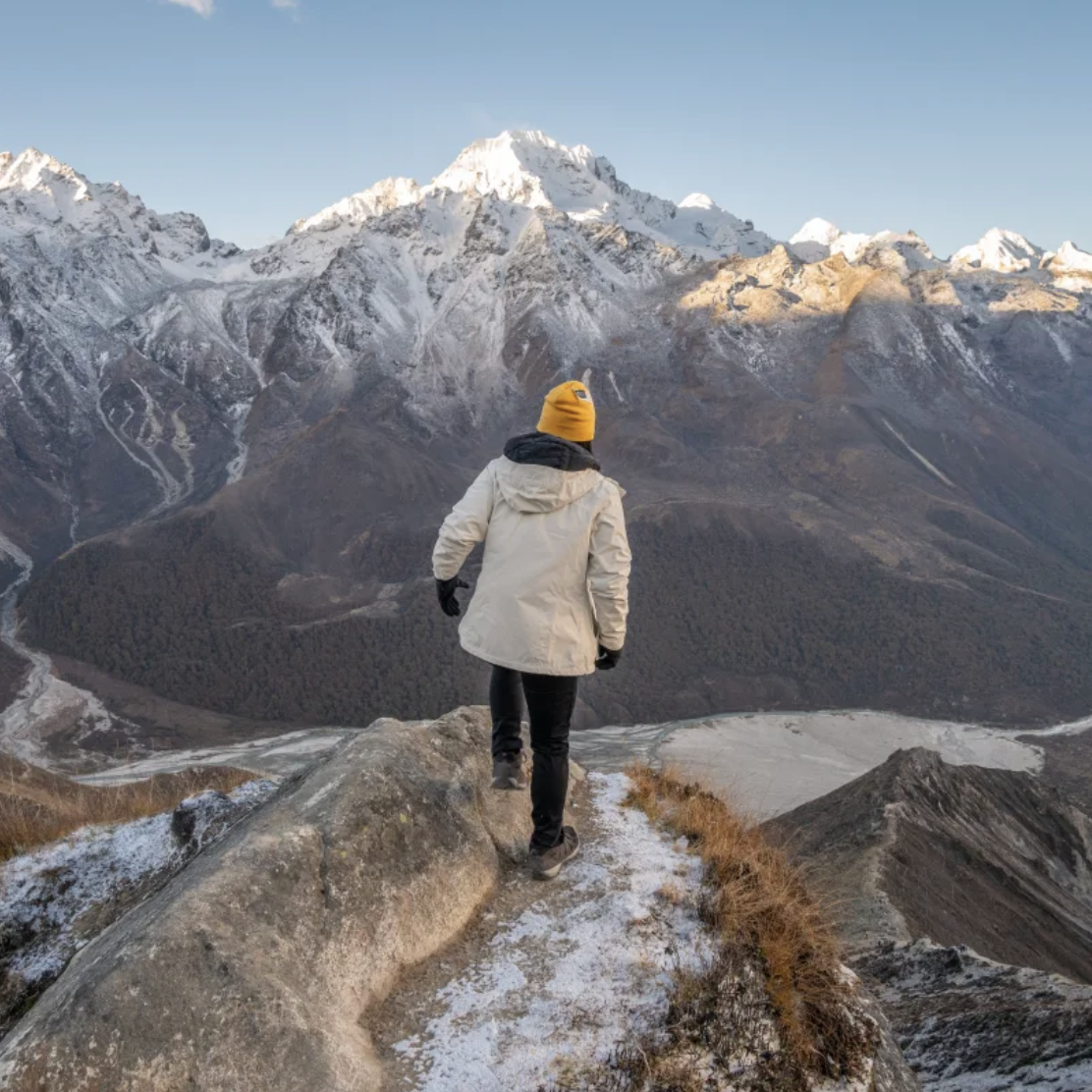
The majestic Annapurna foothills offer distinct, experience-driven routes.
The country provides the setting.
The route provides the reason to travel.
This is particularly relevant for Nepal because the country's geography naturally creates thousands of individual travel experiences.
The Kathmandu Valley is not one experience.
It contains ancient cities, temples, courtyards, local markets, heritage walks, monasteries, food experiences and surrounding hill trails.
Pokhara is not simply a destination.
It can be the starting point for Annapurna Base Camp, Ghorepani-Poon Hill, Mardi Himal, mountain-view hikes, cycling, rafting, paragliding and village experiences.
Mustang is not simply a region.
It can become a story about landscapes, Tibetan-influenced culture, ancient settlements, monasteries, caves, local food and journeys across one of Nepal's most distinctive high-altitude environments.
Manang is not simply a point on a map.
It is a sequence of villages, landscapes, passes, lodges, people and changing altitude.
The opportunity is to market the journey between the points, not only the points themselves.
2. “Name the Route” Could Become Nepal's Next Digital Strategy
There is an important difference between saying:
Come to Nepal.
and saying:
Walk the Annapurna foothills.
The first communicates a country.
The second creates an image.
You can imagine the trail.
You can imagine the villages.
You can imagine waking up to the mountains.
You can imagine walking from one settlement to another.
This is why route-based storytelling can be powerful.
Instead of one enormous digital conversation called “Nepal Tourism,” Nepal can create hundreds or thousands of smaller conversations around actual experiences.
For example:
Annapurna
- Annapurna Base Camp Trek
- Ghorepani-Poon Hill Trek
- Mardi Himal Trek
- Annapurna Circuit
- Lower Mustang
- Manang villages
Everest
- Everest Base Camp
- Gokyo Lakes
- Renjo La
- Everest View Trek
- Namche and Khumjung
- Tengboche
Kathmandu Valley
- Kathmandu heritage walks
- Bhaktapur cultural experiences
- Patan architecture
- Kirtipur village experiences
- Shivapuri hiking
- Nagarkot sunrise routes
- Godawari and surrounding hills
Mustang
- Jomsom
- Kagbeni
- Muktinath
- Marpha
- Lo Manthang
- Upper Mustang trekking routes
The list can continue far beyond the traditional tourism centres.
This is not about replacing Nepal's established destinations.
It is about giving each destination more stories to tell.
3. Route-Based Tourism Creates Better Content
One of the biggest advantages of selling routes is the amount of useful information that can be created around them.
Video: Heaven is a Myth; Nepal is Real by Mountain Tiger Nepal
A route naturally creates questions.
Where does it begin?
How long does it take?
What is the highest point?
Where do travellers stay?
What can they eat?
What villages do they pass?
What is the landscape like?
When is the best season?
How difficult is it?
What should they pack?
Can families do it?
Can beginners do it?
What happens if the weather changes?
What are the alternative routes?
These are not merely marketing questions.
They are traveller decision-making questions.
A strong route page can therefore become a complete information resource rather than a simple sales page.
4. Sell the Accommodation Along the Route
A traveller does not experience a trek as a collection of photographs.
They experience it one day at a time.
They wake up.
They walk.
They stop for tea.
They reach a village.
They meet a local family.
They check into a lodge.
They eat dinner.
They look outside.
Then they wake up and continue.
That means accommodation itself becomes part of the destination story.
Instead of simply writing:
route-based storytelling can explore:
- Where do you stay on the Annapurna Circuit?
- What are teahouses like along the Manaslu Circuit?
- Where can you stay around Mustang?
- What should travellers expect from mountain lodges at higher elevations?
- Which villages offer homestay experiences?
This approach also creates greater visibility for local accommodation providers and communities along the route.
Tourism becomes less concentrated around a few major cities and more connected to the communities travellers actually pass through.
5. Sell the Food Along the Route
Food is another example of how a route becomes a story.
Nepali cuisine is already attracting international attention, but travellers do not experience Nepalese food as an abstract category.
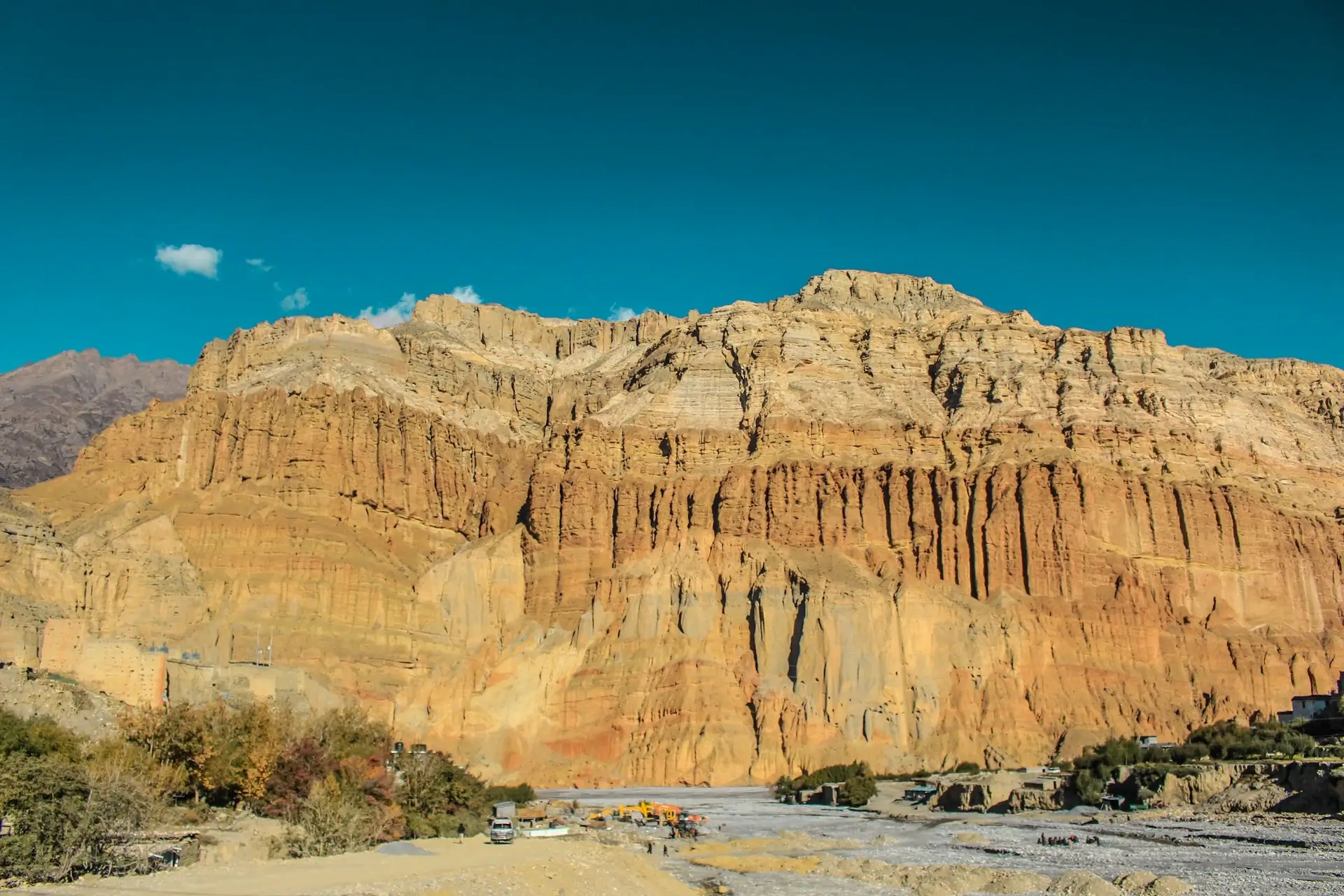
The distinctive arid landscapes of Mustang carry their own unique culinary traditions.
They experience it somewhere.
Maybe it is dal bhat after a long day of trekking.
Maybe it is momos in a mountain village.
Maybe it is Tibetan-influenced food in the high Himalayas.
Maybe it is butter tea.
Maybe it is fresh apples from the Mustang region.
Maybe it is a local meal prepared in a homestay.
That creates a completely different content opportunity.
Instead of:
we can create:
What to Eat on the Annapurna Circuit
or:
The Food Journey Through Mustang
or:
Where to Eat Around Kathmandu Before Your Trek
These are more specific questions, but they also bring the traveller closer to the actual experience.
6. Route-Specific Content Can Make Tourism More Inclusive
Route marketing does not have to mean promoting only long or difficult expeditions.
In fact, one of its biggest opportunities is to show that Nepal has journeys for different kinds of travellers.
Not everyone has two or three weeks for the Himalayas.
Not everyone wants to cross a high mountain pass.
Not everyone wants to climb a peak.
A route-based approach allows Nepal to communicate different levels of experience.
For the first-time visitor
Short hikes and cultural journeys.
For families
Comfortable walks, heritage experiences and accessible destinations.
For adventure travellers
Multi-day treks and mountain routes.
For experienced trekkers
High passes and remote trails.
For wellness travellers
Meditation, nature, yoga and quiet mountain stays.
For photographers
Landscapes, villages, architecture and changing Himalayan light.
For cultural travellers
Monasteries, heritage settlements, festivals and local communities.
7. Route Marketing Can Strengthen Nepal's Safety Communication
There is another reason this approach matters, particularly in an era when travellers receive information from dozens of different platforms.
A country is geographically large and diverse.
A disruption in one location does not automatically describe conditions everywhere else.
This is why route-level information can be more useful than broad statements.
For travellers, useful information should answer:
Where?
When?
What is affected?
What remains accessible?
What alternative exists?
When was this information last verified?
The Nepal Tourism Board itself established an information desk following the August 2026 Bhote Koshi and Trishuli flood, with tourism-sector representatives tasked with sharing verified information about affected tourists and tourism infrastructure.
That development illustrates a broader point:
In a crisis, accurate information needs geography attached to it.
“Something happened in Nepal” is not enough.
A traveller needs to know where it happened.
A trekking company needs to know which route is affected.
A booking platform needs to know which product requires an update.
A journalist needs to know what has actually changed.
And an AI system needs reliable, current sources from which to retrieve its information.
8. Route-Level Information Can Reduce Unnecessary Confusion
Imagine a traveller planning a trip to Nepal and reading that there has been a disruption somewhere in the country.
The immediate reaction may be:
But the more useful question is:
That distinction can fundamentally change how destination information is understood.
A future-oriented tourism information system could potentially show:
| Route | Status | Last Updated | Information |
|---|---|---|---|
| Route A | Open | Date | Normal operations |
| Route B | Limited | Date | Alternative access |
| Route C | Affected | Date | Temporary disruption |
| Route D | Closed | Date | Awaiting further update |
Clear route-level information provides peace of mind for trekkers on the ground.
The purpose is not to minimise genuine risks.
It is the opposite.
Better information allows travellers to understand genuine risk more accurately.
That is particularly important for a mountain destination.
9. Route-Based SEO Can Reach Travellers Earlier in Their Decision
There is also a major digital marketing opportunity.
“Travel to Nepal” is broad.
A traveller searching:
may still be dreaming.
But someone searching:
is asking a much more specific question.
Someone searching:
is already researching a particular experience.
Someone searching:
has moved even further into the planning process.
This is where long-tail content becomes valuable.
A route can generate an entire ecosystem of search topics:
- Route itinerary
- Route difficulty
- Route cost
- Route permits
- Route accommodation
- Route food
- Route weather
- Route packing list
- Route altitude
- Route transportation
- Route safety
- Route photography
- Route alternatives
- Route extensions
- Best season for the route
One route can therefore produce dozens of useful pieces of content.
And together, those pieces can become a much stronger digital presence than a single generic “Nepal tourism” page.
10. Routes Can Help Spread Tourism Beyond the Familiar Names
Nepal already has internationally recognised names.
Everest.
Annapurna.
Pokhara.
Kathmandu.
Chitwan.
Video: Month by Month Trekking in Nepal Guide by Mountain Tiger Nepal
They will remain important.
The opportunity is to use these recognised destinations as gateways to lesser-known experiences.
A traveller coming to Pokhara for Annapurna may discover a village experience.
A traveller visiting Kathmandu may add a hill hike.
A traveller travelling through Mustang may discover local food, monasteries and communities.
A traveller coming for Everest may explore Gokyo.
This creates a more connected tourism economy.
Instead of asking travellers to replace the famous destinations, we can encourage them to go one step further.
11. The Route Can Become the Product
This is perhaps the most important shift.
Traditionally, the product might be:
Nepal Tour – 10 Days
But what if the product becomes:
A Journey Through the Kathmandu Valley's Living Heritage
Or:
Seven Days Through the Annapurna Foothills
Or:
The Villages and Landscapes of Manang
Or:
Across the Mustang Landscape
Or:
The Himalayan Lakes of Gokyo
The second approach creates an emotional proposition.
It gives the traveller something to picture.
And it gives the operator something much more specific to design around.
12. This Is Where Local DMCs Become More Important
There is an interesting paradox in the digital age.
The more information travellers have, the more complicated planning can become.
A traveller may find:
- Five possible routes
- Ten different itineraries
- Multiple transportation options
- Different permit requirements
- Different hotel categories
- Conflicting weather information
- Different interpretations of difficulty
- Hundreds of social media videos
More information does not automatically mean better decisions.
This is where local destination management experience becomes important.
A DMC can connect the digital picture to the physical journey.
At Mountain Tiger Nepal, this means understanding the route beyond the itinerary.
It means considering transportation, accommodation, guides, permits, timing, local conditions and the practical details that determine whether an experience works on the ground.
13. Mountain Tiger Nepal: Building Journeys, Not Just Itineraries
For more than two decades, Mountain Tiger Nepal has been working with travellers, partners and tourism professionals to organise experiences across Nepal and the wider Himalayan region.
Our approach has always been centred on the journey itself.
An itinerary is not simply a list of hotels and destinations.
It is a sequence.
Kathmandu to the mountains.
The road to the trailhead.
The first village.
The first night in the mountains.
The changing landscape.
The higher altitude.
The people encountered along the way.
The moments that were never written into the original itinerary.
That is why route-based tourism fits naturally with the way we think about Nepal.
Whether a traveller is looking for a classic Himalayan trek, a shorter mountain escape, a cultural journey, a pilgrimage, a family experience or a more remote adventure, the starting point should be understanding what kind of journey they actually want.
From there, the route can be built around them.
14. The Future Could Be More Personal Than “Visit Nepal”
Imagine a traveller arriving at a Nepal tourism website and answering five simple questions:
How much time do you have?
How active do you want to be?
What kind of landscape interests you?
What kind of culture do you want to experience?
How remote do you want to go?
The website could then move from country-level inspiration to route-level discovery.
Instead of showing the traveller everything Nepal has to offer, it could show them the journeys most relevant to them.
For example:
You have 7 days.
You enjoy hiking but don't want extreme altitude.
You are interested in villages and mountain views.
Explore the Annapurna foothills.
Or:
You have 14 days.
You enjoy challenging trekking and remote landscapes.
Explore the Manaslu Circuit.
The technology may change.
The principle remains simple:
Match the traveller with the right journey.
15. From Destination Marketing to Destination Intelligence
This is where Nepal's opportunity becomes much bigger than marketing.
The future of tourism may require destinations to connect:
- Search data
- Traveller behaviour
- Route information
- Local conditions
- Accommodation
- Transport
- Safety information
- Real-time updates
- Local knowledge
- Content
into one connected ecosystem.
That would make Nepal not only easier to discover, but easier to understand.
And that distinction matters.
A destination that is easy to understand is easier to plan.
A destination that is easier to plan is easier to book.
And a destination that distributes travellers across more routes and communities can potentially distribute tourism's economic benefits more widely.
16. The Creator Economy Can Help Tell the Route Story
Nepal Tourism Board has already been engaging with travel creators around how Nepal's tourism story can be told more effectively. In August 2026, the Board brought together 35 travel video makers, vloggers and influencers and highlighted the need to showcase the “real Nepal,” including its people, culture and everyday experiences.
This is another reason routes matter.
A creator does not simply film a country.
They film a journey.
They show:
Day 1.
Day 2.
The road.
The village.
The food.
The people.
The climb.
The view.
The unexpected moment.
That narrative structure is naturally suited to route-based tourism.
Instead of asking creators only to promote Nepal, destinations can invite them to experience and document specific journeys.
That creates more useful content for future travellers.
17. Route-Based Tourism Can Support Local Communities
There is also a deeper economic reason to think beyond destination icons.
A traveller spending one night in Kathmandu contributes to one part of the tourism economy.
A traveller travelling through several villages may support:
- Local guides
- Porters
- Tea houses
- Homestays
- Restaurants
- Transport operators
- Local shops
- Farmers
- Artisans
- Community tourism initiatives
The longer and more geographically distributed the journey, the more points of economic interaction it can create.
This does not mean every route should be commercialised.
Quite the opposite.
Responsible route development requires attention to community capacity, environment, culture and infrastructure.
But where tourism is appropriate, better route discovery can help connect travellers with more local businesses.
18. The Opportunity Is Not to Replace the Nepal Brand
There is an important distinction here.
“Stop selling countries, start selling routes” does not mean Nepal should stop marketing Nepal.
The country brand remains essential.
Nepal is the umbrella.
The routes are the stories underneath it.
Nepal gives travellers recognition.
Everest creates aspiration.
Annapurna creates adventure.
Mustang creates curiosity.
Manang creates discovery.
Gokyo creates a specific experience.
A village trail creates connection.
The stronger strategy is therefore not:
Nepal OR routes.
It is:
Nepal THROUGH routes.
19. Nepal Has More Journeys Than the World Has Discovered
Perhaps this is Nepal's greatest tourism opportunity.
The country does not necessarily need to invent hundreds of new attractions.
It needs to tell more of the stories that already exist.
There are villages travellers have never heard of.
Trails they have never searched for.
Food they have never tasted.
Cultural traditions they have never encountered.
Landscapes that rarely appear in international campaigns.
Short hikes that can fit into a weekend.
Long routes that can occupy several weeks.
Pilgrimage journeys.
Wellness journeys.
Wildlife journeys.
Family journeys.
Photography journeys.
Cycling journeys.
Culinary journeys.
And mountain journeys.
The product already exists.
The opportunity is to make it discoverable.
So, What Should Nepal Sell Next?
Perhaps the question is not:
How do we get the world to visit Nepal?
The world already knows Nepal.
The next question is:
How do we help the world discover the right Nepal?
The Nepal of Everest.
The Nepal of Annapurna.
The Nepal of Mustang.
The Nepal of Manang.
The Nepal of quiet village trails.
The Nepal of monasteries.
The Nepal of local kitchens.
The Nepal of sunrise hikes.
The Nepal of long walks.
The Nepal of people and stories.
The Nepal that exists between the famous names.
This is where route-based tourism becomes more than a marketing strategy.
It becomes a way of distributing attention.
A way of distributing tourism.
A way of creating more specific information.
A way of improving traveller decision-making.
And potentially, a way of creating more meaningful connections between visitors and the communities they encounter.
The Next Chapter of Nepal Tourism
Nepal's tourism recovery is encouraging, but recovery should not simply mean returning to the way tourism was marketed before.
The industry has an opportunity to learn from the changes in traveller behaviour, digital discovery, artificial intelligence, creator media and the growing demand for more useful destination information.
The next generation of travellers may not ask:
“Why should I visit Nepal?”
They may ask:
“Which journey in Nepal is right for me?”
That is a much more interesting question.
And Nepal has thousands of answers.
At Mountain Tiger Nepal, we believe the future of Nepal travel is not only about bringing travellers to the country.
It is about helping them discover the journey that makes them want to come.
Stop selling the map.
Start selling the trail.
Start selling the village.
Start selling the experience.
Start selling the journey.
Because Nepal is not one destination.
It is thousands of journeys waiting to be discovered.
About Mountain Tiger Nepal
Mountain Tiger Nepal is a Nepal-based destination management company specialising in trekking, tours and adventure experiences across Nepal, Tibet and Bhutan. With long-standing experience in inbound tourism, our team works with travellers, international partners and travel professionals to design and operate journeys around individual interests, travel styles and routes.
From established Himalayan trails to cultural journeys and more remote experiences, our focus is on making the journey work from the ground up.
Explore Nepal with Mountain Tiger Nepal.
The 777,672 international visitor figure covers January–August 2026 and should not be interpreted as a full-year total or a guarantee of where the year will finish. The figure is based on monthly tourism statistics published through the Nepal Tourism Board's tourism-statistics resources.
For a corporate MTN article, I would not include the original “1.3–1.5 million projected visitors” statement unless we can identify and cite the specific forecast methodology and source. This makes the article more credible and keeps the focus on the strategic argument rather than an uncertain projection.
