
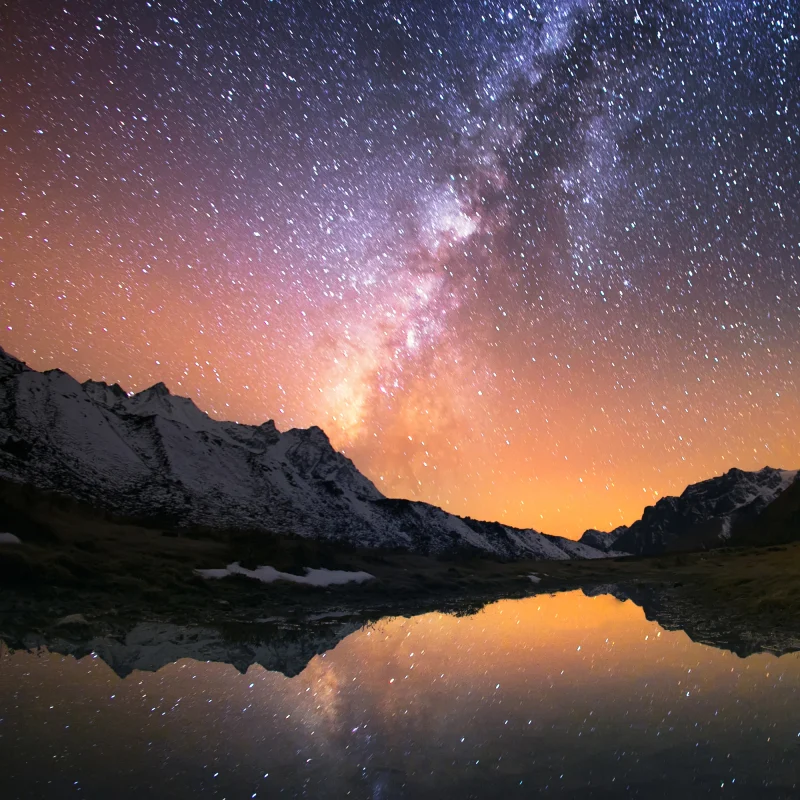
The Glacial Giants of Kanchenjunga
Nepal, Tibet, and India converge in a region of endless snow and ice, in the eastern Himalayas there lies the glaciers of Kanchenjunga, one of Earth's most spectacular mountain systems. Flowing from the world’s third-highest peak, these ice rivers sustain millions of people across South Asia.
The Glaciers of a Giant Mountain
The Kanchenjunga mountain, rising to 8,586 meters above sea level, contains some of the most important glacier systems in the eastern Himalayas. The largest among these is the Zemu Glacier, stretching at 26 kilometers through the heart of Kanchenjunga Biosphere Reserve. This massive ice river, along with the main Kanchenjunga Glacier on the Nepal side, forms part of a complex network of frozen tributaries that have been carving these mountains for thousands of years.
The glacier landscape here is breathtakingly diverse, featuring the primary ice flows and numerous smaller glaciers, including the Talung Glacier in the southeastern section of the region. These glaciers exist in a delicate balance, fed by the intense snowfall of the monsoons and shaped by the extreme slopes of one of the world's steepest mountain faces.
What makes Kanchenjunga's glacier system particularly fascinating is its position within the narrowest section of the Himalayas. This creates a unique climate where subtropical ecosystems at lower elevations change rapidly to cold mountain and snow zones. This compressed height gradient means that the glaciers here influence an extraordinary range of habitats within a relatively small area.
Rivers Born from Ice: The Water Source for Millions
The glaciers of Kanchenjunga are the primary creators of the region's river systems, serving as the source of some of South Asia's most important waterways. Most significantly, these glaciers feed into the Koshi River basin, one of the largest tributaries of the Ganges River. This makes the Kanchenjunga mountain system an integral part of the Ganges river network that provides water for hundreds of millions of people.
On the eastern side, the glacier meltwater creates the Teesta River, which has become increasingly important for hydroelectric power generation in Sikkim. The Teesta's flow patterns, directly influenced by glacier melt cycles, support a proposed 3,500 MW hydropower project, though currently only a 510 MW plant operates on the river due to the earthquake-prone nature of the region.
The Kanchenjunga Glacier itself drains westward into the Ghunsa River system, creating a complex chain of networks featuring smaller rivers that ultimately contribute to the broader Himalayan watershed. These rivers carry water and also the fertile sediments that have built the Indo-Gangetic plains over millions of years, making them crucial for agriculture across the subcontinent.
The seasonal rhythm of these glacier-fed rivers follows a pattern that came into existence for more than tens of thousands of years between winter snow accumulation and summer melt. During the warmer months, increased glacier runoff supplements monsoon precipitation, providing crucial water security during dry periods. However, this delicate balance faces increasing threats from changing climate patterns.
Supporting Life in Extreme Conditions
The glacier ecosystems of Kanchenjunga support an extraordinary range of life forms adapted to extreme conditions. The region falls within the Himalaya global biodiversity hotspot, where the presence of glaciers creates unique small-scale climates and habitats that support species found nowhere else on Earth.
The glacier valleys and rocky debris areas provide habitat for rare high-altitude plants, including numerous endemic rhododendron species, primulas, and medicinal plants that have been used by local communities for centuries. The gradual retreat of glaciers exposes new terrain, creating opportunities for pioneer plant species while simultaneously threatening established communities that depend on specific moisture and temperature conditions.
The wildlife of the region, from the ever-so elusive snow leopard to the Himalayan blue sheep, depends on the glacier watersheds for their survival. These animals have evolved migration patterns and feeding behaviors closely tied to the seasonal rhythms of glacier melt and the vegetation it supports. The complex food webs that exist in these high-altitude environments are particularly vulnerable to changes in glacier water flow.
Perhaps most remarkably, the glaciers themselves contain unique microbial communities adapted to extreme cold and high radiation. These tiny organisms contribute to glacier processes like rock weathering and nutrient cycling and represent potential sources for medical and technological applications.
The Climate Change Crisis
The glaciers of Kanchenjunga are experiencing some of the most rapid changes documented in the Himalayan range. Recent studies indicate alarming trends that speak to the broader crisis facing Himalayan glacier systems. The Kanchenjunga Glacier shows evidence of significant thinning, with mass loss rates of approximately 0.18 meters per year recorded between 1975 and 2010.
The warming trend across the Himalayas, ranging from 0.02 to 0.16°C per year, is particularly pronounced at high elevations where these glaciers exist. This warming is causing several concerning changes in the glacier landscape. The equilibrium line altitude (the elevation where snowfall equals melting) is moving progressively higher, reducing the area where glaciers can maintain themselves.
One of the most visible signs of glacier stress is the rapid expansion of supraglacial lakes. These are pools of meltwater that form on the surface of glaciers. These lakes indicate increased melting and accelerate the process by absorbing more solar radiation than the surrounding ice. Recent satellite imagery shows these features expanding rapidly across the Kanchenjunga glacier system.
The broader Himalayan region faces a dire prediction: up to 75 percent of glacier ice could disappear by 2100 under current warming scenarios. This would have catastrophic implications for the nearly 2 billion people who depend on Himalayan glacier water, including those downstream from Kanchenjunga's watersheds.
The Path Forward: Protection and Adaptation
Protecting the glaciers of Kanchenjunga requires a comprehensive approach that addresses both global climate drivers and local conservation needs. While the Kanchenjunga National Park in the Nepal side has not been recognized as a UNESCO World Heritage site, while the designation of Khangchendzonga National Park on the India side is a UNESCO World Heritage site which helps the world recognize the global importance of preserving this glacier ecosystem, but effective protection demands international cooperation on climate action.
Monitoring and research initiatives are crucial for understanding the complex dynamics of these glacier systems. Advanced satellite monitoring, ground-based measurements, and climate modeling provide the data needed to predict changes and develop adaptation strategies. The expansion of supraglacial ponds, changes in ice thickness, and shifts in seasonal melt patterns all require continuous observation.
Local communities must be central to conservation efforts, as they are both the most directly affected by glacier changes and the holders of invaluable traditional knowledge. Supporting sustainable tourism, alternative livelihoods, and community-based conservation initiatives can help maintain the human fabric of these mountain regions while protecting their natural heritage.
Regional cooperation between Nepal, India, and China is essential for managing cross-border glacier watersheds effectively. Water sharing agreements, joint monitoring programs, and coordinated climate adaptation strategies can help ensure that the benefits of glacier resources are shared equitably while their conservation is pursued collectively.
Time's Frozen River
The glaciers of Kanchenjunga are the frozen history of our planet's climate, the liquid future of billions of people, and the crystalline present of one of Earth's most remarkable ecosystems. As these ice rivers continue their retreat up the mountainsides, they gradually show us the warnings about our collective future.
The story of Kanchenjunga's glaciers is ultimately the story of our interconnected world. Changes in the high Himalayas ripple through river systems and affect agriculture in the Indo-Gangetic plains, which supports millions across India. These impacts extend further, influencing regional economies and contributing to global food security. As the seasonal rhythms of glacier melt shape the movements of snow leopards and the flow of rivers, they also shape human lives far downstream.
In protecting these glacier systems, we protect ice and water, and the complex web of relationships that sustain life across the Asian subcontinent. The glaciers of Kanchenjunga call us to action as stewards of the extraordinary legacy they represent and the uncertain future they help shape.
