
The Himalayan Time Capsule: 500-Year-Old Salt Trade Routes Still in Use
A Trail Through Time
In the high Himalayas, trade routes established centuries ago are still used today. These are narrow trails, carved into the mountains by generations of traders and herders. They continue to support local life in ways that modern infrastructure hasn’t fully replaced.
Today’s world runs on highways, airports, and shipping networks. But in parts of the Himalayas, old salt trade routes still matter. They connect communities, support seasonal livelihoods, and help preserve a shared way of life shaped by terrain and tradition.
Fun Fact: Table salt, or sodium chloride (NaCl), is made from a 1:1 combination of sodium (Na) and chloride (Cl). It naturally occurs in seawater, salt lakes, and mineral deposits, and it can also be produced in labs through chemical reactions. During the Tibet–Nepal salt trade, the most common type of salt was coarse, unrefined rock salt extracted from salt lakes on the Tibetan Plateau. This salt often had a grayish or pinkish tint due to the presence of natural minerals. While salt is important for nerve function and hydration, the body only needs a small amount. Most people get enough sodium from everyday foods like bread, dairy, and vegetables. Adding more salt on top of that can lead to health problems such as hypertension, so it's best to season with care.
How the Salt Trade Started
The salt trade began more than 500 years ago. Tibet had natural salt deposits but lacked food crops. Nepal’s mid-hills and plains produced rice and grains but needed salt. This difference in resources led to a long-standing trade system between the regions.
Salt was essential. People used it to preserve food, perform rituals, and maintain health. Salt from Tibet was valuable in everyday life, but it also held spiritual importance. Traders moved it along high mountain passes, exchanging it for food, textiles, and other goods. The trade created a seasonal rhythm that connected isolated communities during the warmer months when the passes were open.
The Routes and the People
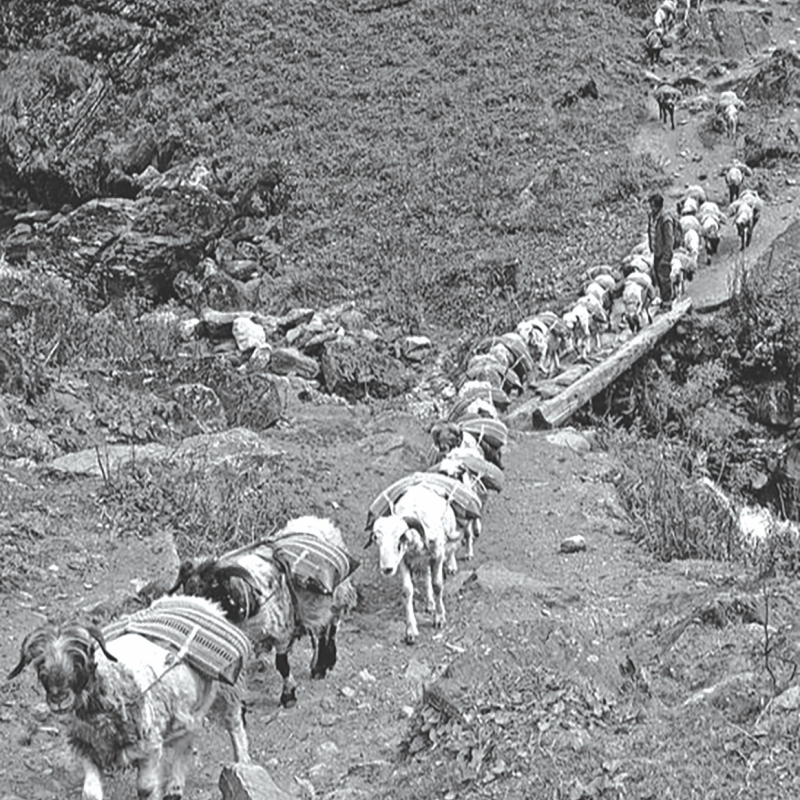
Several key trade routes passed through regions like Mustang, Humla, and Dolpo. Groups such as the Thakali, Tamang, and Sherpa led these journeys. They organized caravans of yaks, dzos, and mules to carry goods across rugged terrain. Success required knowledge of weather, safe pathways, and trading customs.
Along these routes, traders stayed at inns and resting points. These spaces became hubs for sharing news, negotiating deals, and building trust between communities. The trade supported economic exchange, but it also helped maintain long-distance relationships in the mountains.
Changes Over Time
In the 20th century, factory-made salt and new roads made traditional trade less necessary. Salt became cheaper and easier to transport. Many of the old caravan routes became less active. Political changes, especially in Tibet, also disrupted the movement of goods and people.
Even so, the trails weren’t abandoned completely. In many areas, people kept using them to trade local products, migrate with livestock, and collect seasonal herbs. These routes continued to serve practical needs even after the salt trade declined.
Salt Trails Today
Today, some families still organize small salt trading trips, especially in remote areas. Industrial salt is more common, but reaching remote villages by road is expensive. In these places, local salt sources are still important. Some communities maintain the caravan tradition as part of cultural identity and seasonal income.
These trails are also used for other reasons. Herders use them to move between pastures. Healers follow them to collect medicinal plants. Trekkers visit the region and walk along the same routes once used by salt traders. This movement keeps the paths relevant.
In areas like Mustang, tourism has given new life to the trails. Local people run lodges, guide services, and cultural programs. Some even organize short caravan journeys to show visitors what salt trading looked like in the past. These activities support the local economy while keeping the knowledge alive.
Echoes on the Wind
The Himalayan salt trade routes still serve the communities they once built. Their value has shifted, but the paths remain active. They support herding, travel, and tourism. They also keep cultural knowledge in circulation.
These trails show that older systems can still be useful, especially in places where new infrastructure is limited. They are part of a living landscape that continues to adapt. People still walk them for reasons that are practical, seasonal, and cultural.
The salt may no longer travel in large caravans, but the trails remain. They carry stories, shape identities, and connect generations. In places where the past is still part of daily life, these ancient trade routes continue to matter.
