
The Black Stones of Muktinath: The Mind-Bending Science Behind Shaligrams
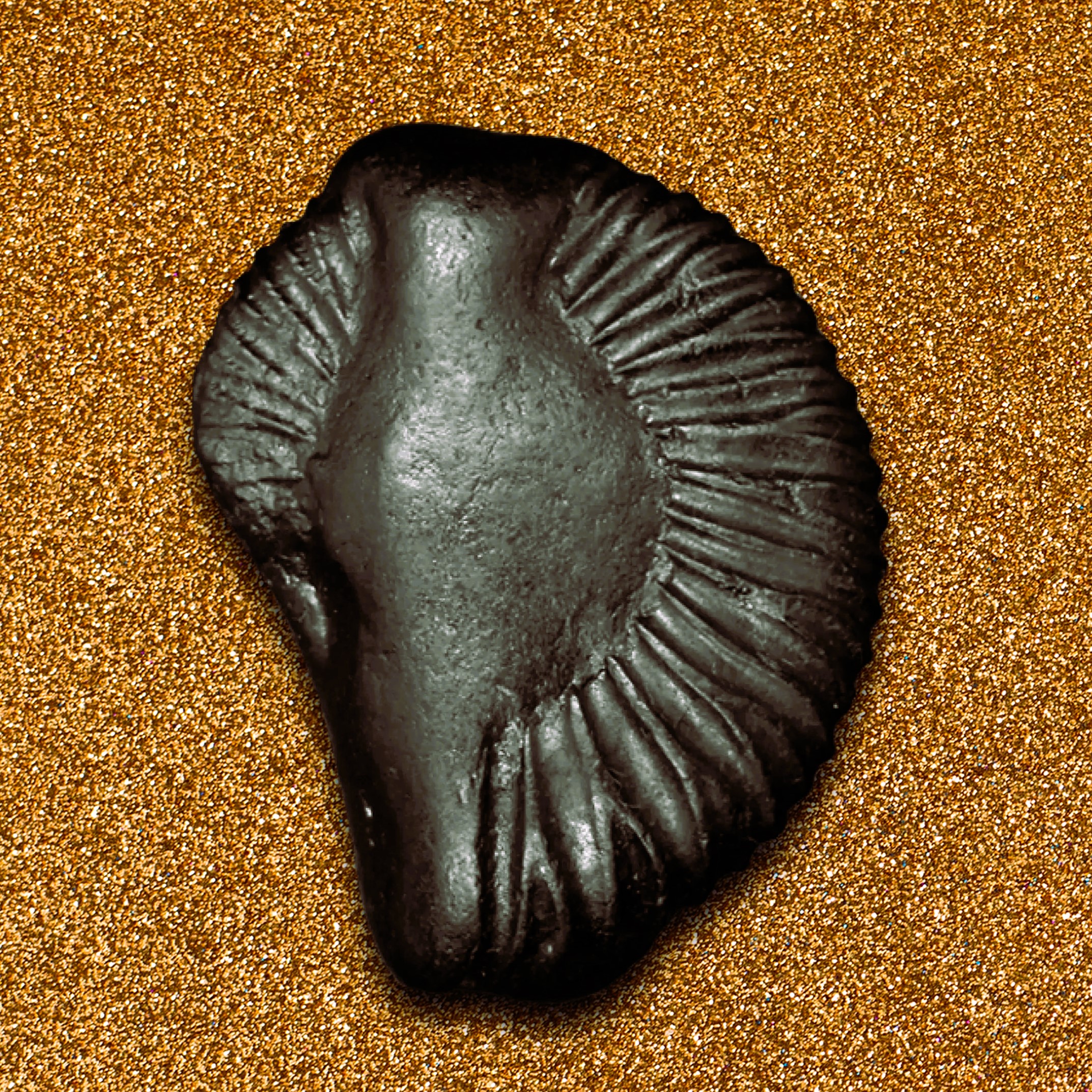
For millennia, pilgrims evaluating the brutal trails to the sacred shrine of Muktinath have kept their eyes cast downward, searching the crashing waters of the Kali Gandaki River. They seek the Shaligram—smooth, heavy, midnight-black stones that hold within them perfect, enigmatic geometric spirals. To the faithful, these are not mere rocks; they are the direct, unmapped manifestation of Lord Vishnu, the Preserver of the Universe.
But when modern geology steps into this high-altitude theater, the story takes a turn that is arguably even more miraculous than the myth. These sacred icons, found at over 3,000 meters above sea level in the freezing rain shadow of the Himalayas, are actually the preserved remains of prehistoric marine creatures. How did creatures from the bottom of a tropical ocean end up resting on the roof of the world? The answer lies in an epic planetary collision and millions of years of chemical alchemy.
1. The Mythology: The Curse of Tulsi
To fully grasp the magic of the Shaligram, one must first look through the lens of ancient Vedic lore. According to Hindu text, the righteous goddess Tulsi cursed Lord Vishnu out of a profound sense of betrayal, commanding him to lose his divine anthropomorphic form and transform into a cold, unyielding black stone found only along the banks of the Kali Gandaki.
Consenting to her rage, Vishnu assumed this geological form, proclaiming that the markings on the stones would mirror his divine symbols. The golden or dark spiral ridges inside the stones are viewed as his *Sudarshana Chakra*—the cosmic discus that slice through ignorance and evil. For generations, these stones have been treated as living deities, passed down as sacred family heirlooms that require no formal temple consecration.
Anatomy of a Sacred Nodule
Click the interactive nodes on this authentic Shaligram specimen to analyze its composition:
2. The Science: The Lost Tethys Ocean
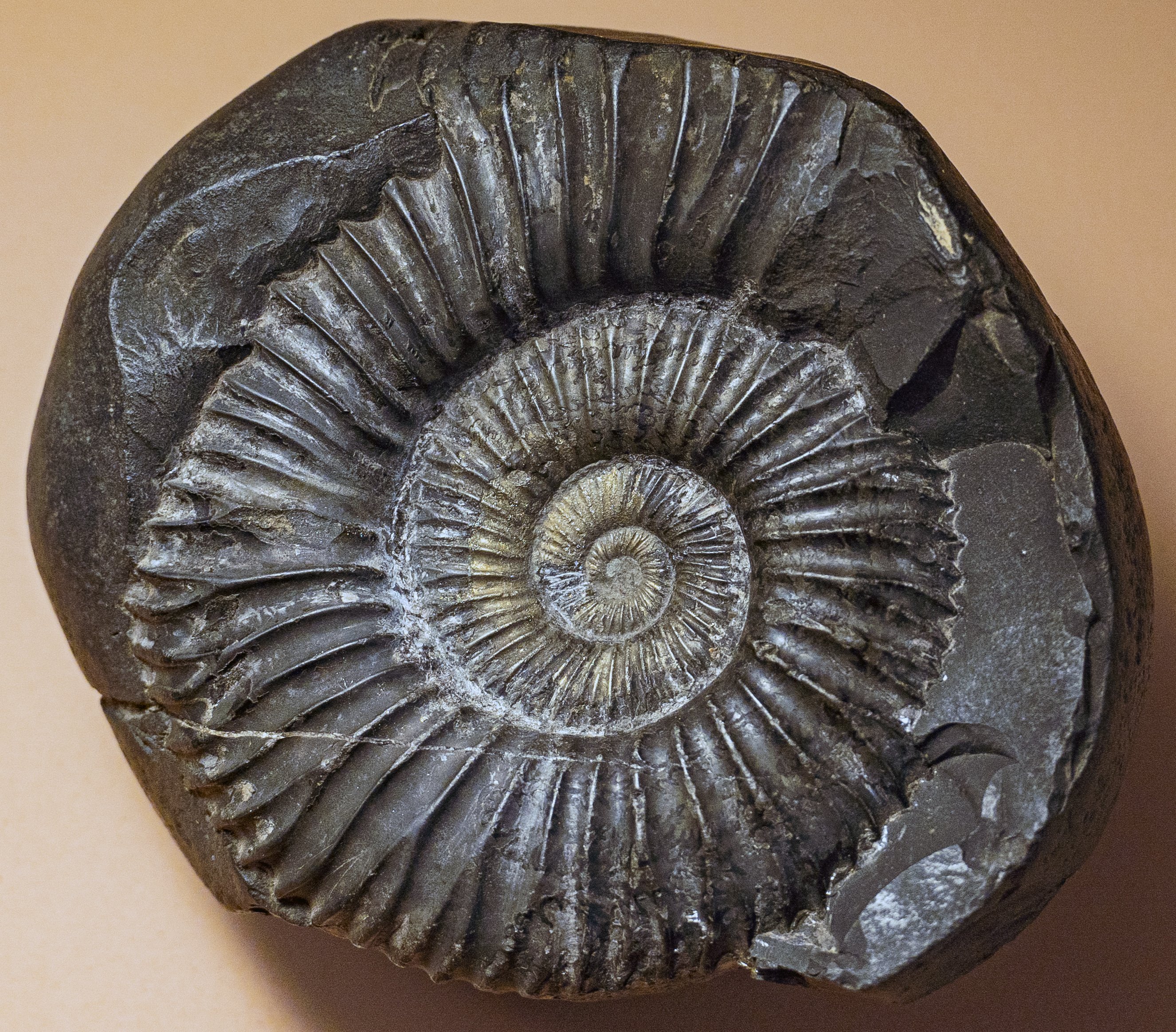
When geologists crack open a Shaligram nodule, they don't find divine flesh—they find the exquisite fossilized shells of **Ammonites**, extinct predatory marine mollusks that dominated the seas during the Jurassic and Cretaceous periods, roughly $$140 \text{ to } 165 \text{ million years ago}$$.
Long before Asia and India existed in their current configuration, a vast, warm, tropical sea known as the **Tethys Ocean** separated the two massive supercontinents of Gondwana and Laurasia. The ancient ancestors of modern squids and octopuses floated effortlessly through these currents, growing rigid, coiled chambered shells of calcium carbonate to shield themselves from predators.
The Chemistry of Preservation
When these ammonites died, their soft bodies decomposed, leaving their empty shells to sink into the thick, dark layer of anaerobic silt at the bottom of the sea floor. Over eons, compressed layers of mud stacked on top of them, initiating a process known as **permineralization**. Rich mineral fluids seeped through the porous shell walls, slowly exchanging the organic matter with hard iron-stone minerals, shale, and occasionally iron disulfide ($$FeS_2$$), creating beautiful metallic golden flecks of fool's gold across the stone chambers.
The Ultimate Tectonic Lift: Around $$50 \text{ million years ago}$$, the Indian tectonic plate crashed violently into the Eurasian plate. The immense force of this ongoing collision buckled and folded the ancient ocean floor, pushing it skyward to form the towering peaks of the Himalayas. The Kali Gandaki gorge—the deepest canyon on Earth—was carved directly through this rising seafloor, exposing the fossil-rich layers of the Spiti Shale and washing the 140-million-year-old marine creatures directly into the mountain streams.
3. Comparing the Dual Realities
The juxtaposition between spiritual devotion and geological history creates an extraordinary dialogue. Far from contradicting one another, science and mythology both emphasize that these stones capture a snapshot of absolute cosmic transformation.
| Attribute | The Spiritual Perspective | The Geological Reality |
|---|---|---|
| True Identity | Direct avatar of Lord Vishnu | Fossilized shells of extinct Ammonites |
| Age of Origin | Timeless / Satya Yuga era | Late Jurassic to Early Cretaceous (~140M years) |
| The Core Spiral | The divine *Sudarshana Chakra* | Logarithmic Growth Chambers (*Phragmocone*) |
| Golden Inclusions | Traces of divine energy (*Hiranyagarbha*) | Pyritization via Iron Disulfide ($$FeS_2$$) crystals |
Hunting for Fossils Safely and Respectfully
Trekking along the riverbed towards Muktinath is a profound sensory experience. The air is thinning, the wind howling down from the Tibetan plateau is crisp, and every stone you turn over could be a vessel of prehistoric history. While finding your own Shaligram is exhilarating, travelers are highly encouraged to treat the environment and local traditions with deep reverence—many specific archetype variations are highly protected by local indigenous communities and monasteries.
Embark on the Sacred Quest with Mountain Tiger Nepal
Are you eager to touch the ancient sea floor at the top of the world, explore the sacred natural eternal flames of Muktinath, and scan the rushing waters for your own piece of prehistoric history? Let our master guides navigate your ultimate high-altitude adventure.
Travel in ultimate comfort up the rugged Kali Gandaki gorge to the holy temples of Muktinath, with dedicated fossil-hunting excursions led by local cultural experts.
Challenge yourself against the legendary Thorong La Pass, descending directly into the ancient mystical valleys where the sacred black stones rest.
🎮 Geological Era Decoder
Can you guess the code words to align the tectonic plates and extract the fossil safely?
