
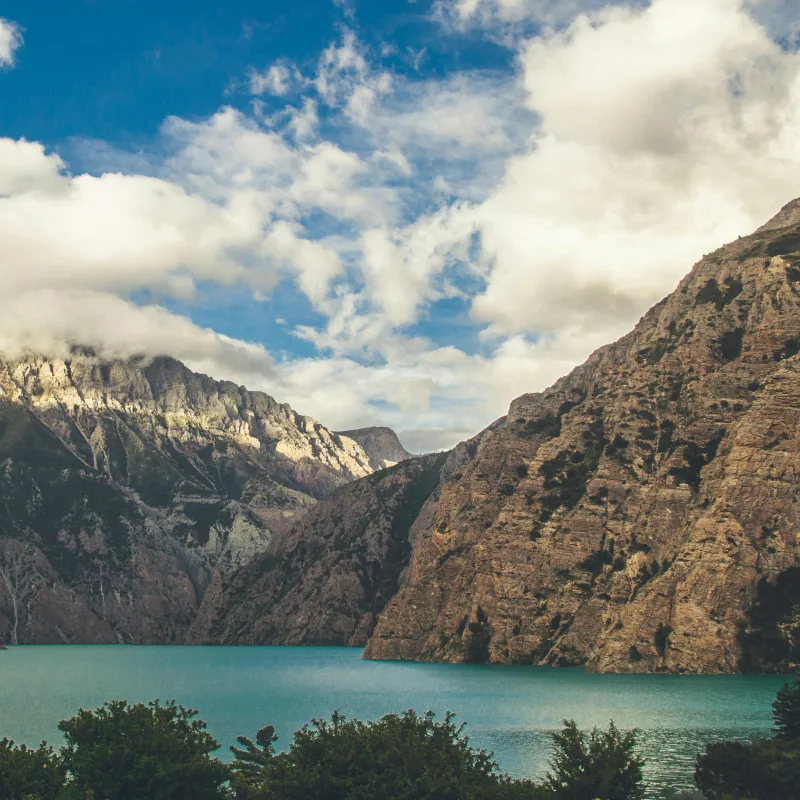
The Sky Mirror Lakes of Nepal
Nepal wedges itself between the Himalayas and the Terai plains. Eight of the world's fourteen highest peaks known as the eight-thousanders rise from this kingdom the size of Illinois. Medieval temples and traditions define the cultural landscape, but Nepal's true potential lies higher up with the lap of the great Himalayas and with the lakes that mirror these sky touching mountains.
These oligotrophic lakes sit scattered across these himalayan terrain like dropped coins. Just so you know, they hold more than reflections of clouds and peaks. They connect culture and nature, earth and sky. They tell tales of our changing planet.
From Tilicho at nearly 5,000 meters to Gosaikunda's sacred pools, six high-altitude lakes showcase Nepal's wilderness. Their stories live in glacial melt and monsoon rains, in yak paths and prayers, in the silence above the clouds.
1. Tilicho Lake
Tilicho Lake sits at 4,919 meters. Even experienced mountaineers approach it with respect. This glacial lake in the Annapurna region claims the title of one of the world's highest lakes.
The journey to Tilicho Lake starts with a detour from the Annapurna Circuit at Manang. Here, acclimatization stops being optional. The trail cuts through alien terrain: bare moraines and ridges, valleys carved by ancient glaciers. The air thins. The landscape hardens. Then Tilicho appears, a sapphire set in ice and stone.
The lake fills a natural bowl formed by Tilicho Peak, Nilgiri, and Khangsar Kang. Glacial melt feeds its blue-green waters. The color shifts with light and weather. In early morning stillness, the surface of Tilicho becomes a perfect mirror, reflecting sky and mountains in equal measure.
2. Gokyo Lakes System
Six lakes lie in a high valley beneath Cho Oyu, the world's sixth-highest peak. The Gokyo Lakes system spans 4,700 to 5,000 meters. These glacial lakes offer an alternative to crowded Everest Base Camp routes while delivering equal mountain drama.
The trail follows ancient trading paths through the Dudh Kosi valley. Sherpa villages dot the route, stone houses clustered around Buddhist monasteries. Prayer flags flap in mountain winds. At Namche Bazaar, the path splits from the main Everest route, following the Dudh Kosi River toward the quieter Gokyo Valley.
During the trek to Gokyo Lakes, you can see the landscape transform as you climb. Rhododendron forests give way to alpine forest. Vegetation thins to hardy grasses and cushion plants clinging to rocks. Distant peaks move closer until they dominate the horizon. The first Gokyo Lake appears, and the lower world disappears.
Glaciers created these lakes over millennia where glaciers carved natural basins from the bedrock. The largest, Dudh Pokhari, stretches nearly a kilometer. Its turquoise color comes from glacial flour, rock particles ground fine by glacial action and suspended in water.
Gokyo Ri provides the trek's climax. This 5,357-meter peak offers panoramic views of four of the world's highest mountains: Mount Everest, Lhotse, Makalu, and Cho Oyu.
3. Rara Lake
Rara Lake, also locally known as Mahendra Tal, sits at an altitude 2,990 meters in Nepal's far-western region. Tourist trails fade here into old migration routes. Nepal's largest lake is surrounded by lush coniferous forests.
The trekking trail is mostly within the confinement of the Rara National Park, Nepal's smallest but most biologically diverse park. Forests of blue pine, spruce, and fir filter high-altitude sunlight into patterns on the forest floor. Rhododendron groves explode in blooms, painting hillsides red, pink, and white during the spring season.
The lake measures 10.8 square kilometers and reaches depths of 167 meters. Multiple small streams feed it, but no visible outlet exists. Water disappears underground through porous rock. This creates a stable ecosystem supporting diverse aquatic life.
Wildlife thrives in Rara National Park. Red pandas, while in small numbers, inhabit the forest canopy. Musk deer graze below them and snow trout populate the lake. Shores attract birds including the Himalayan monal, Nepal's national bird, whose iridescent feathers catch the sunlight giving them a striking blue plumage.
4. Phoksundo Lake
Phoksundo Lake sits at 3,611 meters in the Dolpo region's rain shadow. The landscape here mirrors the Tibetan plateau. This body of water appears so azure it seems to hold the captured sky. Sacred traditions and natural wonder combine at this remote lake.
The journey to Shey-Phoksundo starts with a flight to Juphal, a mountain airstrip serving as Lower Dolpo's gateway. Ancient trade routes connect Nepal's highlands with Tibet, followed for over a millennium. The path winds through timeless landscapes: bare hills carved by wind and water, Buddhist monasteries clinging to cliffs, villages where Tibetan life continues unchanged.
The lake measures 4.94 square kilometers and reaches depths of 145 meters. Glacial melt feeds its famous deep blue waters year-round. Exceptional depth and mineral content create the distinctive azure colour.
Phoksundo holds sacred status in Bon Buddhist and Hindu traditions. Nearby Ringmo village centers on Bon practice, an ancient Tibetan religion predating Buddhism. Villagers maintain traditions including prohibitions against removing anything from the lake. This custom helps preserve its pristine state.
Shey Phoksundo National Park protects 3,555 square kilometers of trans-Himalayan ecosystem. Rare wildlife flourishes: snow leopards, blue sheep, Tibetan wolves. Elevation ranges from 2,130 to over 6,000 meters, creating habitat diversity from subtropical to alpine.
5. Gosaikunda Lake
Gosaikunda Lake sits at 4,380 meters in the Langtang region. Himalayan peaks rise like spires around this sacred water. This glacial lake serves as one of Hinduism's most important pilgrimage sites, drawing both pilgrims and trekkers.
Multiple routes approach Gosaikunda, but most start in Dhunche, the Langtang region's gateway town. The trail follows the Trisuli River valley before turning north into Langtang National Park. The landscape transforms from subtropical to alpine with each elevation gain, revealing new mountain views.
The Tamang people, descendants of Tibetan traders, maintain the cultural landscape. Their villages synchronize with the mountain environment. Stone houses with slate roofs cluster around Buddhist monasteries. Prayer flags flutter from rooftops, constant reminders of spiritual significance.
Above the treeline, the journey's character changes. Rhododendron forests yield to hardy grasses and cushion plants on rocky slopes. Air thins and crisps. Distant peaks move closer, dominating the horizon with snow-covered summits and glaciated faces.
Hindu mythology saturates Gosaikunda. Legend tells of Lord Shiva striking his trident into the mountainside, creating a water source to cool his throat after drinking poison to save the world. This origin story made the lake sacred to Hindu pilgrims, who believe August bathing during Janai Purnima festival cleanses sins and brings fortune. The annual pilgrimage creates a remarkable cultural event. Thousands of pilgrims, from children to elderly devotees, make the challenging journey during the festival period.
6. Khayer Lake
Khayer Lake, situated at approximately 4,660 meters in Nepal's Annapurna region, is scientifically characterized as a high-altitude alpine lake. Its primary water source is glacial melt and snow, contributing to extremely cold temperatures and low dissolved nutrient concentrations. Such harsh conditions limit complex aquatic ecosystems.
The Khayer Lake trek has started to flourish quite recently. Khayer Lake trek offers breathtaking vistas of mountains and their distinctive faces from a unique direction. Trekkers have lauded it as one of the finest viewpoints in western Nepal. Know that, specific research on its precise limnological parameters and any endemic microbial life is less publicly available compared to more accessible lakes.
Mirrors of the Mountain
These six lakes transcend photography destinations or adventure challenges. They preserve Nepal's natural heritage, connect physical and spiritual realms, and reflect broader Himalayan changes.
Each lake has their own unique stories in geological, ecological, and cultural languages. These diverse experiences suit different travelers. Less-experienced trekkers find reward in gentler approaches to Rara Lake. Seasoned mountaineers test skills on demanding Tilicho routes. Pilgrims visit with timing the religious festivals. Wildlife observers focus on national park biodiversity.
These environments face increasing pressures from climate change, growing tourism, and local economic needs. Retreating glaciers feeding these lakes potentially alter water levels and ecosystem dynamics. Tourism provides economic benefits to local communities but risks environmental degradation without proper management.
Responsible travel becomes essential when visiting sacred and protected areas. This means traveling with reputable operators supporting local communities, following Leave No Trace principles, respecting cultural traditions and religious customs, and supporting conservation through park fees and responsible spending.
As mirrors of sky and mountain, these lakes reflect Himalayan grandeur and spiritual aspirations of people who consider them sacred. They remind us that the world's most beautiful places require effort to reach, respect to preserve, and humility to appreciate. In their waters, we glimpse our own reflection and a world where nature and culture exist in balance.
