

The Untold Story of Kirati Sacred Trails in Eastern Nepal
Introduction: A Trail System Older Than the Himalaya Myths
Eastern Nepal is a land whispered about in folklore a tapestry of emerald hills, cloud forests, ancient stone cairns, and sacred sites that predate written history. Yet hidden within this untouched landscape lies a cultural highway far older and richer than most travelers ever encounter: the Kirati Sacred Trails.
These trails are not simply walking paths, they are ancestral routes carved by the Kirati people, one of Nepal’s oldest Indigenous communities whose heritage stretches back thousands of years. The Kirati world is woven with animism, nature worship, shamanic traditions, and a spiritual connection to mountains, rivers, forests, and unseen forces of nature. Each trail carries the memory of hunters, warriors, shamans, and pilgrims who walked these paths long before Nepal existed as a nation.
Today, these sacred routes remain remarkably intact, isolated from mass tourism, preserved by local guardians, and enriched with living rituals. The Kirati Sacred Trails are not just treks; they are time portals into the spiritual origins of the Himalaya.
Who Are the Kirati? A Civilization Rooted in Nature
The Kirati (also known as Kirat or Kiranti) are an ancient Himalayan Indigenous community said to descend from the early rulers of Kathmandu Valley and the highlands of Eastern Nepal. Their history intertwines with legendary figures like:
- Yalambar, the first Kirati king
- Sumnima and Paruhang, the primordial mother-father deities
- Tagera Ningwaphuma, the supreme sky god
- Mundhum, their ancient oral scripture and cosmic guide
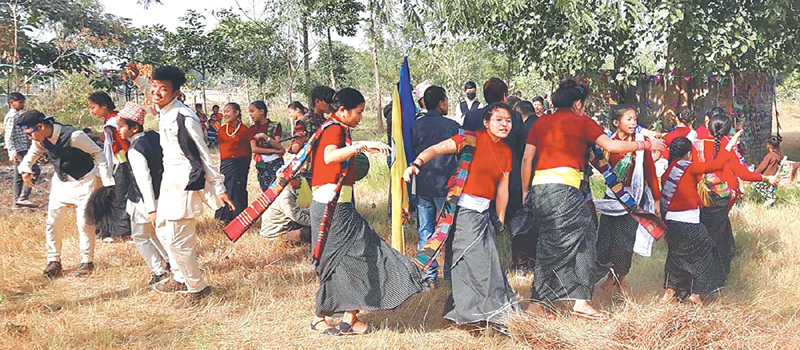
Kirati culture is deeply spiritual, animistic, and ecologically aligned. Every forest, waterfall, hilltop, and cave is believed to be alive with spirits, ancestors, and protectors guiding the land. Walking the Kirati Sacred Trails is walking through an open-air museum of living mythology.
Where Are the Kirati Sacred Trails?
These mystical trails stretch across the eastern mid-hills, covering:
- Limbu heartlands like Panchthar, Taplejung, Dhankuta, Terhathum
- Rai regions such as Bhojpur, Khotang, Okhaldhunga, Solukhumbu
- Remote spiritual pockets like Salpa Pokhari, Silichung Peak, and Pathivara ridges
Each area guards its own rituals, forest shrines, shamanic grounds, and sacred lakes—yet all are connected through the shared Kirati cosmology.
The Sacred Sites Hidden Along the Trails
1. Salpa Pokhari – The Lake of Spirits
Perched at 3,500m, this shimmering alpine lake is a powerful pilgrimage site for both Kirati shamans and Buddhist monks. During full moons, shamans arrive for trance rituals, ancestral offerings, and spiritual cleansing ceremonies. The energy here is unmatched still, silent, and otherworldly.

2. Silichung Peak – The Watchtower of the Ancestors
One of the holiest Kirati summits, Silichung is believed to be the vantage point where ancient shamans communicated with the skies. Its ridgelines are dotted with long-forgotten stone altars, prayer flags, and forest shrines that predate organized religion in Nepal.

3. Temke Danda – The First Sunrise of Eastern Nepal
Temke Danda is both a pilgrimage and a natural viewpoint. Locals believe it was once a gathering point of Kirati clans for solstice ceremonies and nature-worship rituals that honored the rising sun.
4. Pathivara Ridge – A Mystical Convergence of Faiths
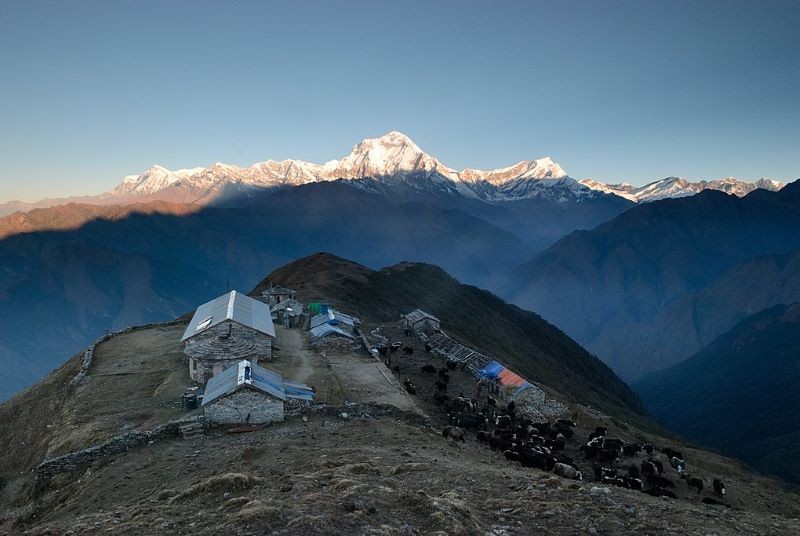
While widely known as a Hindu-Buddhist pilgrimage, the Pathivara region holds older Kirati shrines in the surrounding forests often overlooked yet spiritually potent, honoring ancestral mother deities and nature spirits.
5. Chintang and Jalpadevi – Cradles of Kirati Ritual Culture
These sites preserve ancient Kirati rituals such as Nakchhong shamanism, fire ceremonies, forest offerings, and the worship of Sumnima–Paruhang. Visitors witness a culture living in its purest form.
What Makes the Kirati Sacred Trails Unique?
A Living Spiritual Landscape
Unlike popular trekking routes, these trails are not commercial—they are spiritual arteries where rituals, ancestral myths, and oral histories are still practiced daily.
Zero Crowds, Pure Wilderness
You walk through untouched forests, quiet villages, and serene ridgelines that remain outside the mainstream tourism map.
Immersive Cultural Encounters
Travelers can witness shamanic ceremonies, folklore performances, and age-old celebrations like Sakela, Nwagi, and Udhauli–Ubhali.
Ethical & Community Support
Visiting these trails uplifts Indigenous communities, supports cultural preservation, and enables sustainable tourism development.
A Sample Journey Along the Kirati Sacred Trails
A typical experience might include:
- Hiking to Salpa Pokhari with local guides
- Viewing the first light from Temke Danda
- Attending a village Sakela dance festival
- Meeting Nakchhong shamans and learning about healing practices
- Trekking forest ridges filled with ancient cairns and stone altars
- Visiting hidden waterfalls and sacred caves linked to Kirati mythology
This is Himalayan travel in its most authentic, untouched, and soul-stirring form.
Best Time to Visit
- Autumn (Sept–Nov): Clear skies, festivals, cultural events
- Spring (March–May): Rhododendron blooms, ideal trekking conditions
- Winter (Dec–Feb): Crisp air and solitude for spiritual seekers
Why These Trails Matter Today
Modern Nepal often celebrates its mountains and temples but the Kirati Sacred Trails preserve the original Himalayan worldview, where:
- Nature is divine
- Forests are guardians
- Mountains are ancestors
- Rituals are pathways to balance
In a rapidly changing world, these trails protect one of Nepal’s oldest living civilizations.
Conclusion: Walk the Trails, Hear the Ancestors
To walk the Kirati Sacred Trails is to step into a world untouched by noise, modern tourism, or the rush of time. These routes whisper stories older than temples, older than kingdoms, older than recorded history.
For travelers seeking depth not just destinations this is Eastern Nepal’s most profound gift.
