
The World's Highest Honey Harvesters — The Risky Art of Himalayan Cliff Honey Hunting
The hilly district of Lamjung, located in the Gandaki Province of Nepal, is where Ghale Gaun village is located. Ghale Gaun might be a place you've never known before, or let's just say it is one of the most offbeat and most intriguing of all places in Nepal.
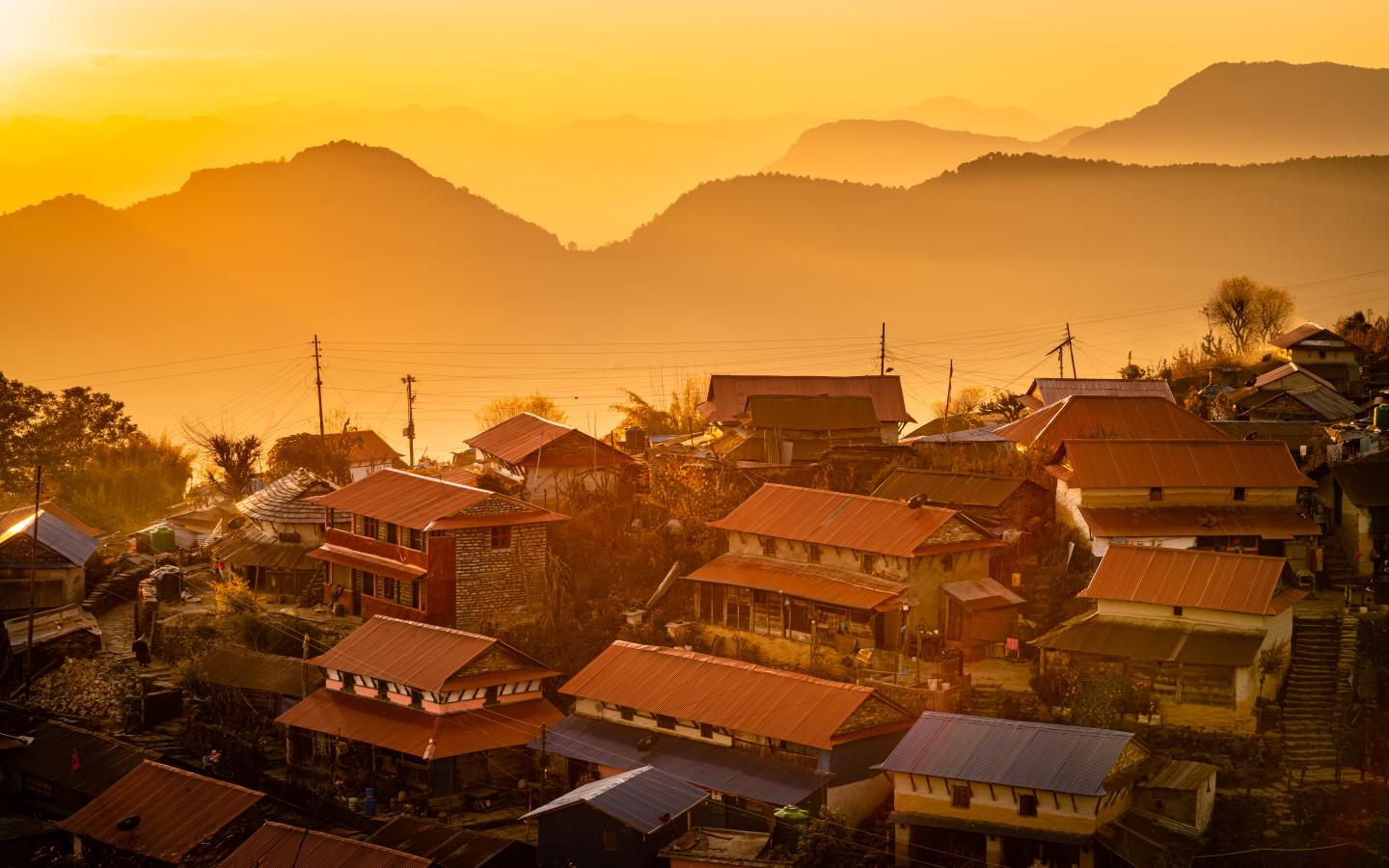
Nestled at an altitude of approximately 2,100 meters above sea level, Ghale Gaun offers breathtaking views of the Annapurna mountain range, including Annapurna II, Lamjung Himal, and Manaslu. The village is home to the indigenous Ghale community, descendants of Tibetan migrants who settled in this region centuries ago. What makes this settlement truly extraordinary isn't just its stunning location, but the death-defying tradition that has been passed down through generations of its inhabitants.
The village consists of traditional stone houses with slate roofs, connected by narrow mountain paths that snake through terraced fields of millet, barley, and potatoes. During the spring months of March and April, when the rhododendron forests burst into crimson blooms across the hillsides, the village transforms into a staging ground for one of the world's most dangerous honey harvesting expeditions.
This village gets this status because of a sticky situation – it's mad honey or pagal mah as it is locally known.
The term "pagal mah" literally translates to "crazy honey" in Nepali, a name that perfectly captures both the intoxicating effects of the honey and the seemingly insane methods required to harvest it. Local folklore suggests that the honey was first discovered by accident when a villager, having fallen from a cliff while gathering medicinal herbs, survived by consuming the honeycomb he found lodged in the rock crevices. Upon his rescue, villagers noticed his altered state of consciousness and unusual euphoria, leading to the honey's mystical reputation.
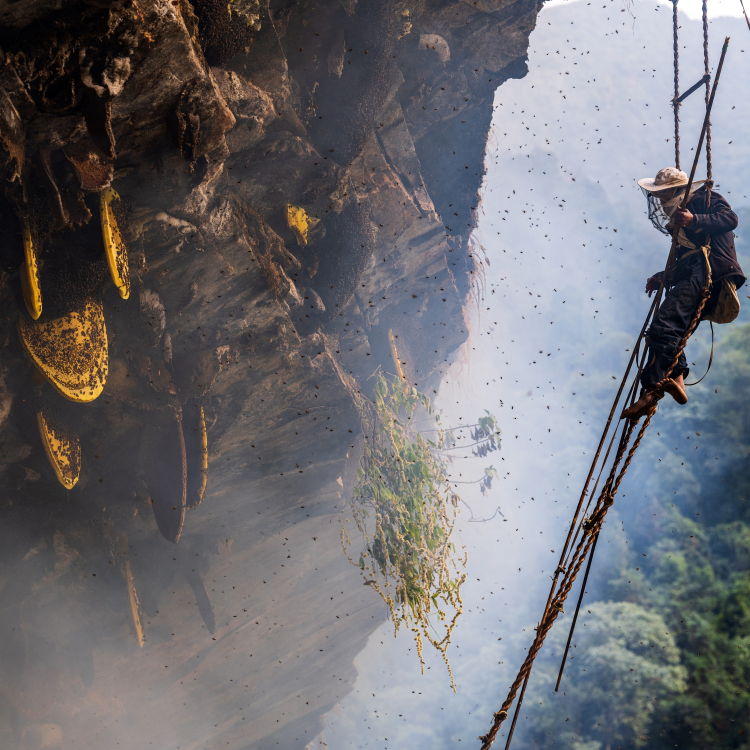
Mad honey is a type of honey that is harvested from the high cliffs of Ghale Gaun. Honey collectors climb up more than 800 feet above the ground, with the help of what looks like flimsy ropes and nothing more. Most probably, they are the only ones who can pull this off unscathed.
The harvesting process is a masterclass in traditional mountaineering that would make even experienced rock climbers nervous. The honey hunters, known locally as "kulung" (meaning "the brave ones"), begin their preparations at dawn during the optimal harvesting season. The giant Himalayan cliff bees (Apis dorsata laboriosa) the world's largest honeybee species construct their massive combs on overhanging cliff faces, often at heights exceeding 300 meters.
The honey hunters use handwoven bamboo ladders called "tangos," some stretching over 100 feet in length, secured with yak hide ropes. These ladders are remarkably flexible, swaying dramatically in the mountain winds as hunters ascend. The lead harvester, typically the most experienced member of the group, carries a long bamboo pole with a woven basket attached to collect the honeycomb sections.
What makes this process particularly treacherous is the bees' aggressive defense mechanism. The giant cliff bees form living curtains around their hives, and when disturbed, they release pheromones that can trigger coordinated attacks. Hunters traditionally burn green rhododendron leaves to create smoke, which helps calm the bees, but this also reduces visibility on the already precarious cliff face.
The timing of the harvest is crucial. It must occur during the brief window when the bees are least active - typically in the early morning hours before the sun hits the cliff face. A single miscalculation in timing, weather conditions, or rope placement can result in fatal falls or severe bee stings that, combined with the honey's psychoactive effects, can prove deadly.
Why is it called mad honey?
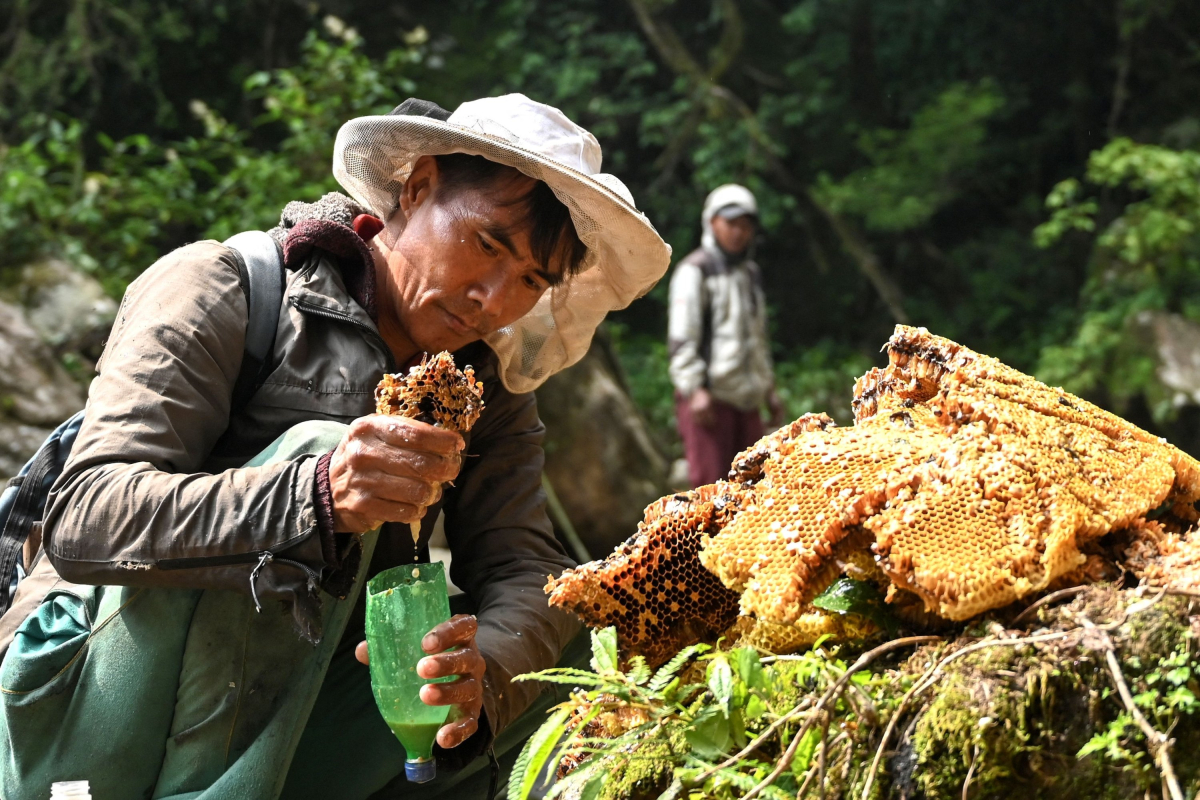
That is because this particular honey is known for its unique properties and effects due to the presence of certain substances in the nectar of specific rhododendron flowers that the honeybees feed on. The nectar of the rhododendron flowers in the region contains grayanotoxins, which are a group of natural neurotoxins. When bees collect the nectar from these flowers and convert it into honey, these toxins are retained in the honey.
The specific rhododendron species responsible for the honey's psychoactive properties are primarily Rhododendron ponticum and Rhododendron luteum, which bloom abundantly in the Himalayan foothills. These ancient flowering plants have evolved grayanotoxins as a natural defense mechanism against herbivores. The concentration of these toxins varies significantly depending on the season, altitude, and specific location of the rhododendron groves.
Interestingly, the bees themselves have developed a remarkable tolerance to these toxins, which would be lethal to most other insects. This evolutionary adaptation allows them to exploit a nectar source that competitors cannot access, creating their monopoly on the high-altitude cliff faces.
The honey's appearance is distinctly different from regular honey - it tends to be darker, with a reddish tint, and has a slightly bitter aftertaste. Fresh mad honey often has a crystalline texture and emits a faint floral aroma mixed with an almost medicinal scent. The potency can vary dramatically even within the same hive, as different sections of the comb may contain honey from various rhododendron patches.
Consuming mad honey in small quantities may have mild psychoactive effects, resulting in feelings of relaxation and euphoria. However, when taken in larger amounts, it can cause more severe symptoms such as dizziness, nausea, vomiting, hallucinations, and in extreme cases, it can lead to heart problems and even death. Consume with care, is what it is in case of mad honey.
The traditional dosage, as prescribed by local healers, is typically no more than a teaspoon for adults, and even then, only after proper preparation involving fasting and ritualistic cleansing. The effects usually begin within 30-60 minutes of consumption and can last anywhere from 2-6 hours, depending on the individual's body weight, metabolism, and the honey's potency.
Local shamans and traditional healers, known as "jhankris," have developed elaborate protocols for mad honey consumption. They believe the honey opens spiritual channels and enhances communication with mountain deities. The preparation involves specific chants, offerings to the cliff spirits, and careful observation of the consumer's physical and mental state throughout the experience.
Medical research has identified that grayanotoxin poisoning affects the sodium channels in nerve and muscle cells, leading to the characteristic symptoms. The ancient Greeks and Romans were familiar with similar toxic honey from the Black Sea region, which they called "meli maenomenon" or "honey of the mad."
Partaking this incredibly unique honey unsupervised is not advisable, and it should not be taken lightly too. Some locals believe that the mad honey is good for certain illnesses, but then, no definitive research has been done on this subject. Due to its hallucinogenic properties, sale and purchase is heavily monitored.
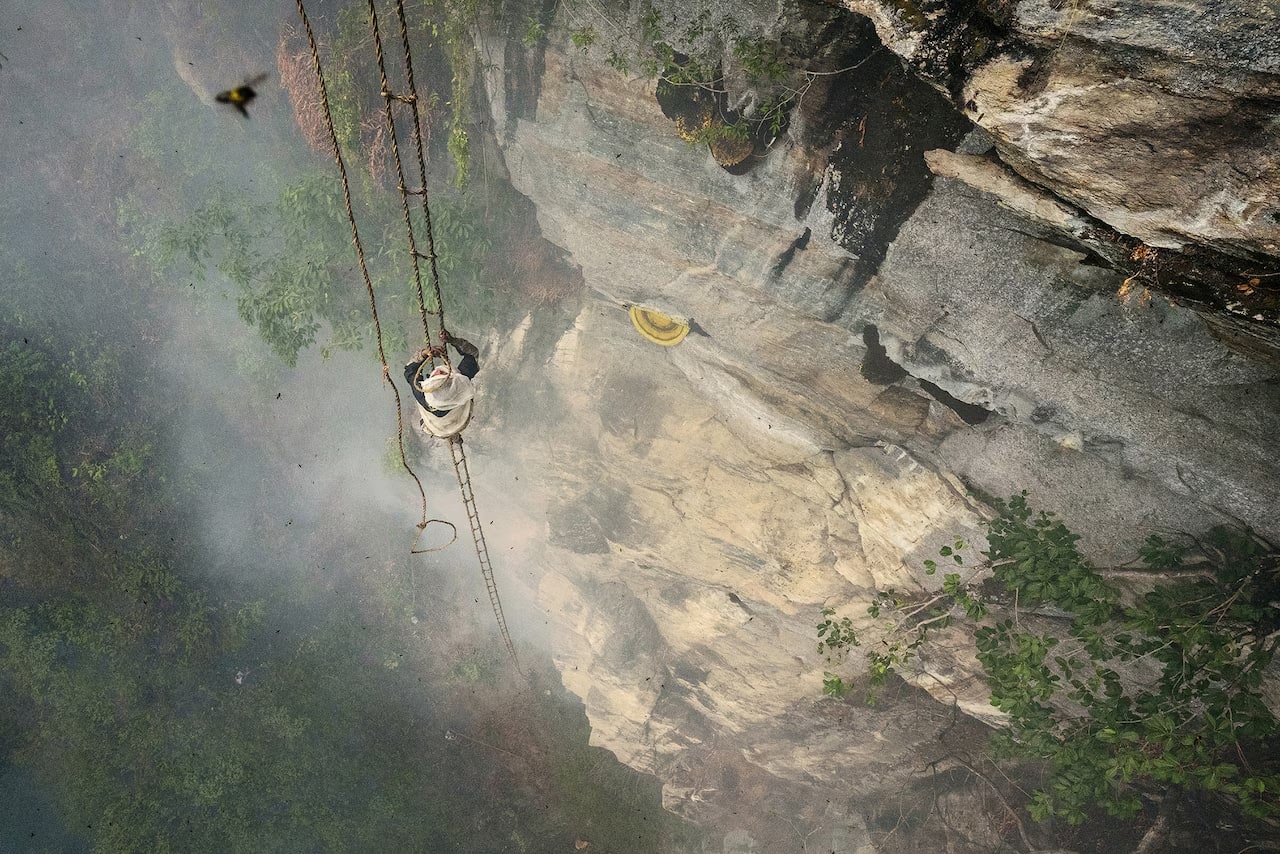
Honey Harvesting in Lamjung. Credit:- National Geographic
The Cultural Significance and Endangered Tradition
Beyond its psychoactive properties, mad honey holds profound cultural significance for the Ghale community. The harvest is not merely an economic activity but a sacred ritual that connects the villagers to their ancestral traditions and the mountain spirits they believe protect their community.
The honey hunting season is marked by elaborate ceremonies. Before each expedition, the hunters perform "puja" (worship rituals) at local temples, seeking blessings from both Hindu deities and ancient Bon spirits. The lead hunter, often chosen through hereditary succession, must undergo purification rituals including fasting, meditation, and abstinence from alcohol and certain foods.
However, this ancient practice faces numerous modern challenges. Climate change has disrupted the rhododendron blooming cycles, making the honey harvest less predictable. Younger generations, drawn to urban employment opportunities, are increasingly reluctant to continue the dangerous tradition. The knowledge of rope-making techniques, cliff navigation, and honey processing methods is held by a diminishing number of elderly experts.
The Nepalese government has implemented strict regulations on mad honey trade, classifying it as a controlled substance due to its psychoactive properties. This has created a complex black market, with genuine mad honey commanding prices of up to $500 per kilogram in international markets. Unfortunately, this has also led to the proliferation of counterfeit products and dangerous harvesting practices by inexperienced collectors seeking quick profits.
Interested in trekking to Ghale Gaun for Mad Honey?
You can experience the traditional lifestyle and warm hospitality of the Gurung community with a homestay in Ghale Gaun. This short but enriching tour provides a unique opportunity to learn about cultural heritage and natural beauty of this village.
Tour Highlights:
- Stay in a traditional homestay in Ghale Gaun.
- Taste and try out mad honey in a controlled environment.
- Engage with the local Gurung community and experience their culture and traditions.
- Enjoy stunning mountain views and scenic landscapes.
- Hike down to Besisahar, experiencing the natural beauty of the region.
Itinerary:
Day 1: Drive from Kathmandu to Ghale Gaun
- Depart from Kathmandu in the morning.
- Enjoy a scenic drive through the beautiful landscapes of Nepal as you head towards Ghale Gaun.
- Arrive in Ghale Gaun, a picturesque village known for its cultural richness and stunning mountain views.
- Check into your homestay and get to know your host family.
- Explore the village, interact with the locals, taste mad honey and learn about their traditions and way of life.
- Overnight stay in Ghale Gaun.
Day 2: Explore Ghale Gaun and Hike to Besisahar
- Spend the morning exploring Ghale Gaun, visiting local attractions and enjoying the breathtaking views of the surrounding mountains.
- After a hearty breakfast, begin your hike down to Besisahar, taking in the natural beauty and tranquility of the region.
- Arrive in Besisahar, where your vehicle will be waiting to take you back to Kathmandu.
- Drive back to Kathmandu, reflecting on the unique experiences and memories made during your homestay in Ghale Gaun.
The Physical and Mental Demands of Honey Hunting
The physical requirements for becoming a honey hunter are extraordinary. Candidates must possess exceptional strength-to-weight ratios, as they often hang from ropes for hours while maneuvering heavy baskets of honeycomb. The hunters develop remarkable grip strength and proprioceptive awareness, able to navigate cliff faces in conditions where a single misstep means certain death.
Mental preparation is equally crucial. Hunters must maintain absolute focus while being swarmed by aggressive bees, managing vertigo-inducing heights, and dealing with the psychological pressure of knowing that their family's livelihood depends on a successful harvest. Many hunters report entering a trance-like state during the most dangerous moments, a phenomenon they attribute to the protective spirits of the mountains.
The harvesting tools themselves are marvels of traditional engineering. The bamboo ladders are constructed using specific joinery techniques that allow them to flex without breaking, while the ropes are made from twisted yak hide that becomes stronger when wet. The collection baskets are woven with precise patterns that allow honey to drain while preventing the loss of valuable comb sections.
Conservation Efforts and Future Challenges
Recent conservation initiatives have begun documenting the traditional knowledge of honey hunters, recognizing their practice as an intangible cultural heritage. International organizations are working with local communities to develop sustainable harvesting practices that balance tradition with safety and environmental protection.
The challenge lies in preserving the cultural authenticity of the practice while introducing modern safety measures. Some younger hunters have begun using climbing harnesses and helmets, but elder practitioners argue that such equipment disrupts the spiritual connection essential to successful harvesting.
Climate change poses the most significant long-term threat to the tradition. Rising temperatures are causing rhododendron blooms to occur earlier and at higher altitudes, forcing the giant bees to relocate their colonies to increasingly inaccessible locations. Some years, the honey harvest fails entirely due to unpredictable weather patterns.
The mad honey hunters of Ghale Gaun represent more than just a dangerous occupation, they also maintain a significant role in maintaining relationship between humans and nature, risking their lives to maintain a connection to the spiritual and natural world that modern society has largely forgotten. Their story is one of courage, tradition, and the delicate balance between human ambition and respect for the forces of nature that govern life in the lap of world's highest mountains.
