
Top 10 Viewpoints in Everest Region
The Everest region, aka Khumbu region of Solukhumbu District in Nepal, is renowned worldwide for being home to Mount Everest. The high and mighty Khumbu region, known for its grandeur and beauty, stands out as one of the best places for trekking in Nepal.
Thinking of trekking in this remarkable place? Trekking in the Everest region is a great personal endeavor in itself. In this guide to the top viewpoints that the Khumbu region has to offer, we’ll explore what makes each of these locations so captivating, what you can see from them, and how to reach them. Whether it be from close or afar, the east or the west, up high or down below, the Everest Region is full of landmarks ready to provide. Let's understand the significance of these viewpoints one by one.
Namche Bazaar
This viewpoint at an altitude of 3,440 m (11,290 ft) is a must-visit location inside the famous Solukhumbu district. Namche stands as the largest and most prosperous town in the Khumbu region, hosting a bustling bazaar every Saturday. The market showcases a variety of goods, from meat, grains, and vegetables to tennis shoes, trinkets, handwoven aprons, and Tibetan boots. Sherpas warmly welcome traders from the foothills and Tibetans from across the border. The town is nestled in a natural bowl, surrounded by impressive peaks like Thamserku (6608m), Kongde Ri (6187m), and Khumbila (5761m).

Pink and White hue during sunset in Namche
Sunrise and sunset views from the viewpoint are equally mesmerizing. At sunrise, the mountains shift from dark, looming silhouettes to brilliantly illuminated giants, while at sunset, the descending sun paints the mountains and sky in soft shades of pink and white.
Hotel Everest View
Among a number of hotels, guest houses and lodges in the Everest Region offering a lot of its innate services alongside the fortune of great vistas, the Everest View Hotel opened in 1971 is a notable one.
This hotel located within the Sagarmatha National Park, a UNESCO world heritage site, is at an elevation of 3,962.4 m (13,000 ft). With its name on the Guinness Book of World Records (2004) as the Highest Placed Hotel in the world, the resort is a destination on its own.
Different from other viewpoints of the Everest region, Hotel Everest View provides a unique experience to its visitors. It almost identically claims the myth of the heavens, with both luxury and spectacle at once, the viewpoint is truly one of a kind.

A breathtaking panoramic view from the dining area at Hotel Everest View.
The views from Hotel Everest View during sunrise and sunset are another sight to behold. When the golden hues of light illuminate the mountain peaks, boasting a close resemblance to a halo, the views are more than just holy. It is an experience like no other.
The hotels’ strategic placement imparts the best views of the mountains around the Everest Region. From Mount Everest (8,849m), Lhotse (8,516m), Nuptse (7,861m), Ama Dablam (6,812m), Thamaserku (6,608m), Kangtega (6,782m) to Taboche (6,495m), these are some of the prominent mountain ranges that can be seen from Hotel Everest View.
Tengboche
Tengboche is another viewpoint in the Everest region located in Khumbu, standing at an altitude of 3,867 m (12,687 ft). The village, a popular stop among trekkers on the trekking route to the Everest Base Camp is also a common acclimatization point, thanks to its elevation.
The village nestled within a picturesque landscape, runs from terraced fields surrounding little sherpa houses to rhododendron forests complimenting its panorama.
The views from Tengboche are just as delightful if not more, the Himalayas show in such beautiful frames, it is breathtaking, to say the least. Some of the world’s highest peaks including the Ama Dablam (6,812m) and Mount Everest (8,849m) offer themselves right before the eyes of Tengboche.

Two contrasting mountain landscapes surrounding Tengboche
One of its many prominent features is the Tengboche Monastery, which is not just the largest but also the most important monastery in the region. Its stunning architecture withholding all of its religious and cultural importance adds more to the beauty it builds.
The sunrise and sunset views from Tengboche are also particularly stunning. As the sun rises and sets before the Himalayas, the changing dynamic of light and reflection creates an almost surreal burst of color streaks in the sky. Fitting perfectly with its surroundings, the play of colors makes Tengboche even more magical than it already is.
Nangkartshang Peak

Sun shining bright over the Nangkartshang Peak
Nangkartshang Peak, at an elevation of 5,083.14 meters (16,677 feet), is situated just above the village of Dingboche in the Khumbu region. This viewpoint serves as a key acclimatization hike for trekkers on their journey to Everest Base Camp, offering a chance to adjust while resting in Dingboche. From Nangkartshang Peak, you can enjoy breathtaking views of mountain ranges such as Ama Dablam (6,812m), Makalu (8,481m), Lhotse (8,516m), Kantega (6,782m), and Cho Oyu (8,188m). Easily accessible, Nangkartshang allows trekkers to enjoy most of the hike up to its peak and is renowned for offering one of the most stunning views among similar viewpoints in the region.
Chhukung Ri
Chhukung Ri is a well-known peak in the Khumbu region, standing at an altitude of 5,546 meters (18,196 feet). Due to its moderate difficulty and accessibility, it attracts many trekkers who use it for acclimatization before tackling higher mountains. The peak offers breathtaking views of world-famous mountain ranges and takes you through beautiful forests filled with wildflowers and plants like rhododendrons, oaks, and pines.

Pink, blue and white hues over the skies of the Everest Region as seen from Chhukung Ri
The journey is highlighted by stunning views of peaks such as Ama Dablam (6,812m), Imja Tse, also known as Island Peak (6,165m), Nuptse (7,861m), and Makalu (8,481m). However, it's important to note that Mount Everest is not visible from Chhukung Ri.
Kala Patthar

LAST LIGHT ON EVEREST - Jason Weiss
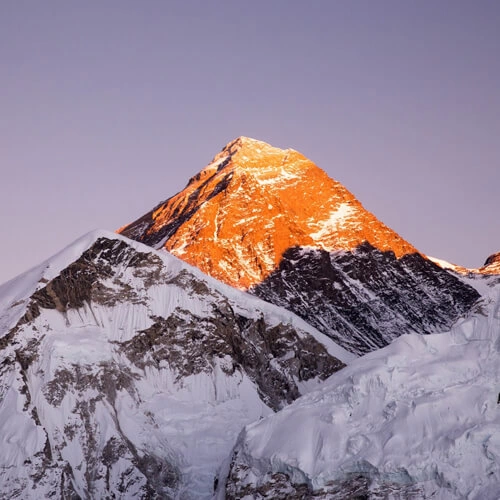
Kala Patthar is one of the most iconic viewpoints in the Everest region, standing at an elevation of 5,545 meters (18,192 feet). It is renowned for offering the most accessible close-up view of Mount Everest. From Kala Patthar, you can also expect stunning views of other majestic peaks like Lhotse (8,516m), Nuptse (7,861m), and Changtse (7,543m). The experience is particularly breathtaking at sunrise when the mountains are bathed in a warm golden glow, creating the illusion that the peaks have drawn even closer.
Gokyo Ri
Gokyo Ri is another popular viewpoint in the Everest region, standing at an elevation of 5,357 meters (17,575 feet). This peak is an excellent alternative for trekkers who want to experience a different route from the Everest Base Camp Trek.
The trek to Gokyo Ri takes you through a rugged yet fascinating path filled with dark, desolate forests, high-altitude settlements, and numerous breathtaking vistas.

Gokyo Lake as seen from Gokyo Ri
The viewpoint is particularly famous for the Gokyo Lakes, which lies just below the summit, and the world’s largest glacier, the Ngozumpa Glacier. From Gokyo Ri, you can enjoy some of the best views of the world’s tallest mountains, including Mount Everest (8,848.86m), Cho Oyu (8,188m), Lhotse (8,516m), and Makalu (8,481m).
The experience of Gokyo Lake Trek becomes truly magical at sunrise and sunset when the mountains and lakes are bathed in an ethereal glow, creating a humbling and unforgettable moment.
Renjo La Pass
Renjo La Pass, the westernmost pass of the Three Passes trek, is located within Sagarmatha National Park in the Solukhumbu district. The three pass trek provides us with a glimpse of remote and less explored areas of the Khumbu region. With the lowest elevation among the three passes, Renjo La Pass sits at 5,360 meters (17,560 feet).

Renjo La Pass
This unique viewpoint offers trekkers an extraordinary aerial perspective, showcasing the stunning convergence of valleys, glaciers, and ridges. Renjo La impresses with breathtaking views of the Himalayan range, featuring towering peaks such as Mount Everest (8,848.86m), Cho Oyu (8,188m), Lhotse (8,516m), Ama Dablam (6,812m), and Makalu (8,481m).
Due to its altitude, weather conditions can significantly impact visibility, but early mornings typically provide the most captivating views from the pass.
Kongma La Pass
The Easternmost pass of Nepal’s Three Passes Trek is Kongma La Pass. It stands at an elevation of 5,535 meters (18,159 feet) which makes it the highest of the two other passes.

Kongma La Pass
Known for its challenging terrain, the pass rewards trekkers with stunning panoramas of snow-covered mountains that surround the area. Although Mount Everest is not visible from Kongma La, the pass offers breathtaking views of other impressive peaks, including Ama Dablam (6,812m), Lhotse (8,516m), Nuptse (7,861m), and Makalu (8,481m). Its combination of difficulty and beauty makes it a remarkable experience for adventurous trekkers.
Cho La Pass
This pass situated at an elevation of 5,420 meters (17,782 feet) is another impressive viewpoint in the Everest region.
The Cho La Pass is a high mountain pass that connects the Gokyo Valley with the Everest Base Camp trekking route.

Trekkers traversing the Cho La Pass
The Cho La pass is popular among trekkers seeking to experience the breathtaking scenery of the Everest region as it passes through landmarks including Namche Bazaar, Tengboche, Dingboche, and Gorak Shep to eventually reach the Everest Base Camp.
At sunrise the peaks surrounding Cho La Pass change colors from ash white to soft pink, while at sunset they shift to warm shades of orange. This region known for its dramatic landscapes allows trekkers to embrace its sights of glaciers, lakes, mountain ranges & huddled valleys.
This viewpoint offers stunning vistas of Mount Everest (8,848.86m), Lhotse (8,516m), Makalu (8,481m), Ama Dablam (6,170m), Nuptse (7,861m) and many more.
And there you have it! The top 10 viewpoints you’ll want to visit for stunning views and to fully experience the beauty of the Everest Region.
