
Top Five Nepal Treks You Can Finish in a Week
Think you need three weeks to trek in Nepal? Think again. Nepal stands as the world's ultimate trekking destination, home to eight of the world's fourteen peaks over 8,000 meters, including the highest peak on Earth, Mount Everest (8,848.86m). Nepal is a small landlocked country in the Himalayas, known for its gigantic mountains, rich cultural history, and hospitable people. For years, it has been one of the favourite destinations for travelers and adventurers from around the globe.
But here's the reality many travelers face: limited vacation time. Between work commitments, family responsibilities, and budget constraints, not everyone can dedicate two to three weeks to a classic Everest Base Camp or Annapurna Circuit trek. That's where 7-day treks come in as the perfect solution.
Focusing on week-long adventures opens up Nepal's incredible mountain landscapes to a much wider audience. These carefully curated itineraries maximize your trek experience while respecting time constraints, aiming to offer the perfect balance between authenticity and practical vacation planning. You'll still witness sunrise over the Himalayas, experience traditional culture, and create memories that last a lifetime.
This guide is designed for travelers with time constraints who refuse to compromise on adventure. Whether you're a beginner looking for your first Himalayan experience, an intermediate trekker seeking new challenges, or a seasoned adventurer with only a week to spare, these five treks offer something spectacular for everyone. Each itinerary has been selected for its ability to deliver maximum impact in minimal time, ensuring every day of your precious vacation counts.
What to Expect from a 7-Day Trek in Nepal
Trail Conditions and Terrain
Nepal's established trekking routes feature well-maintained trails that have been carved by centuries of local use and decades of international trekking. Expect a mix of stone-paved paths, dirt trails, and occasional rocky sections. Trails involve constant ups and downs which will be tough to navigate in the beginning but will become a familiar challenge afterwards. Most trails are clearly marked and follow logical routes between villages, though stream crossings and seasonal variations can occasionally make navigation interesting.
Here is a video that demonstrates how hiking and trekking trails are developed.
While Nepal's popular trekking routes follow similar development principles, the off-the-beaten-path trails offer a more authentic experience. These remote trails were originally created decades ago by local people traveling for trade and commerce, rather than being specifically designed for tourism.
Simple suspension bridges spanning deep gorges are common, particularly in the Everest and Annapurna regions. These sturdy structures are generally safe but can be unnerving for those afraid of heights. Trail maintenance is constantly ongoing, but monsoon damage, landslides, and erosion can create temporary obstacles.
Altitude Considerations
The 7-day treks in this guide range from comfortable hill walking at 1,000 meters to high-altitude adventures reaching up to 4,500 meters at Mardi Base Camp. Most itineraries are designed with proper acclimatization in mind, featuring gradual ascents and strategic rest days. However, altitude affects everyone differently, and symptoms can begin as low as 2,400 meters.
The Helambu Trek stays at moderate altitudes throughout, making it ideal for those concerned about altitude sickness. The Everest Panorama Trek reaches significant heights but includes careful acclimatization days. Always remember the golden rule: climb high, sleep low.
Fitness Requirements
A moderate level of fitness is essential for enjoying these treks. You should be comfortable walking 6-8 hours per day on uneven terrain while carrying a light daypack. Regular cardiovascular exercise for at least 6-8 weeks before your trek is highly recommended. Hill walking, stair climbing, and hiking with a weighted pack are excellent preparation activities.
Most treks involve daily elevation gains and losses of 500-1,000 meters, which can be demanding on knees and ankles. Previous hiking experience is beneficial but not mandatory for the easier routes like Ghorepani Poon Hill.
Guides and Permits
All trekking in Nepal requires permits, and hiring a licensed guide is highly recommended, especially for first-time visitors. The Annapurna Conservation Area Permit (ACAP) and Trekkers' Information Management System (TIMS) card is required for Annapurna region treks. Everest region treks need the Sagarmatha National Park permit, Khumbu Rural Municipality Permit and TIMS card. Our guide for permits in Nepal will help you understand which permits are required for your choice of trek.
Licensed guides provide invaluable local knowledge, handle permit paperwork, manage accommodation bookings, and serve as cultural interpreters. They're also trained in basic first aid and altitude sickness recognition. Porter services are available to carry main luggage, allowing you to trek with just a daypack.
Best Seasons for 7-Day Treks
Spring (March-May): Excellent visibility, warm weather, and blooming rhododendrons make this peak season. Expect clear mountain views but also crowds on popular routes.
Autumn (September-November): The post-monsoon period offers the clearest skies and most stable weather. This is considered the best time for trekking, with excellent visibility and comfortable temperatures.
Winter (December-February): Lower altitude treks remain accessible, but high passes may be snow-covered. Clear skies provide stunning views, though temperatures can be frigid at altitude.
Monsoon (June-August): Generally avoided due to heavy rainfall, leeches, and obscured mountain views. However, the Helambu Trek can be feasible during lighter monsoon periods.
The Top 5 Treks
Ghorepani Poon Hill Trek - 7 Days
Start and End Point: Naya Pul to Syauli Bazar (both accessible from Pokhara)
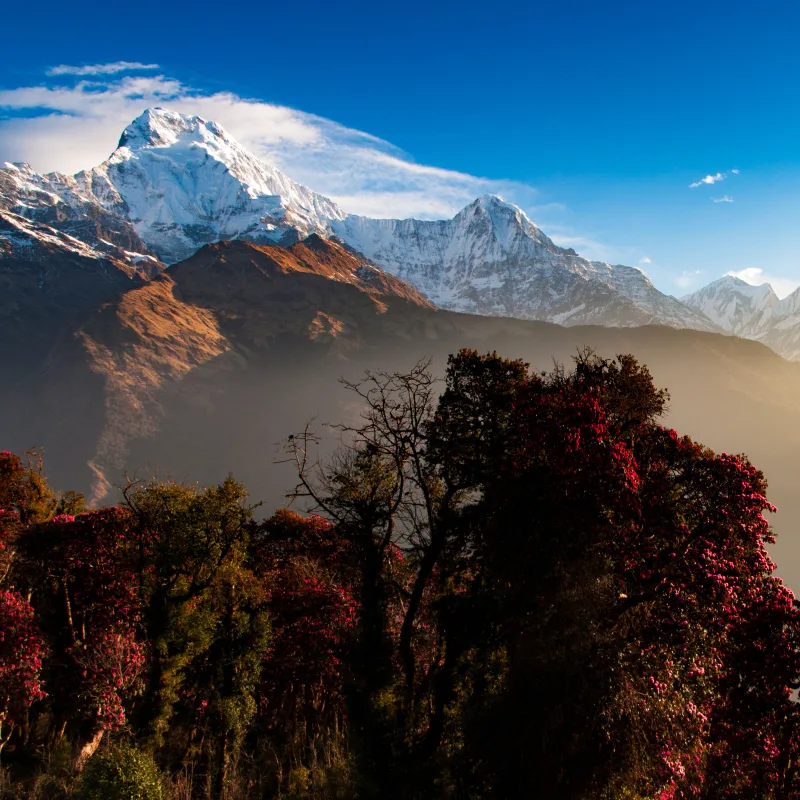
Highlights: The highlight of this trek is the glorious sunrise view from Poon Hill (3,210m). A beautiful panoramic display of Annapurna Massif that included the prominent peaks of South Annapurna, Annapurna I, Dhaulagiri, and Machapuchare (Fishtail). The trek passes through Gurung villages like Ghandruk, where traditional stone houses and terraced fields create picture-perfect mountain scenes. The rhododendron forests between Tikhedhunga and Ghorepani burst into color during spring, creating tunnels of red and pink blooms.
Difficulty: Easy to Moderate
Best Season: March-May and September-December
Who it's perfect for: First-time trekkers to Nepal, photographers seeking the classic Himalayan sunrise shot, families with children, and anyone wanting to experience authentic mountain culture without extreme physical demands. This trek offers the perfect introduction to Nepal's mountain hospitality and teahouse culture.
Itinerary
Day 01: Fly from Kathmandu to Pokhara (822m) - 25 minutes. Drive to Naya Pul (1,070m) - 90 minutes, and trek to Tikhedhunga (1,480m) - 2 to 3 hours
Day 02: Trek from Tikhedhunga to Ghorepani (2,874m) - 5 to 6 hours
Day 03: Early morning excursion hike to Poon Hill (3,210m) - 2 hours, then trek to Tadapani (2,610m) - 5 to 6 hours
Day 04: Trek from Tadapani to Ghandruk (1,940m) - 4 to 5 hours
Day 05: Trek from Ghandruk to Syauli Bazar (1,220m) - 3 to 4 hours. Then drive to Pokhara (822m) - 3 hours
Day 06: Whole-day Pokhara sightseeing
Day 07: Drive from Pokhara to Kathmandu (1,400m) - 7 to 8 hours
Annapurna Base Camp Trek - 7 Days
Start and End Point: Ghandruk to Syauli Bazar (accessible from Pokhara)
Highlights: Standing at Annapurna Base Camp (4,130m) surrounded by humungous peaks creates an amphitheater effect that's absolutely breathtaking. The trek showcases incredible biodiversity, from subtropical at lower elevations to alpine near base camp. Mount Machapuchare dominates the skyline, while Annapurna South, Hiunchuli, and Annapurna I create a spectacular 360-degree mountain panorama in the sanctuary. The natural hot springs at Jhinu Danda provide a perfect way to soothe tired muscles on the return journey.
Difficulty: Strenuous
Best Season: March-May and September-November
Who it's perfect for: Experienced hikers seeking a taste of high-altitude trekking, mountain enthusiasts wanting to reach a famous base camp, and adventurers comfortable with longer daily walks and significant altitude gain. This trek rewards serious effort with world-class scenery.
Itinerary
Day 01: Fly from Kathmandu to Pokhara (822m) - 25 minutes. Drive to Ghandruk (1,940m) - 2 to 3 hours
Day 02: Trek from Ghandruk to Chomrong (2,170m)- 3 to 4 hours
Day 03: Trek from Chomrong to Himalaya (2,940m) - 5 to 6 hours
Day 04: Trek from Himalaya to Annapurna Base Camp (4,130m) - 6 to 7 hours
Day 05: Trek from Annapurna Base Camp to Bamboo (2,145m) - 7 to 8 hours
Day 06: Trek from Bamboo to Syauli Bazar (1,170m) - 5 to 6 hours then drive to Pokhara (822m) - 2 hours
Day 07: Drive from Pokhara to Kathmandu (1,400m) - 7 to 8 hours
Mardi Trek - 7 Days
Start and End Point: Kande to Sidhing (accessible from Pokhara)
Highlights: Mardi Base Camp (4,500m) offers the highest point among these five treks, providing gorgeous views of Mardi Himal, Machapuchare, and the entire Annapurna range. This relatively new trekking route means fewer crowds and a more pristine wilderness experience. The trek features diverse ecosystems, from dense rhododendron and pine forests to high-altitude meadows. Australian Camp provides excellent acclimatization with stunning sunrise views, while the final push to Mardi Base Camp rewards trekkers with some of Nepal's most spectacular close-up mountain vistas.
Difficulty: Moderately Challenging
Best Season: March-May and September-November
Who it's perfect for: Adventurous trekkers seeking solitude, experienced hikers comfortable with steep ascents and high altitude, and those wanting to explore Nepal's relatively new trekking route away from the crowds. Perfect for photographers seeking alternate perspectives of famous peaks.
Itinerary
Day 01: Fly from Kathmandu to Pokhara (822m) - 25 minutes. Drive to Kande (1,770m) - 45 minutes, and trek to Australian Camp (2,060m) - 2 to 3 hours
Day 02: Trek from Australian Camp to Forest Camp (2,600m) - 6 to 7 hours
Day 03: Trek from Forest Camp to High Camp (3,550m) - 6 to 7 hours
Day 04: Trek from High Camp to Mardi Base Camp (4,500m) - 3 to 4 hours and then descend to Low Camp (3,050m) - 4 to 5 hours
Day 05: Trek from Low Camp to Sidhing (1,750m) - 4 to 5 hours. Drive to Pokhara (822m) - 2 hours
Day 06: Whole-day Pokhara sightseeing
Day 07: Drive from Pokhara to Kathmandu (1,400m) - 7 to 8 hours
Everest Panorama Trek - 7 Days
Start and End Point: Lukla to Lukla
Highlights: The legendary flight into Lukla's airport, known as the most dangerous airport in the world sets the adventure tone immediately. In Namche Bazaar, known as the Sherpa capital, you can observe the famous Sherpa culture and prepare for the trek ahead of us. Tengboche Monastery, perched atop a hillside with Everest views, provides spiritual and visual highlights. The trek offers glimpses of Everest, Lhotse, Nuptse, and Ama Dablam while bringing trekkers close to the Sherpa culture. Every teahouse meal comes with stories of Everest expeditions and Sherpa mountaineering achievements.
Difficulty: Moderate
Best Season: March-May and September-November
Who it's perfect for: Everest dreamers with limited time, culture enthusiasts interested in Sherpa traditions, and trekkers wanting to experience the famous Khumbu region without committing to the full Everest Base Camp trek. Ideal for those seeking the prestige of trekking in Everest's shadow.
Itinerary
Day 01: Flight to Lukla (2,860m) from Kathmandu or Ramechhap - 45 mins, overnight in Lukla.
Day 02: Trek from Lukla to Namche Bazaar (3,440m) – 5 to 6 hours
Day 03: Acclimatization Day at Namche – Hike to Syangboche (3,780m)
Day 04: Trek from Namche to Tengboche (3,867m) – 5 to 6 hours
Day 05: Trek from Tengboche to Namche (3,440m) – 5 to 6 hours
Day 06: Trek from Namche Bazaar to Lukla (2,860m) – 6 to 7 hours
Day 07: Flight from Lukla to Kathmandu or Ramechhap and same-day drive to Kathmandu.
Helambu Trek - 7 Days
Start and End Point: Sundarijal to Melamchi Bazar (accessible from Kathmandu)
Highlights: This trek showcases the beautiful Tamang and Holmo cultures of the Langtang region without requiring domestic flights. Traditional villages like Tarkeghyang and Sermathang offer authentic cultural experiences with less tourist influence. The trek provides excellent views of Langtang Lirung, Ganesh Himal, and on clear days, distant Everest. Rhododendron and bamboo forests create a scenic trekking trail, while the moderate altitudes make this accessible year-round.
Difficulty: Easy to Moderate
Best Season: March-May and September-December.
Who it's perfect for: Those who are all about the culture and want a deep insight in one of the lesser known communities of Nepal in the Holmo community. Those who seek authentic village experiences, trekkers preferring moderate altitudes, budget-conscious adventurers (no flights required), and those wanting to explore Nepal's less-visited regions. Perfect for travelers who want to kick start the trek straight from Kathmandu.
Itinerary
Day 01: Drive from Kathmandu to Sundarijal (1,460m) - 1 hour, then trek to Chisapani (2,215m) - 4 to 5 hours
Day 02: Trek from Chisapani to Kutumsang (2,470m) - 6 to 7 hours
Day 03: Trek from Kutumsang to Melamchi Gaon (2,530m) - 7 to 8 hours
Day 04: Trek from Melamchi Gaon to Tarkeghyang (2,600m) - 5 to 6 hours
Day 05: Trek from Tarkeghyang to Sermathang (2,590m) - 5 to 6 hours
Day 06: Trek from Sermathang to Melamchi Bazar (870m) - 5 to 6 hours
Day 07: Drive from Melamchi Bazar to Kathmandu (1,400m) - 3 to 4 hours
Conclusion
Nepal's magic doesn't require weeks of commitment. Sometimes seven days is all you need to transform your perspective and create memories that last a lifetime. Each of these carefully curated treks offers a unique window into the Himalayas, from the cultural richness of Holmo people to the raw beauty of high-altitude base camps in Annapurna.
Whether you choose the gentle introduction of Ghorepani Poon Hill, the heights of Mardi Base Camp, or the legendary trail of the Everest region, you'll discover that a week in Nepal's mountains can be profoundly life-changing. The sunrise views, warm hospitality, and sense of achievement that comes from trekking in the world's highest mountains create experiences that extend far beyond the seven days on the trail.
The mountains are calling, and you don't need a month-long sabbatical to answer. Your Himalayan adventure takes just seven days to complete. Book that flight, and prepare for the week that might just change how you view the world. The peaks of Nepal are waiting, and they're more accessible than you ever imagined.
