
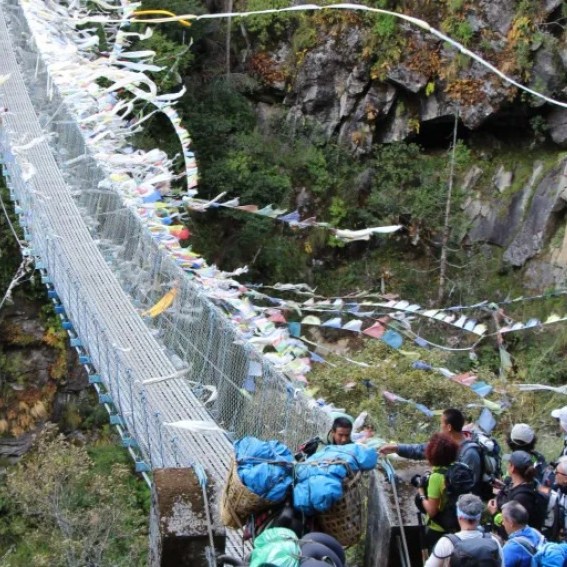
What Nobody Tells You About the "Hillary Bridge" Traffic Jams
When trekking to Everest Base Camp (EBC), most travelers imagine serene Himalayan landscapes, rushing rivers, and breathtaking peaks. Few anticipate that one of the most iconic spots on the trail, the Hillary Suspension Bridge can actually slow your trek to a crawl.
Here’s what nobody tells you about the “Hillary Bridge” traffic jams and how to plan your 2027 trek to avoid unnecessary delays.
Why the Hillary Suspension Bridge Is Iconic
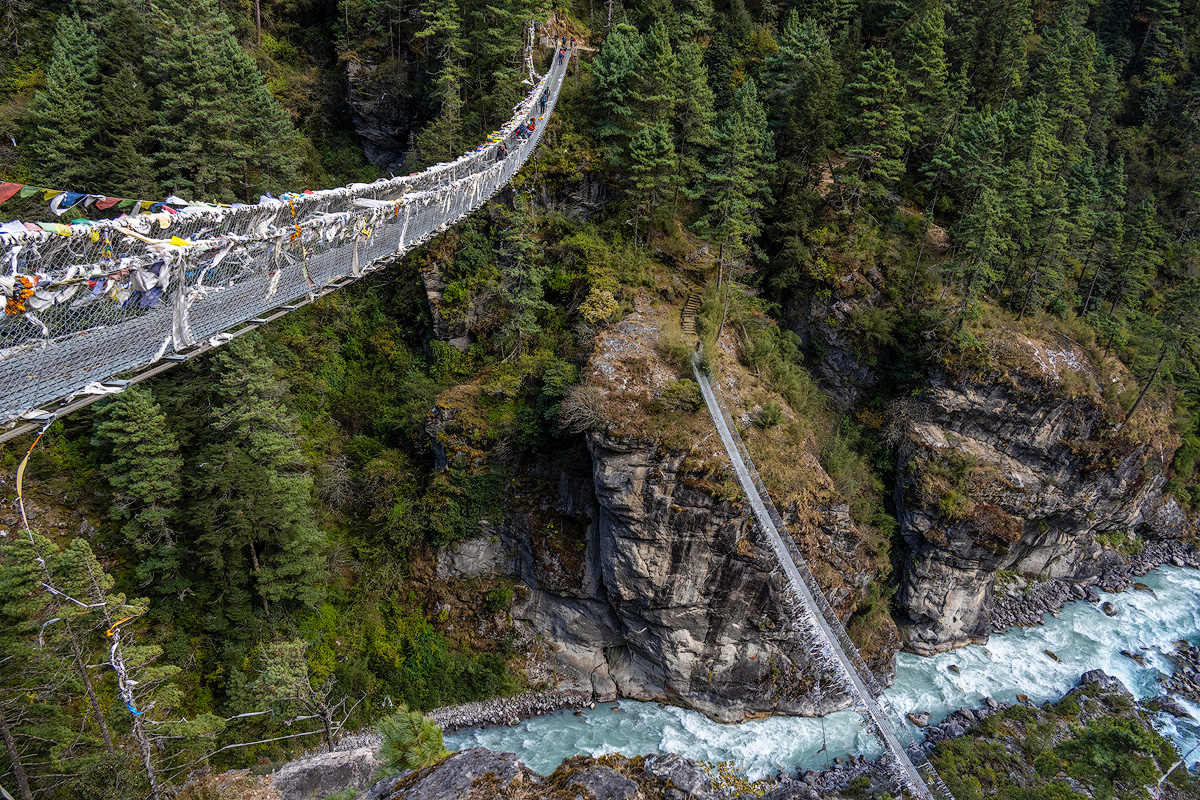
Named after Sir Edmund Hillary, the first climber to summit Everest, the Hillary Suspension Bridge spans the Dudh Koshi River near Namche Bazaar, serving as a vital link on the EBC trail.
It is:
- Narrow and only wide enough for single-file passage in most sections
- A critical point where trekkers, porters, and yaks converge
- Surrounded by dramatic views that encourage stops and photos
The bridge is visually stunning but often becomes a bottleneck during peak trekking seasons.
The Traffic Jam Reality
Contrary to popular images of solitary trekking:
- High Season Congestion
- March–May and September–October bring hundreds of trekkers daily
- Groups moving in both directions meet mid-bridge, forcing stops
- Porters and Pack Animals
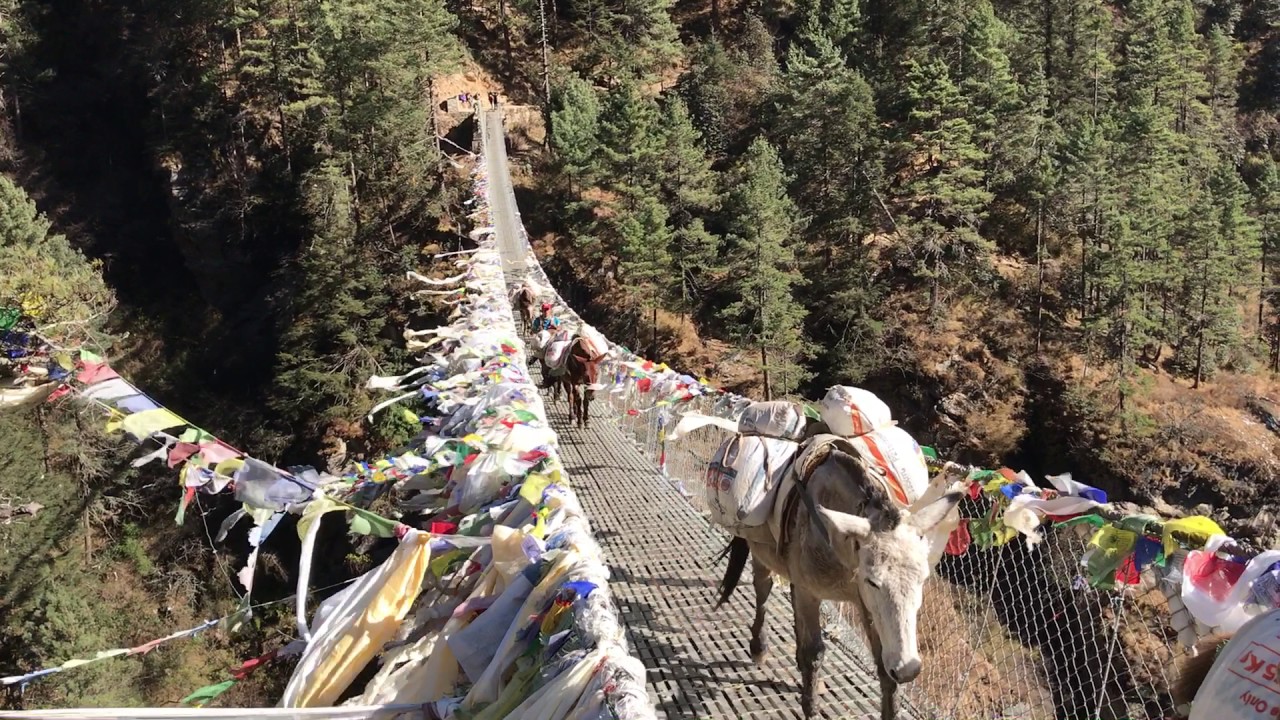
- Yaks, mules, and porters transporting goods to higher villages share the bridge
- Narrow spacing requires careful coordination, sometimes causing long waits
- Photo Stops
- Trekkers pause to take photos or enjoy the view
- Even small delays can cascade into 20–30 minute backups
The result: a trekker may spend significant time waiting at a bridge meant to be crossed in seconds.
How These Jams Affect Your Trek
- Extended trekking time: A 5–6 hour day can stretch to 7–8 hours.
- Disrupted schedules: Overcrowding may cause you to miss teahouse reservations in higher villages.
- Increased fatigue: Stopping and starting repeatedly is more tiring than steady trekking.
- Reduced solitude: Peaceful moments in the Khumbu are interrupted by congestion and noise.
Even experienced trekkers often underestimate how much small bottlenecks can impact daily progress.
Tips to Avoid the Hillary Bridge Bottleneck
- Start Early
- Cross the bridge before 7:30 a.m. to beat the majority of trekkers.
- Avoid Peak Season if Possible
- Late September and early October are crowded; consider March–April or November for fewer trekkers.
- Move with a Small Group
- Large groups slow crossing; traveling solo or in small parties reduces waiting time.
- Respect Porters and Yaks
- Always yield to animals carrying loads. Maintaining awareness reduces accidents and delays.
- Plan Buffer Time
- Include extra 30–60 minutes for potential bridge congestion in your daily itinerary.
The Silver Lining
Despite occasional jams, the Hillary Bridge is still one of the most photogenic and adrenaline-inducing spots on the EBC trek. With a little planning:
- You can enjoy the iconic crossing without stress
- Capture photos without hundreds of other trekkers in the frame
- Experience the thrill of suspension bridges safely
Final Verdict: Expect the Unexpected
Traffic jams at Hillary Bridge are part of the real EBC trekking experience. It’s a subtle reminder that:
- Everest trekking isn’t just about altitude or distance it’s about sharing paths with hundreds of fellow adventurers and local porters
- Planning early starts and off-peak trekking windows can maximize your time and enjoyment
- Understanding trail dynamics is as important as gear, fitness, or permits
