
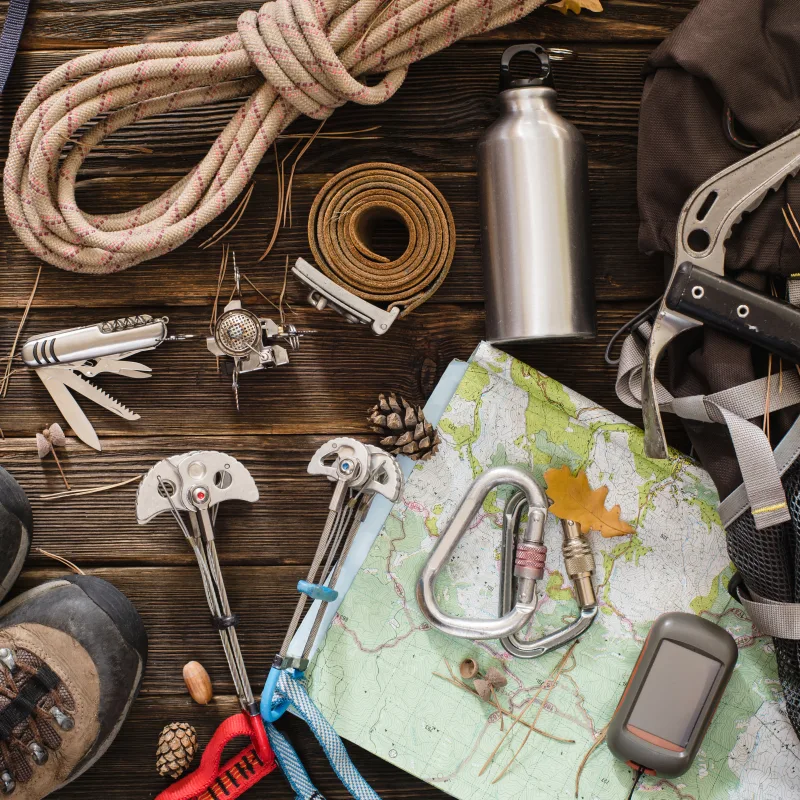
Why Gears Matter: A Practical Guide to Trekking and Climbing Equipment in the Himalayas
Before we begin, let's understand the core meaning and difference between Trekking and Mountaineering/Climbing. What exactly is trekking and how difficult is mountaineering in comparison to it.
Trekking
Trekking involves long-distance hiking on established or semi-established trails, typically at moderate to high altitudes. In the Himalayas, trekking usually means walking on well-defined paths, staying in teahouses or camping at designated sites, and reaching viewpoints, base camps, or high passes without technical climbing. The focus is on endurance, acclimatization, and enjoying the journey through diverse landscapes.
Mountaineering/Climbing
Mountaineering combines trekking with technical climbing skills to reach mountain summits. It involves using ropes, ice axes, crampons, and other specialized equipment to navigate steep rock faces, ice walls, crevasses, and exposed ridges. Mountaineering requires technical knowledge of rope work, anchor systems, self-arrest techniques, and rescue procedures.
Key Differences
- Technical Skills: Trekking requires basic hiking skills; mountaineering demands advanced technical climbing abilities
- Terrain: Trekkers follow established paths; mountaineers create their own routes on technical terrain
- Risk Level: Trekking has moderate environmental risks; mountaineering involves significant objective hazards
- Equipment: Trekking uses standard hiking gear; mountaineering requires specialized technical equipment
- Duration: Treks can be completed in days to weeks; mountaineering expeditions often take weeks to months
Importance of Specialized Gear
Specialized gear in the Himalayas isn't just about comfort but it's about survival. The extreme conditions include:
- Extreme Cold: Temperatures can drop to -40°C (-40°F) or lower
- High Altitude: Reduced oxygen levels above 3,500m affect performance and judgment
- Weather Volatility: Conditions can change from sunny to life-threatening storms within hours
- Remote Locations: Rescue operations are difficult or impossible in many areas
- Technical Terrain: Proper equipment prevents falls and enables safe passage
Proper gear provides protection against hypothermia, frostbite, altitude sickness, falls, and other life-threatening conditions while enabling you to perform effectively in challenging environments.
Gear Categories and Equipment
TREKKING GEAR
Clothing System
Base Layer
- Merino Wool or Synthetic Tops/Bottoms: Worn directly against skin to wick moisture and provide insulation. Merino wool naturally resists odor and regulates temperature, while synthetic materials dry faster.
- When Used: Continuously throughout the trek, changed daily or every few days depending on duration
Insulation Layer
- Down Jacket: Provides exceptional warmth-to-weight ratio using duck or goose down. Essential for high-altitude trekking where temperatures drop significantly.
- Synthetic Insulation Jacket: Alternative to down that maintains warmth when wet. Better choice in humid conditions.
- Fleece Jacket: Mid-weight insulation that's breathable and quick-drying, ideal for active periods.
- When Used: During rest stops, in camp, and in cold conditions. Down jackets are typically worn above 4,000m.
Shell Layer
- Hardshell Jacket: Waterproof, windproof, and breathable outer layer using Gore-Tex or similar membranes. Protects against rain, snow, and wind.
- Softshell Jacket: More breathable than a hardshell but less waterproof. Good for active periods in mild conditions.
- Rain Pants: Waterproof pants to protect legs from precipitation and wind.
- When Used: During storms, high winds, or when precipitation is expected.
Footwear
Trekking Boots
- High-Cut Leather or Synthetic Boots: Provide ankle support, protection from rocks, and waterproof/breathable membranes. Stiff soles handle rocky terrain and provide a platform for microspikes.
- When Used: Primary footwear for all trekking days on trails
Camp Shoes
- Lightweight Sneakers or Sandals: Allow feet to rest and air out after long days in boots. Essential for foot health on multi-day treks.
- When Used: In teahouses, camp, and during rest stops.
Accessories
Hat and Gloves
- Warm Beanie: Insulated hat for cold conditions. Significant heat loss occurs through the head.
- Sun Hat: Wide-brimmed hat for sun protection at high altitude where UV radiation is intense.
- Liner Gloves: Thin gloves worn alone in mild conditions or under insulated gloves.
- Insulated Gloves: Warm gloves for cold conditions with good dexterity for handling gear.
- When Used: Beanies in cold/windy conditions, sun hats during sunny periods, gloves based on temperature
Eye Protection
- Glacier Sunglasses: Category 4 sunglasses with side protection to prevent snow blindness from intense UV reflection.
- When Used: Any time on snow or at high altitude during daylight hours
Navigation
Navigation Tools
- Map and Compass: Primary navigation tools that don't rely on batteries. Topographic maps show terrain features and established routes.
- GPS Device: Electronic backup for navigation with waypoint marking and route tracking capabilities.
When Used: Continuously for route finding, especially in poor visibility
Shelter and Sleep System
Shelter
- Four-Season Tent: Designed to handle heavy snow loads and high winds. Features strong poles, guy-out points, and vestibules for gear storage.
- When Used: When camping is required or as emergency shelter
Sleep System
- Sleeping Bag: Down bags provide the best warmth-to-weight ratio but lose insulation when wet. Synthetic bags maintain warmth when damp.
- Sleeping Pad: Insulates from ground and provides cushioning. R-value indicates insulation effectiveness.
- Pillow: Inflatable or stuff-sack pillow for comfort and better sleep quality.
- When Used: Every night when camping, as backup comfort in teahouses
MOUNTAINEERING GEAR (Basic)
Footwear
Mountaineering Boots
- Double Boots: Removable inner boot with insulated outer shell. Designed for extreme cold and technical crampon use.
- Single Boots: Integrated design that's lighter but less warm than double boots.
- When Used: On technical terrain, glaciers, and in extreme cold conditions
Basic Technical Gear
Crampons
- 12-Point Steel Crampons: Metal spikes that attach to boots for traction on ice and hard snow. Front points enable front-pointing on steep ice.
- When Used: On glaciers, icy terrain, and steep snow slopes
Ice Axe
- General Mountaineering Axe: 60-70cm tool with pick, adze, and spike. Used for self-arrest, cutting steps, and anchor points.
- When Used: On any slope where a slip could result in a long fall, typically above 30-degree slopes
Helmet
- Climbing Helmet: Protects from falling rock, ice, and impact during falls. Lightweight with ventilation.
- When Used: In areas with rockfall danger or when technical climbing
MOUNTAINEERING GEAR (Technical)
Climbing Hardware
Ropes
- Dynamic Climbing Rope: 9-11mm diameter rope that stretches to absorb impact forces during falls.
- Static/Low-Stretch Rope: Used for hauling loads and fixed lines where stretch isn't desired.
- When Used: For all technical climbing, glacier travel, and rescue situations
Protection
- Pitons: Metal spikes hammered into rock cracks for anchors.
- Ice Screws: Threaded tubes screwed into ice for protection points.
- Snow Anchors: Specialized anchors like snow flukes or pickets for snow conditions.
- When Used: To create anchor points for belaying and rappelling
Hardware
- Carabiners: Metal clips for connecting rope to protection. Locking carabiners provide security for critical connections.
- Belay/Rappel Device: Controls rope during belaying and rappelling operations.
- Ascenders/Jumars: Mechanical devices that grip rope for ascending fixed lines.
- When Used: During all technical climbing for connecting systems and controlling ropes
Specialized Tools
Ice Tools
- Technical Ice Axes: Shorter tools (50-60cm) with aggressive picks for steep ice climbing.
- When Used: On steep ice faces, mixed climbing, and technical ice routes
Approach Gear
- Approach Shoes: Sticky rubber shoes for scrambling on rock approaches to climbs.
- When Used: On technical rock approaches where boots are too clunky
Seasonal Gear Considerations
Pre-Monsoon (March-May)
Conditions: Generally stable weather, warming temperatures, longer days
Gear Adjustments:
- Lighter sleeping bags (rated to -10°C instead of -20°C)
- More breathable clothing options
- Less need for storm protection at lower elevations
- Sunscreen becomes critical as UV intensifies
Monsoon (June-September)
Conditions: Heavy rainfall, unstable weather, leeches, muddy trails
Gear Adjustments:
- Robust waterproof gear essential
- Quick-dry clothing and extra changes
- Waterproof pack covers and dry bags
- Gaiters to keep leeches out of boots
- Anti-leech socks and repellent
Post-Monsoon (October-November)
Conditions: Clear skies, stable weather, cold nights
Gear Adjustments:
- Standard gear loadout works well
- Clear skies mean excellent visibility but cold nights
- Perfect conditions for photography gear
Winter (December-February)
Conditions: Extreme cold, heavy snow, shorter days, unstable weather
Gear Adjustments:
- Warmest sleeping bags (rated to -30°C or colder)
- Multiple insulation layers
- Robust shelter systems rated for heavy snow loads
- Extended-life batteries for electronics
- Emergency bivouac gear becomes essential
Common Beginner Gear Mistakes
Cotton Clothing
Problem: Cotton retains moisture and loses all insulation when wet, leading to hypothermia risk.
Solution: Use only synthetic or merino wool base layers and avoid cotton entirely.
Inadequate Footwear
Problem: Running shoes or lightweight hiking boots on technical terrain lead to injuries and cold feet.
Solution: Invest in proper mountaineering boots rated for the conditions you'll encounter.
Insufficient Weather Protection
Problem: Cheap rain gear fails when you need it most, leaving you exposed to hypothermia.
Solution: Buy quality hardshell gear from reputable manufacturers with proven waterproof ratings.
Improper Fit
Problem: Ill-fitting boots cause blisters, loose clothing doesn't insulate effectively.
Solution: Get professionally fitted for boots and try on all clothing with the layers you'll actually wear.
Over-reliance on Technology
Problem: Relying solely on GPS devices that can fail, break, or run out of battery.
Solution: Always carry map and compass as primary navigation tools with GPS as backup if travelling without a guide.
Inadequate Testing
Problem: Using new, untested gear on important trips leads to discoveries of problems when it's too late.
Solution: Test all gear thoroughly in similar conditions before committing to major expeditions.
Effects of Improper or Missing Gear
Hypothermia and Frostbite
Cause: Inadequate insulation, wet clothing, improper footwear
Effect: Body temperature drops, leading to impaired judgment, eventual unconsciousness, and death
Prevention: Proper layering system, waterproof protection, and insulated extremities
Altitude Sickness
Cause: Ascending too quickly without proper acclimatization gear like pulse oximeters to monitor oxygen levels
Effect: Headaches, nausea, and potentially fatal cerebral or pulmonary edema
Prevention: Gradual ascent, monitoring tools, and descent plan
Falls and Injuries
Cause: Improper or missing safety equipment like helmets, harnesses, or crampons
Effect: Traumatic injuries, difficult rescue situations, potential fatalities
Prevention: Complete safety system appropriate for terrain
Navigation Errors
Cause: Relying on inadequate navigation tools or lacking backup systems
Effect: Getting lost in dangerous terrain, exposure to weather, delayed rescue
Prevention: Redundant navigation systems and route planning
Equipment Failure
Cause: Using gear beyond its capabilities or failing to maintain equipment
Effect: Sudden loss of critical protection during dangerous conditions
Prevention: Regular gear inspection, appropriate gear selection, and backup systems
Local Expertise and Knowledge
Experienced Himalayan guides and outfitters play a crucial role in gear planning that extends far beyond simple equipment lists. At Mountain Tiger Nepal, our guides bring intimate knowledge of specific routes, seasonal conditions, and regional challenges that directly impact your gear needs and safety.
Route-Specific Guidance
- Terrain Assessment: Our team knows exactly what conditions you’ll face. River crossings, exposed ridgelines, or technical sections, we have got it covered.
- Seasonal Variations: Mountain Tiger Nepal guides are knowledgeable on seasonal weather patterns and can advise on gear accordingly.
- Accommodation Types: We help you pack smartly based on whether you'll be in teahouses, tents, or emergency shelters.
- Water Sources: Knowing reliable water points helps us guide you on filtration methods and water-carrying needs.
- Regulatory Knowledge
- Permit Requirements: Our team manages necessary permits, ensuring a smooth process tailored to your destination.
- Local Regulations: Mountain Tiger Nepal keeps you informed of gear restrictions in protected or regulated zones.
Guide-Assisted Procurement
Our guides know where to find the best gear at fair prices, especially in hidden corners of Thamel away from overpriced tourist shops. With Mountain Tiger Nepal, you benefit from:
- Negotiated rates at trusted rental houses
- Guidance in selecting high-quality gear
- Support with sizing, fit, and compatibility
- Recommendations based on conditions and local experience
Pre-Trek Gear Consultation
We offer pre-departure consultations tailored to your trek. Mountain Tiger Nepal’s gear experts provide:
Customized Gear Lists based on:
- Route difficulty and terrain
- Seasonal conditions during your travel
- Shared vs. individual gear needs
- Your personal experience and preferences
Gear Inspection Services: Our guides check your gear for:
- Functionality and weather readiness
- Fit and comfort
- Suggestions for last-minute upgrades or changes
Cost-Benefit Analysis
When to Use Guide Services:
Mountain Tiger Nepal is especially valuable for:
- First-time Himalayan trekkers
- Climbers tackling technical routes
- Travelers on a tight schedule needing efficient logistics
- Group expeditions needing gear coordination
Self-Guided Considerations:
For seasoned trekkers, independent planning may be sufficient, but our team is always available for rental support, consultations, or backup logistics if needed.
Communication Strategies:
- Honest conversations about your skill level
- Clarity on gear preferences and budget
- Questions about gear use and terrain challenges
The relationship between trekkers and local guides/outfitters in gear planning represents a crucial element of Himalayan adventure success. While self-sufficient planning is possible for experienced mountaineers, the local expertise, logistical support, and safety backup provided by reputable guide services often proves invaluable, particularly for complex routes or first-time Himalayan adventurers.
The key to successful Himalayan adventures lies in understanding your gear intimately, testing it thoroughly, and choosing equipment appropriate for your objectives and skill level. Proper gear selection and use can mean the difference between an enjoyable adventure and a life-threatening situation in these unforgiving mountain environments.
